Wednesday, February 24, 2016

More haiku/haikus


What is the plural of haiku?
Haiku? Haikus? What to do?

I think that I’ll choose
‘Haikus’ to use 
To post these haiku haikus for you.

Okay, I agree that’s pretty bad but you try writing a limerick about haikus.

For those who have not read previous posts in Bytes about haikus, they are the traditional Japanese poems that consist of seventeen syllables arranged in three lines.  The first line has five syllables, the second has seven and the third has five.  In traditional Japanese haiku the poet generally describes a fleeting moment in nature; usually something he has observed and that has moved him. Through the haiku's simple image or series of images, the poet tries to arouse in the reader the same sensation that he has experienced.  Often there is grand image or thought in the last line and commonly there is a reference to the season or nature.

Haikus, in Japanese culture date back many centuries, the grand masters of haikus emerging in the 17th century.  The greatest of these is generally regarded to be Matsuo Basho (1644-1694), who is commonly called just Basho.

A Basho haiku:

On a withered bough 
A crow alone is perching 
Autumn evening now

Visualise the image: a solitary crow sitting on a withered tree branch, autumn and night approaching. In the simple words of the above haiku Basho powerfully conveys loneliness, solitude and isolation. 

Often times Japanese haikus are intertwined with Zen philosophy, as in one of Basho’s most widely known: 

Ancient pond 
A frog leaps in 
The sound of water

I won’t go into the Zen aspect here, that will have to wait for a future Bytes. 

Haikus have been extended in the West to apply to a whole range of subject matter, although always remaining true to the 5-7-5 syllable structure. 


Here are some amusing haiku . . .

Caution, there is swearing included.


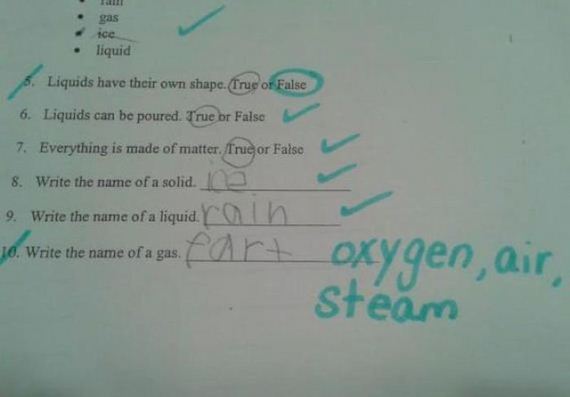
A response by a young student when the teacher set the class a task of writing a haiku.


Tuesday, February 23, 2016

Quote for the Day


Bonus quote:


Happiness

______________________________

So far as I have been able to find out anything about him, Afred D Souza, sometimes referred to as Father Alfred D Souza, was an inspirational writer/philosopher from Brisbane, Australia who died in 2004. 
______________________________

De Souza is widely credited as the author of:

Dance like nobody's watching.
Love like you've never been hurt.
Sing like no one is listening.
Work like you don't need the money.
Live life every day as if it were your last.
______________________________

His work below contains a lot of sound comment . . .

Happiness

Alfred D. Souza

For a long time it seemed to me that life was about to begin - real life. But there was always some obstacle in the way, something to be gotten through first, some unfinished business, time to still be served, a debt to be paid. Then life would begin. At last it dawned on me that these obstacles were my life.

This perspective has helped me to see that there is no way to happiness. Happiness is the way. So, treasure every moment that you have. And treasure it more because you shared it with someone special, special enough to spend your time … and remember that time waits for no one…

So stop waiting
until you finish school,
until you go back to school,
until you lose ten pounds,
until you gain ten pounds,
until you have kids,
until your kids leave the house,
until you start work,
until you retire,
until you get married,
until you get divorced,
until Friday night,
until Sunday morning,
until you get a new car or home,
until your car or home is paid off,
until spring,
until summer,
until fall,
until winter,
until you are off welfare,
until the first or fifteenth,
until your song comes on,
until you've had a drink,
until you've sobered up,
until you die,
until you are born again
to decide that there is no better time than right now to be happy…

Happiness is a journey, not a destination.


Monday, February 22, 2016

Quote for the Day


More Oz Fun Facts

______________________________

Continuing the facts series sent to me by Graham.

The cane toad's 'highly satisfactory' introduction to Australia:


Cane toads seemed like a great idea. They were introduced from South America to Hawaii in 1932 to feast on insects that threatened crops, and after Australians heard "excellent reports" of this strategy, the toads were brought to Queensland in 1935. This pair was photographed at the Meringa Sugar Experiment Station shortly after the species' introduction.

At first the so-called giant American toad was deemed "highly satisfactory": a 1937 report declared some success at eradicating bugs, and there was little concern about population numbers. But we all know how the story turned out. The poisonous, near-indestructible amphibians are an ecological disaster and have spread all across north-eastern Australia. FYI, they're now as much of a pest in Hawaii as they are here.

Additional comment:

The natural habitat of the cane toad is southern Texas, Mexico, to Amazon River Basins in South America. They were introduced into Hawaii about 1932 when 148 were released on Oahu to control sugar cane beetles. They are now found in all main islands. From Hawaii, cane toads were introduced into Australia.

______________________________

Government urges Australians to eat more bread:


After the Great Depression, the Australian government tried to get the economy humming again with a campaign urging farmer to "Grow More Wheat". But they grew too much wheat — so much they were faced with selling it for less than the cost of production. So the government launched another campaign: "Eat More Bread". It was estimated that if every household consumed an extra loaf per week, it would use up 1 million bushels of unsold wheat. To support the campaign, master bakers distributed "a most attractive little volume" titled 75 Delicious Dishes Made with Bread, offering housewives "economical, appetising and healthful" inspiration with what to do with all that dough.
______________________________

How pink cockatoos earned the strange nickname “wee jugglers”:


This black-and-white picture of four Major Mitchell's cockatoos was taken around the turn of the 20th century, before colour photography — so it doesn't show off the vivid crests that explain why the birds are also called pink cockatoos. The cocky is named in honour of Sir Thomas Mitchell, the surveyor-general of New South Wales who led several exploration missions of inland Australia in the 1800s. Mitchell's hopping mouse and Mitchell grass are also named after him, as are several Australian places. The cockatoo's scientific name is Lophochroa leadbeateri, after the British naturalist Benjamin Leadbeater, which is why they're sometimes known as Leadbeater's cockatoos. They're also known as "wee jugglers" — a nickname bushmen might have corrupted from an Aboriginal name for the bird, "weejee galah".

Additional comment:

This will give an idea of the colour . . .

______________________________

The bread wars of the Great Depression


One symptom of the Great Depression in Australia were the "bread wars" that broke out in Sydney in the early 1930s, with shops dropping the price of bread to dangerously unprofitable levels to vie for customers. (Nothing new — Australians have been sparring about the price of bread since the early 1800’s all the way up to the current day.) Newspapers of the era carried daily reports of the ever-dropping cost of a loaf — none more ridiculous than the duelling stores in Camperdown who beat their prices down so far they both ended up giving away free bread. It was custom for bread prices to be loudly advertised in shop windows, as seen in this 1934 photo of a Surry Hills corner store. The site is still a corner store today.

Additional comment:

The shop is at the corner of Bourke and Foveaux Streets Sydney. Here is a Google maps image photographed from my computer screen:

______________________________

Sydney’s Ghostbusters


In November 1944, a group of boys on bikes tore through Sydney in pursuit of a ghost. Sadly it wasn't the real-life inspiration for Ghostbusters, but a publicity stunt for the new film Ghost Catchers, which had opened at the Capitol Theatre. The scariest thing about the US musical-comedy, starring vaudeville duo Olsen and Johnson as "sleuths who clean out some pugilistic ghosts from the home of wide-eyed neighbours", was its Aussie reviews. Women's Weekly deemed its "bodies in closets, screams and gunfire" as "too much of a good thing", the Sydney Morning Herald complained the pair's schtick "is wearing thin", while the Advertiser decried it as "strictly juvenile fare … entirely devoid of rhyme or reason".

Additional comment:

Film poster -

______________________________

Vicious lion attack at Sydney zoo


Sydney's first public zoo opened in 1884 in Billy Goat Swamp — the area of Moore Park where Sydney Girls High School now stands. Garfield, the zoo's first lion, came via San Francisco in 1885, and at one point the park's leonine population numbered a dozen. This lion was snapped by photographer Henry King around 1900, and its skeletal appearance and plain surroundings indicates how zoos used to house animals for human entertainment, not for conservation and study.

Disaster struck in 1902 when three-year-old Emma Huntingdon wandered too close to the lions' cage while keepers were on their lunch break. When her 73-year-old grandfather William George Renn rushed to rescue her, one of the lions viciously mauled him through the bars. Though seriously injured — "his back [was] furrowed with deep cuts" and "all his clothes from the waist up were ripped to ribbons" — he survived.
Sunday, February 21, 2016

Quote for the Day


Some aspects of marriage and convicts

______________________________


Byter Maureen, aka Mazza and Maz, sent me a couple of items, which makes her the guest contributor today.
______________________________

Item 1:

Maz sent me a link to the following item:

A most unusual marriage ceremony

I've seen some interesting marriage register entries in my time, but this one takes the biscuit!

From records in the custody of the Borthwick Institute for Archives, University of York; reproduced by kind permission of Findmypast


Not only does everyone who took part in the marriage ceremony - the groom, the bride, the witnesses, even the vicar - have the same surname, they all shared a grandfather. Joseph and William Beckett, the witnesses, were brothers of the groom - as was the vicar - whilst the bride was their 1st cousin.

Talk about keeping it in the family! 

______________________________

Item 2:

A female and male convict, in a watercolour by Juan Ravenet in 1789–94. 
State Library of NSW

Maureen is descended from a First Fleeter (a cause of shame when I was a kid, a source of pride today) and has a fascination in all things historical from those days.

From Maureen, an article written by her for a First Fleet publication:

18th Century Marriages and the First Fleet

It started back when I was in primary school learning about early Sydney Cove. How could the Reverends marry those who open confessed to still having spouses in England? Did they have their religious beliefs drop overboard as they came into Sydney Heads? I have now discovered that was more likely while they were still on the Thames in London. But it was to the new colony's benefit that they did.

Upon arrival into Port Jackson Governor Phillip had the most trustworthy felons ashore to build the important structures such as the governor’s canvas house, hospital tent, housing (tents) for the women, a storehouse and fresh water tanks. On Wednesday 6th February these arrangements were sufficient as to allow the women convicts ashore. 

The next day, 7th, at 11 o’clock, all were summoned to be present to hear the Governor’s Commission read and the Commission constituting the Court of Judicature. Phillip was agnostic. The Reverend Richard Johnson had earned his retainers by ministering to convicts on the hulks on the Thames. He was a man of the world and the overnight rampant revelries had convinced both that marriage was to be recommended. Phillip was anxious that all present would realise this was reality, and return to England was no more than a dream. He proclaimed that any marriage in England did not preclude marriage in Port Jackson. Fourteen marriages were solemnised during the first week. 

By the middle of the eighteen century in England all that was required for a marriage to be considered legal was mutual consent of both parties provided the boy was 14 years of age and the girl 12. Without parental consent the age for both was 21. A man could promise to marry a woman at a future date, and if they consummated their relationship they were considered married, no formal ceremony required. Marriage was more about financial arrangements and inheritance than romance. 

Near St Paul’s Church, London, at the foot of Ludgate Hill there was the Fleet Ditch and famous marriage houses, such as the Hand and Pen, by the Fleet Bridge. Clergy and tavern keepers sent out flyers to tout for their strange trade. The clock in the establishment was permanently stuck at 9 o’clock, as weddings were only legal if performed between 8am and noon.

Marriages were taxed at a specific rate by imposing a stamp duty on the licence. Whosoever the Fleet ‘parson’ he came with counterfeit marriage certificates that lacked an official stamp. A so-called Fleet marriage would cost only a few shillings in total. A wife with a marriage certificate could not be sued by her creditors. Her ‘husband’ received all of her possessions, and her debts. If the creditor could not find the husband the wife was not to blame. Many Fleet marriages often did not even have witnesses so how to prove or disprove the marriage? They could be back-dated to legitimise bastard children and confirm their right to inheritance. Same sex marriages were not unknown and often husband and wives never met again after the groom was paid to sign. When the Marriage Act was introduced in 1753 it was estimated that up to that date in England at least one-third were Fleet marriages. (Statistic from 1700: Scenes from London Life by Maureen Waller)

Thanks, Maureen (Mazza, not Maureen Waller)
______________________________

An item from me:

There was a custom hundreds of years ago amongst families of sailors who were setting out on long voyages, to rub down the side of a penny coin and scratch or engrave a message or picture thereon. This was pre-photographs and trhere was no social networking. The coin custom came to be extended to families and loved ones of convicts sentenced to transportation, who would most likely remain separated for good and never see each other again.


Convict love token made from a 1797 Penny, National Museum of Australia
______________________________


Saturday, February 20, 2016

Quote for the Day


Kidspeak

______________________________

Byter Leo sent me some images of “Kids Say the Darndest Things”. I don’t know if they’re all real, certainly the writing styles appear to be those of children so I will assume that the notes are genuine until proven otherwise.

Bill Cosby hosted a comedy series, Kids Say the Darndest Things, between 1998 and 2000. The show consisted of Cosby asking young children questions and recording their cute responses. This show was in turn based on Art Likletter’s radio show House Party and television series, Art Linkletter's House Party, which together aired mostly five days a week from 1945 to 1969. Linkletter also released a series of books called Kids Say the Darndest Things.

Bill Cosby

Art Linkletter

______________________________

Some pics of kids writing the darndest things: