Saturday, June 29, 2024

QUOTE FOR THE DAY


WE DIDN’T START THE FIRE


-----------ooOoo-----------

Continuing a look at the events and people in Billy Joel’s We Didn’t Start the Fire.

Each two lines represent a year.

Little Rock, Pasternak, Mickey Mantle, Kerouac
Sputnik, Chou En-Lai, "Bridge on the River Kwai"
Lebanon, Charles de Gaulle, California baseball
Starkweather homicide, children of thalidomide
Buddy Holly, "Ben Hur", space monkey, Mafia
Hula hoops, Castro, Edsel is a no-go
U-2, Syngman Rhee, payola and Kennedy
Chubby Checker, "Psycho", Belgians in the Congo

1959: Hula Hoops

-----------ooOoo-----------


A hula hoop is a toy hoop that is twirled around the waist, limbs or neck. It can also be wheeled along the ground like a wheel with careful execution. They have been used by children and adults since at least 500 BC.

The hula hoop gained international popularity in the late 1950s, when a plastic version was successfully marketed by California's Wham-O toy company. Cane hoops had been popular children's toys to be rolled on the ground and kept balanced for as long as possible. In 1957, children in the Norwegian town of Steinkjer began a fad described in the English press as "rock-rings", with the description being "These are huge cane rings which little girls swing round their bodies by moving their hips and arms." An August 7 news item described the origin as children buying cane rings after seeing ring jugglers at a circus that visited Steinkjer and added "It wasn't long before most of the children in the town had caught the 'wiggle-rock' craze. Now it is all over Norway."

In the same summer, schoolgirls in Australia were using the hoops and news came to the United States with the first reference to the toy as a "Hula hoop", described as "all the rage among the female small fry of Australia. This is old fashioned hoops with a difference. You don't roll them, you put them around your middle and by swinging the hips in a circular motion to keep the hoop revolving— hence the name.".

Girl twirling a hula hoop 1958

According to "The Playmakers: Amazing Origins of Timeless Toys" by Tim Walsh, the bamboo hoop's path to plastic started in Australia when a Sydney teacher taught school students how to sway bamboo hoops in sports classes. Australia's Coles department stores then started selling bamboo hoops and demand soon outstripped supply. Coles then asked legendary toy man Alex Tolmer (also known as Alec), who founded toy company Toltoys, to help mass produce hoops. In 1957, Tolmer used Polyethylene which was stronger and less brittle than earlier plastics. The new lightweight plastic hoops sold in a variety of colours for less than $2. Toltoys sold 400,000 plastic hoops in Australia in 1957 alone. According to Tolmer's Melbourne-based son, David Tolmer, Toltoys already had a good working relationship with Wham-O in the United States and when Wham-O told Toltoys the hoop was too generic to warrant a royalty, Alex Tolmer instead asked the US company to sponsor one bed in an Australian children's hospital. By 1958, Wham-O plastic hoops were being used in California and then the craze for hooping swept the United States and beyond.

Richard Knerr and Arthur "Spud" Melin of Wham-O updated the Toltoys design and manufactured 110 cm (42 in) diameter hoops from Marlex plastic. The earliest known advertisement was seen for the "Hula-Hoop by Wham-O" was seen on June 16, 1958 for "The Broadway" chain of department stores in Los Angeles, for sale for $1.98 (equivalent to $20 more than 60 years later). With giveaways, national marketing and retailing, a fad began in July 1958: twenty-five million plastic hoops were sold in less than four months, and sales reached more than 100 million units in two years. Carlon Products Corporation was one of the first manufacturers of the hula hoop. During the 1950s, Carlon was producing more than 50,000 hula hoops per day. Saddled with a glut of unwanted Hula Hoops, Wham-O stopped manufacturing the toy until 1965, when Knerr and Melin came up with a new twist: They inserted ball bearings in the cylinder to make a "shoosh" sound. The hoop was inducted into the National Toy Hall of Fame at The Strong in Rochester, New York, in 1999.

The hula hoop craze swept the world, dying out in the 1980s except in China and Russia, where hula hooping and hoop manipulation were adopted by traditional circuses and rhythmic gymnasts. In the mid to late 1990s there was a re-emergence of hula hooping, generally referred to as either "hoopdance" or simply "hooping" to distinguish it from the children's playform. The jam band The String Cheese Incident is widely credited with fostering a renewed interest in hooping. Band members started throwing larger adult-sized hoops into their audiences in the mid-1990s, encouraging their fans to hoop and dance, spreading the word and the fun. It wasn't until 2003 with the launch of a former website, Hooping.org, that these small bands of hoopers began to find each other online and a real community and movement began to grow. Bay Area Hoopers began in San Francisco at that time holding regular "hoop jams" with music to hoop to and the hooping group began being replicated in cities around the world.

-----------ooOoo-----------

The final season of M*A*S*H contains an episode titled "Who Knew?", in which Sergeant Klinger observes children playing with barrel rings, and fashions a hula hoop-like toy made of metal tubing. He then tries to get Major Winchester to fund their production, but fails.

-----------ooOoo-----------

Marawa (nΓ©e Ibrahim, formerly Wamp), stage name Marawa the Amazing, is an Australian-born performer, athlete, and author. She has held 12 different Guinness World Records, but is best known for holding the record for the most simultaneous twirling hula hoops, having spun 200.

-----------ooOoo-----------

Gallery:


 fffffff  


7 Art Linkletter with kids


8

Jane Russell


Thursday, June 27, 2024

QUOTE FOR THE DAY


FUNNY FRIDAY


---- 😊😊😊 -----


Welcome to another Funny Friday Byters and readers.

A few days ago I posted some items about Willie Nelson, with a couple of jokes included. Today’s Funny Friday throws in some more Willie Nelson humour.

Enjoy, but a warning that risquΓ© content is included.


---- 😊😊😊 -----

SOME HUMOUR:

__________

What has 99 legs and eight teeth?

The front row at a Willie Nelson concert.
__________

What gets higher with age?

Willie Nelson
__________

WARNING: If you get an email with the subject 'Enlarge your snake' DO NOT order the pills.

THEY DO NOT WORK! It is a scam. My snake went really stiff and then died, no larger than it ever was.
__________

This poem is actually by Willie Nelson:

The Penis Poem

My nookie days are over, my pilot light is out.
What used to be my sex appeal, is now my water spout.
Time was when, on its own accord, from my trousers it would spring.
But now I’ve got a fulltime job, to find the gosh darn thing.
It used to be embarrassing, the way it would behave.
For every single morning, it would stand and watch me shave.
Now as old age approaches, it sure gives me the blues.
To see it hang its little head, and watch me tie my shoes!!
__________

Some low-level mafia thugs are playing cards...
One of them says, "Where's Joey? He never misses poker night."
His friend says, "Oh, didn't you hear? Joey's dead."
"Awww, that's a shame. How did he die?"
"Well, he went to the doctor last week and found out he had gonorrhea."
"So? Gonorrhoea isn't fatal."
"It is if you give it to the boss's wife."

---- 😊😊😊 -----


A woman walks into a tattoo shop and asks the tattoist if he could do a portrait tattoo of Elvis Presley on her inner thigh. He says of course and they negotiate a price, $500, and he gets to work.

After a few hours the artist says it’s done. The woman looks at the tattoo is was not satisfied. “That’s an excellent looking tattoo of somebody, but that is not Elvis Presley. I wanted a tattoo of Elvis.”

The tattoo artist can see the disappointment on the customer’s face and says he will do another tattoo on other thigh, no extra charge. This time they pick another picture off the internet of Elvis, the artist sketches it on, she approves and he begins to tattoo.

Again, after a few hours the artist announces he is done. The woman excitedly looks at the result and again is instantly disappointed. “It’s an excellent portrait, but it doesn’t look like Elvis.” The tattoo artist is a little annoyed at this point. “Lady, both those tattoos are perfectly recognisable as portraits of Elvis. I am positive anyone looking at these tattoos will know instantly they are of Elvis Presley, The King of Rock in Roll, no question about it.”

“I don’t think so” she says “I don’t think I should have to pay for these tattoos”.

Exasperated, but confident in his work, the tattoo artist suggests “Let’s go to the bar next door and ask the first person we see their opinion. If they don’t instantly recognise Elvis, no charge.” The customer agrees and they both walk next door.

The first person they see is an old man sitting at the bar. The old man is clearly a little drunk, but the tattoo artist explained to him they were in need of his opinion. All he had to do was look at the tattoos on the woman’s thigh and identify the individual in the tattoos. “Ok” says the old man.

The customer pulls up her skirt and the old man begins to examines both tattoos very carefully. Suddenly the old man’s face glimmers with recognition and he proclaims “Well, I’m not sure who those two fellas on the side are, but that’s definitely Willie Nelson in the middle.”
__________

An alternative version is set in England where a woman wants a tatt of Prince William on one inner thigh and Prince Harry on the other. When the woman complains that the tatts don’t look anything like the two princes, they agree to invite a street passerby to see if he recognises the persons in the tattoos. He doesn’t recognise either but says that the one in the middle is definitely Boris Johnson.

---- 😊😊😊 -----


LIMERICK OF THE WEEK:

An original by moi:

I guess I’m just plumb out of luck,
Was writing a limerick and got stuck.
I’m having a moan,
No last rhyme for my poem,
So now I don’t give a damn.

---- 😊😊😊 -----

GALLERY:


---- 😊😊😊 -----


CORN CORNER:
__________

I called the pizza shop and said, “Can I get a medium pepperoni pizza?”

Pizza guy: No problem.

Me: Will that be long?

Him: No sir, it’ll be round
__________

My son asked me "Where does poo come from?"

I was a little uncomfortable, but I sat him down and gave him an honest explanation.

He looked a little perplexed, and stared at me in stunned silence for a few seconds, then asked "And Tigger?"
__________

From the vault:

My son’s team won the soccer tournament, so the goalkeeper invited the two of us for a party afterwards.

It was the father, the son, and the goalie host.
__________

How do you spell the name of the country north of the United States

C eh? N eh? D eh?

(Canadians apparently say eh a lot at the end of sentences, like the Kiwis:

2 New Zealanders:

“Hey bro, what’s a Hindu?”

“It lays eggs, eh.”
__________

I used to have a loving family, a nice house and good car until I got involved with drugs.

Now I also have an island and a yacht.
__________

I ordered a chicken and an egg from Amazon....

I'll let you know.

---- 😊😊😊 -----


Wednesday, June 26, 2024

QUOTE FOR THE DAY


FROM THE VAULT

________________________

From Bytes
March 19, 2014

Three Bats and a Bird

"I’d give all wealth that years have piled,
The slow result of Life’s decay,
To be once more a little child
For one bright summer day."

- Lewis Carroll
________________________

My friend Tony Z sent me an email yesterday headed “We've been painted on a wall somewhere!?!?!”.

His email was an onsend from his son Christian, now an adult, of an email with the same caption and two photographs:


Tony's email was accompanied by the following message:
Otto
This is a photo of my son and 3 of his friends when they were about 5 years old. My son is in the Robin outfit. Somehow this is now a painting on a wall in Melbourne, called I think “3 bats and a bird”. I don't know how the artist got the photo . Apparently he is world renowned. I'm not aware where exactly it is other than on a wall somewhere in Melbourne.
TZ
Here is another pic of the art work:


Tony:

The work is by Brisbane street artist Fintan Magee who has done some fascinating and quality street art, as the Batman artwork, which is correctly identified as having been done in Melbourne, shows. I am unaware as to its location in Melbourne.

In a chat after receiving the email Tony informed me that the four boys were friends. The occasion was not dressup for school or for any function, simply that the four were enthralled by Batman and Robin. The lad to the right of Christian/Robin would not answer to any name but Batman when he was wearing the outfit. The Batman to the left of Robin was Christian’s best friend, the Dark Knight to his left, in black, was the first Batman’s older brother. The photo was taken by one of the parents and it is believed that it was spotted by Fintan Magee on a Facebook page.

Here is another version:

________________________

Some more images. . . 


August 17, 2014


Fintan Magee
________________________

“. . . although these days may seem commonplace, in years to come they will crystallise in our minds as our best! . . . we shall all look back to the friendships, the adventures, the fun . . . to the best days of our lives.”

- Cottee’s Cordial ad


________________________

Coincidentally, not long after I received Tony's email, I received the following in a mobile phone text message from son Thomas:


________________________


Tuesday, June 25, 2024

THOUGHT FOR THE DAY


READERS WRITE


-----------ooOoo-----------

Last week’s Remembering Heroes post about Kevin ‘Dasher’ Wheatley brought a number of comments.

Warrant Officer Wheatley, 29, chose to stay with a mortally wounded comrade, knowing that he too would be killed by the nearby Viet Cong. I acknowledged his heroism and sacrifice but questioned the wisdom of his choice, given that he had a wife and 3 young children at home.
__________

Following is an email exchange with Steve M, a multi published author:
Steve:
Super post today, Otto, very moving. I especially liked the post script at the end from Lofty Hansen.
Regards
Steve m

Myself:
I don’t know whether I would have done what he did.

Steve:
Likewise, Otto. I enjoy writing about human nature and courage and I am so grateful that I can – thanks to men like them.
Thanks for the feedback Steve.
__________

Bruce R commented:
Hi Otto,

Another great post. I travel down to Canberra from time to time myself to visit relatives and have stopped at a number of these rest areas to attend to calls of nature. I always make the effort to read about the person who the area is named after.

Like you I have mixed feelings about the “motives” many heroes have for their actions. Personally I think a lot comes down to that magic ingredient in all of us and that is adrenalin. In a less pressured situation when you have the time to analyse what is going on, the decision may be completely different. That is not to take away from all recipients of awards the bravery and the selflessness they display.

I still wonder however when will be the day when awards for bravery in war will not be necessary because there are no wars – I suspect never sadly. Man/womankind never seem to learn!

All the best

Bruce
Thanks Bruce
__________

David B wrote:
Hi Otto

Whist I have unbounded appreciation of the courage shown by the soldiers awarded the Victoria Cross I do share your doubts about the wisdom of Dasher Wheatley's decision to stay with his dying comrade

But your assertion that the medals are made from the metal of cannons captured by the British at the siege of Sevastopol. may well be untrue according to research described in this article


But I rather subscribe to John Ford's "When you had to choose between history and legend, print the legend"
Regards Dave
Thanks Dave.

The quote is from The Man Who Shot Liberty Valance.

Below is the article the subject of Dave’s link.
__________

Victoria Cross not made from captured Crimean guns after all

Published on: 4 May 2020

A long-held belief that all Victoria Cross medals are made from Russian guns captured during the Crimean War is unlikely to be sustainable, research suggests.


The Victoria Cross is Britain’s highest award for valour in war and was instituted in 1856 at the end of the Crimean War.

It was reported by a newspaper at the time that the metal used for the new honour came from cannon captured at Sebastopol in 1855. In 1901, nearly 50 years after the introduction of the Victoria Cross, a detailed account of the process used in making the medal was published in the Strand magazine. This repeated the assertion that the bronze used was from guns taken from the Russians during the Crimean War – a view that continues to be asserted by various institutions, including the Ministry of Defence.

However, new analysis by a doctoral student from Newcastle University, UK, has shown that at various times since the start of World War One, Victoria Cross medals have been cast from metal from multiple sources.

The research, which is published in Post-Medieval Archaeology, was carried out by Dr Andrew Marriott, now a visiting researcher at Newcastle University.

Andrew, who served in the Royal Regiment of Fusiliers for more than 30 years, explained: “Although we know that Queen Victoria decreed that the new honour be cast from bronze, there is no evidence to suggest that she wanted captured weapons from Sebastopol to be used for this purpose. Like many at the time, the Queen saw little to celebrate from the victory at Sebastopol, and had displayed little interest in the captured Russian ordnance.

“The only contemporary record of a Sebastopol connection is a newspaper report of the medal ceremony in Hyde Park in 1857. The correspondent most likely conflated various stories circulating about the redistribution and recycling of captured Crimean guns.”

One of the Chinese guns

The Crimean War took place between 1853 and 1856 and led to the defeat of Russia by an alliance of Britain, France and the Ottoman Empire. The campaign initially enjoyed public support in Britain but this quickly changed when it became clear how badly the British army had suffered as a result of disease and administrative shortcomings. Attitudes began to change and there were calls for more recognition of the service and sacrifice made by individual soldiers.

To date, 1,358 Victoria Cross medals have been awarded, including 111 to soldiers who fought during the three-year conflict in Crimea. Queen Victoria personally presented 62 of those medals at a public investiture at Hyde Park in 1857.

Dr Marriott used x-ray fluorescence scans to examine the composition of 50 Victoria Cross medals covering the period 1856 – 2013, as well as examining the apparent sources for the medals. Along with previously unpublished data collected by the Royal Armouries in the 1980s and 1990s, this revealed that part way through World War One, and again during the Second World War, there were noticeable changes in composition compared with the 19th-century medals. Some are even brass alloys, not bronze.

Donnington cascabel piece

The current source of Victoria Cross metal is understood to be a cascabel - the round protrusion at the back of a cannon - stored under secure conditions at a MOD depot in Donnington, Shropshire. Dr Marriott found historical evidence that this cascabel may have been taken from a gun captured during the Second Anglo-Chinese War of 1860, three years after the first Victoria Cross awards were made.

Use of this, or other cascabels, as the ‘mother’ metal for Victoria Cross medals began early in the First World War, when a supply of the metal was given to the London jewellers Hancocks, the sole appointed makers of the awards.

A newspaper report in 1942 claimed that this supply had run out, prompting the Commandant at Donnington to advise, in 1943, that they still held 53 lbs of the metal, and a quantity was sent to Hancocks. Dr Marriott says that this indicates that for at least one year during the Second World War Victoria Crosses were cast from bronze from an unknown source.

Dr Marriott added: “While it’s unlikely that even the earliest medals came from the ordnance captured at Sebastopol, it is clear that most of the VCs awarded since World War One have plausibly been sourced from the cascabels of captured guns - an important and symbolic fact for those who have received the honour in recognition of their bravery.”

Reference: ‘Manufactured tradition? – the Victoria Cross’, Andrew Marriott (2020), Post-Medieval Archaeology, DOI: 10.1080/00794236.2020.1750150

-----------ooOoo-----------

Steve also sent me an email commenting on the post about Willie Nelson’s song Me and Paul:
We enjoyed your Bytes today Otto. Love Mr Nelson. In fact Di asked she could have a ‘little Willie’ this morning

So I of course obliged…he’s playing right now!

S & D

Thanks Steve.
__________

It brings to mind that Brit cricket commentator Brian Johnston is reputed to have said "The bowler's Holding; the batsman's Willey" while commentating, which supposedly occurred when Michael Holding of the West Indies was bowling to Peter Willey of England in a Test match at The Oval in 1976.

This is now considered apocryphal; Johnston claimed not to have noticed saying anything odd during the match, and that he was only alerted to his gaffe by a letter from "a lady" named "Miss Mainpiece". According to Christopher Martin-Jenkins, his Cricinfo biography, and the biography by Johnston's son Barry, Johnston never actually made the remark. Barry Johnston says "It was too good a pun to resist ... but Brian never actually said that he had spoken the words on air."

Another version holds that Brian Johnston was apparently warned against accidentally saying this phrase in a letter sent to him by Miss Mainpiece - which he read on the air - but he didn't actually say the phrase during the match.

Still:


QUOTE FOR THE DAY


SONG SPOT


-----------ooOoo-----------

Driving back from Canberra, Kate put on a Willie Nelson CD. She still hasn’t lived down that she once said in company “I like a bit of Willie.”

I like him too, think that some of his versions (Georgia On My Mind, Blue Skies, Crazy, Stardust) are the definitive ones.

One of his tracks I like is his autobiographical song ‘Me and Paul’, a comment on the Youtube clip accurately stating that he should be America’s Poet Laureate.

Some information for your easy listening. . .

-----------ooOoo-----------

Video link:

Hear it by clicking on

-----------ooOoo-----------

Some Youtube comments:

It's surprising Willie never was deemed a US Poet Laureate. Few Americans have ever been as wonderful a wordsmith as Willie. The De Jangoesque guitar picking is a real plus too.

No one does it better than you Willie.

I hope you can feel the love we have for you and the appreciation for all the great music. You make a lot of difference in our lives and in this world. Thank you for speaking up for truth and justice even when it’s not popular or safe to do so. You’ve worn your heart on your sleeve and we love you for it.

Willie there isnt a note or word out of place in this whole song...I have it memorized and it soundtracked a profound time in my life. You sharing your life with me, all of us, has a lasting effect. I love you for that.

This song is simply about friendship.... Friendship till the end!

Me And Paul is a fantastic song . Thank You Willie for sharing this song . You have that special unique voice . You were meant to sing country . Love all your songs ️

Willie Nelson, I know you have had a rough row to hoe, but a quieter you ain't, and you have left some mighty big footprints where you have traveled! To me there is no equal to you my friend. I respect you as a true Full blooded American hero sir. Real Country is what you are and you bleed Red, White, and Blue like myself

-----------ooOoo-----------

Lyrics:

It's been rough and rocky traveling
But I'm finally standing upright on the ground
After taking several readings
I'm surprised to find my mind's still fairly sound

I guess Nashville was the roughest
But I know I've said the same about them all
We received our education
In the cities of the nation, me and Paul

Almost busted in Laredo
But for reasons that I'd rather not disclose
But if you're staying in a motel there and leave
Just don't leave nothing in your clothes

And at the airport in Milwaukee
They refused to let us board the plane at all
They said we looked suspicious
But I believe they like to pick on me and Paul

Well, it's been rough and rocky traveling
But I'm finally standing upright on the ground
And after taking several readings
I'm surprised to find my mind's still fairly sound

Guess Nashville was the roughest
But I know I've said the same about them all
We received our education
In the cities of the nation, me and Paul

On a package show in Buffalo
With us and Kitty Wells and Charlie Pride
The show was long and we're just sitting there
And we'd come to play and not just for the ride

Well, we drank a lot of whiskey
So I don't know if we went on that night at all
But I don't think they even missed us
I guess Buffalo ain't geared for me and Paul

Well, it's been rough and rocky traveling
But I'm finally standing upright on the ground
After taking several readings
I'm surprised to find my mind's still fairly sound

I guess Nashville was the roughest
But I know I've said the same about them all
We received our education
In the cities of the nation, me and Paul

-----------ooOoo-----------

About:
__________

Paul English (1932-2020) was Willie Nelson's drummer for most of Willies career. He also doubled as Willie's bodyguard and collected their pay on some of those tough nights where the venue didn't feel like paying what they owed. Willie once said "He got me out of more scrapes than I care to recall...." He is the subject of the 1976 song off the multi-platinum and first ever gold country music record "WANTED - THE OUTLAWS"....."Me and Paul".
__________

From “Me and Paul”
Written by Drew Scherger. 2 March 2016.
Country Music Project

Excerpts:

“Me and Paul” is a song performed by Willie Nelson and released on his album Yesterday’s Wine in 1971. The song was also later featured on the compilation album Wanted: The Outlaws in 1976 as well as on several live albums. Willie wrote the song about the friendship between himself and his longtime drummer, Paul English. The song illustrates what his life was like on the road but also shows his frustrations with Nashville as well as mainstream American culture, which led him to eventually settle in Austin and embrace the Outlaw and Hippie movements.

When Willie and other Texas born musicians such as Waylon Jennings led the exodus from Nashville in the 70’s they were seen as rebelling from the mainstream country scene and became known as the “outlaws.” The term came from a Waylon Jennings album called Ladies Love Outlaws (1972). They rebelled against the Nashville sound known for heavy production value instead often opting for more bare recordings (Red Headed Stranger) and a respect for traditional country music.

At the time that “Me and Paul” was releasehere-are-willie-nelsons-mug-shots-from-1974-and-2010d, in 1971, this outlaw movement wouldn’t take off for another four to five years. Willie wasn’t doing as well in his career as he had been earlier with his songwriting success. He wasn’t having as many songwriting hits, and many in the industry thought his vocal stylings were too strange to for him to become a successful performer. This is expressed in “Me and Paul through lyrics like “I thought Nashville was the roughest, but I know I said the same about them all.” This line in the song also shows Willie’s frustrations with not just Nashville but the culture throughout America that didn’t accept “longhairs” like him, Waylon, and the others who lived a different lifestyle than what was seen as normal behavior at the time. “Even Kris Kristofferson, a Brownsville born Rhodes scholar who followed the traditional path failed to fit in…more to the point his hair was too long” (Spong). Many of these artists were embracing the counterculture ideas of the 60’s and began seeking refuge among the hippie communities of Austin.

“Me and Paul” tells a lot about the career of Willie Nelson as well as what was going on in country music and the world in the early 70’s. The song predates Willie’s move from Tennessee to Austin but shows definitive signs of his future with the hippie movement as well as the outlaw country movement that would gain traction in the mid to late 70’s. The other artists mentioned in the song show that country music and the world itself were changing. The effects of the civil rights and feminist movements began to show as it was increasingly accepted to have non-white or male country artists be extremely successful and popular.
__________

A 2022 book by Willie Nelson:

Me and Paul: Untold Stories of a Fabled Friendship


The blurb for the book:

Discover the untold stories and unbreakable bond between country music icon Willie Nelson and his longtime drummer, Paul English. Immortalized in Willie Nelson’s road song "Me and Paul," Paul English was the towering figure who for 70 years acted as Willie’s drummer, bodyguard, accountant, partner in crime, and right-hand man. Together, the two men roamed the country Stories of Willie and Paul’s misadventures became legendary, but many have gone untold--until now. Set against the backdrop of the exploding Americana music scene and told in Willie’s inimitable, colorful style, Me and Paul follows the two performers through their decades-long careers.

-----------ooOoo-----------

By the way:

Willie Hugh Nelson was born April 29, 1933 - In 2023, Nelson performed at two concerts at the Hollywood Bowl celebrating his 90th birthday and was inducted into the Rock and Roll Hall of Fame.

The 2024 Outlaw Music Festival Tour featuring Willie Nelson & Family, Bob Dylan, Robert Plant & Alison Krauss, and John Mellencamp with Brittney Spencer, Celisse, and Southern Avenue, commenced June 21. They will do 26 shows in June and July.


-----------ooOoo-----------

Gallery:


Paul English


A young Willie

An older Willie


Sunday, June 23, 2024

QUOTE FOR THE DAY


WORD ORIGINS


-----------ooOoo-----------

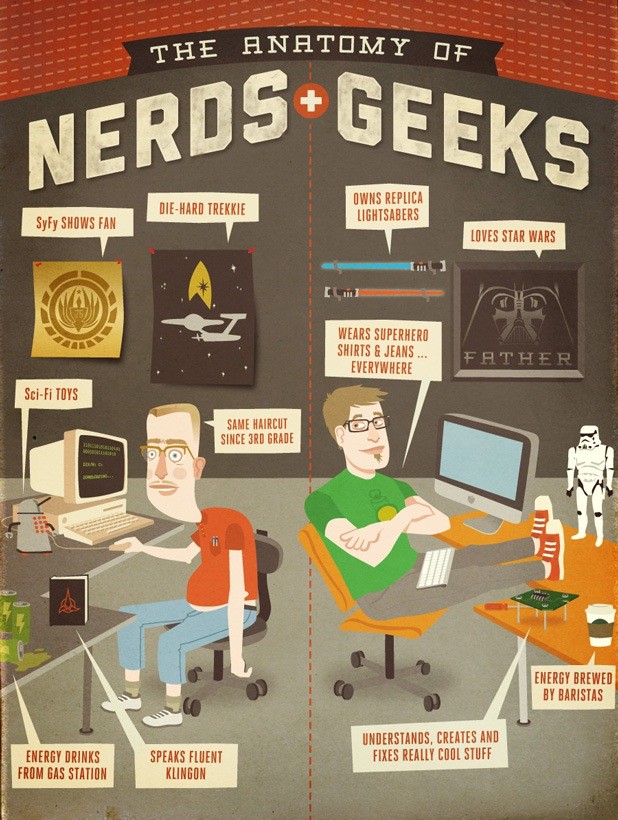
Nerd:

Meaning:

1. a person devoted to intellectual, academic, or technical pursuits or interests

2. a person preoccupied with or devoted to a particular activity or field of interest

3. an unstylish or socially awkward person


Origin:

The first documented appearance of the word nerd is as the name of a creature in Dr. Seuss's book If I Ran the Zoo (1950), in which the narrator Gerald McGrew claims that he would collect "a Nerkle, a Nerd, and a Seersucker too" for his imaginary zoo.

The slang meaning of the term dates to 1951. That year, Newsweek magazine reported on its popular use as a synonym for drip or square in Detroit, Michigan. By the early 1960s, usage of the term had spread throughout the United States, and even as far as Scotland. At some point, the word took on connotations of bookishness and social ineptitude.

An alternate spelling, as nurd or gnurd, also began to appear in the mid-1960s, or early 1970s. Author Philip K. Dick claimed to have coined the "nurd" spelling in 1973, but its first recorded use appeared in a 1965 student publication at Rensselaer Polytechnic Institute. Oral tradition there holds that the word is derived from knurd (drunk spelled backwards), which was used to describe people who studied rather than partied. The term gnurd (spelled with the "g") was in use at the Massachusetts Institute of Technology (MIT) by the year 1965.

According to Online Etymology Dictionary, the word is an alteration of the 1940s term "nert " (meaning "stupid or crazy person"), which is in itself an alteration of "nut" (nutcase).

The term was popularised in the 1970s by its heavy use in the sitcom Happy Days.

Stereotypical nerd appearance, often lampooned in caricatures, can include very large glasses, dental braces, buck teeth, severe acne and pants worn high at the waist.
__________

Geek:

Meaning:

1. a digital-technology expert or enthusiast (a term of pride as self-reference, but often used disparagingly by others).

2. a person who has excessive enthusiasm for and some expertise about a specialised subject or activity:

3. a peculiar person, especially one who is perceived to be overly intellectual, unfashionable, or socially awkward.

4. a carnival performer who performs sensationally morbid or disgusting acts, as biting off the head of a live chicken.


Origin:

The word dates to the sixteenth century when it had the sense of a fool or simpleton. It was generally spelled geck, with variations being common.

Shakespeare uses the word in two of his plays. In Twelfth Night, composed c.1601 and first published in the 1623 First Folio, the character of Malvolio, a servant, uses it in speaking to Olivia, his mistress:

Why haue you suffer’d me to be imprison’d,
Kept in a darke house, visited by the Priest,
And made the most notorious gecke and gull
That ere inuention plaid on? Tell me why?

And in Cymbelene, which was first staged no later than 1611, Sicilius Leonatus uses the word in speaking to Posthumus, his son:

Why did you suffer Iachimo, slight thing of Italy, To taint his nobler hart & brain, with needlesse ielousy, And to become the geeke and scorne o’th’others vilany?

This general sense of a worthless or despised individual persisted through the nineteenth century. In the latter half of that century geek starts appearing in American slang. The Oxford English Dictionary treats the British geck and the American geek as distinct words, presumably because of the difference in pronunciation.

In the early twentieth century, the American term developed a specific meaning in the carnival or circus world, that of a performer who would eat live animals or do other repellant or painful things on stage—or more usually feign doing so.

Another specialised sense, more common than the carnival sense at the time but less well known today, is that of a weak man, especially one prone to various ailments or even hypoondria.

This sub-sense of a weak and sickly man continued well into the 1950s, often in the phrase poor geek. And it is probably from this sub-sense that the sense of an overly bookish, non-athletically inclined student developed. Both the Oxford English Dictionary and Green’s Dictionary of Slang list the first use of this studious sense as being by writer Jack Kerouac in a 1 October 1957 letter to Allen Ginsberg.

The use of geek to mean a studious student would not become common until the 1980s.

Early use of the studious sense was often in the slang of black youth, before it transferred over to university slang in general.

With the advent of the personal computer in the early 1980s, the studious sense of geek became attached to the world of high-tech.

The tech sense started out as a negative one but by the late 1990s geek would be reclaimed and used proudly by computer engineers, coders, and other technical specialists.

__________


__________

Square:

Meaning:

A person who is conventional and old-fashioned, similar to a fuddy-duddy.


Origin:

The English word square dates to the 13th century and derives from the Old French esquarre. By the 1570s, it was in use in reference to someone or something honest or fair. This positive sense is preserved in phrases such as "fair and square", meaning something done in an honest and straightforward manner, and "square deal", meaning an outcome equitable to all sides. 

The sense of square as a derogatory reference to someone conventional or old-fashioned dates to the jazz scene of the 1940s; the first known reference is from 1944. There it applied to someone who failed to appreciate the medium of jazz, or more broadly, someone whose tastes were out of date and out of touch.

A common phrase "be there or be square." implies that a 'square' is the opposite of someone who is a 'round'. This is a play on words, the idea being that a square is someone who is never around, regularly stays home, and avoids social gatherings, especially unchaperoned gatherings where illegal activities might take place, for fear of getting in trouble, thus indicating that if you are not "around", you are square.