Sunday, May 7, 2023

ROYAL STUFF


Some memes and pics from and about the Coronation . . .


__________

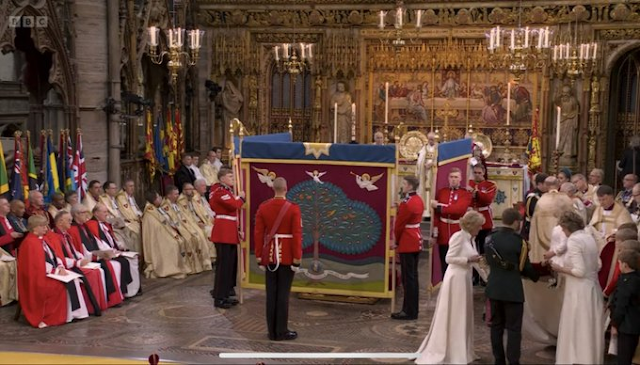
Her work done, the sword passed to the one undoubted King, the lady returns to the lake.
__________

And the Lord spake, saying, "First shalt thou take out the Holy Pin... Once the number three, being the third number, be reached, then lobbest thou thy Holy Hand Grenade of Antioch towards thy foe, who, being naughty in My sight, shall snuff it.


__________

Biggest moment of his life and the barber couldn’t even blend in the fade


__________

Princess Anne ready to defeat napoleon should the need arise.


__________

Let’s never forget, Liz Truss made Penny Mordaunt Leader of the House of Commons to keep her out of the limelight


__________

Sadly King Charles just fell at Becher’s Brook and has had to be destroyed.


__________

The King Charles coronation mug has just been released


__________


__________


__________

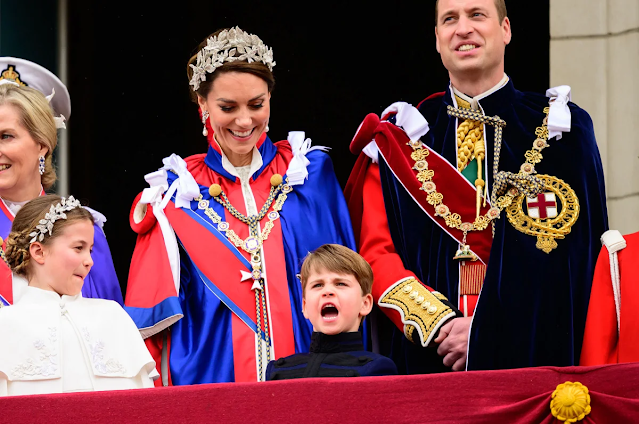
Ok, grandfather Charles will be crowned today, but we all know that today the attention is all for him.
Louis, don't let us down, give us some memes. . .


From the past . . . 


__________


__________

Nice to see they brought two spare Camillas, just in case


__________


__________


__________

The comment, with pics, sent to me by my daughter during the coronation: "Well played Anne"


__________

Eagle-eyed viewers saw what they thoughwas the Grim Reaperduring the oronation broadcast . . .


__________

I don't know much about the Coronation but I do know this is obviously a disguise and 100% they're going to try and steal the crown jewels


__________

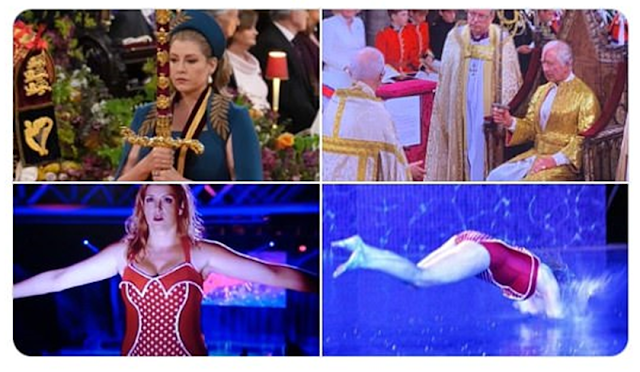
Must not fancy Penny Mordaunt 
Must not...


__________

A moment, if you will, for Penny Mordaunt wielding a big ass sword.


Kudos to Penny Mardaunt, she looks like a gorgeous Marvel character wielding that sword - magnificent

__________


__________

Should it not be that Charles can only move one step in any direction and the other two can only move diagonally?


__________

I didn't realise they had won that many Wimbledons. . . 


__________

“Before you leave the house, look in the mirror and remove one accessory.” 

— Coco Chanel


__________


Archbishop: "Repeat after me. I, Charles of Windsor"
Charles: "I, Charles of Windsor" 
Archbishop: "Prince Of Wales" 
Charles: "Prince Of Wales" 
Archbishop: "Accept this crown as King" 
Charles: "Take thee Rachel-"

__________


__________


__________


__________


__________


Saturday, May 6, 2023

THOUGHT FOR THE DAY


ORIGINS


---------oOo---------

Byter Sue P sent me an email:
Hi Otto!

What does it mean if you are salty with someone and where did that phrase originate?

Does it have anything to do with "salties" salt water crocodiles being a bit snappy?

Regards, Sue
Thanks for the email, Sue, some comments about saltiness below, plus more.

---------oOo---------

According to Dictionary.com, the meaning of salty can be various:
1. tasting of or containing salt; saline.
2. piquant; sharp; witty.
3. racy or coarse:
    salty humor.
4. of the sea, sailing, or life at sea:
    salty tales of adventure on the high seas.
5. Slang. (especially of a sailor) toughened by experience:
    proud and salty Marines.
6. Slang. angry, upset, or hostile, especially due to embarrassment or failure:
    He gets all salty whenever he loses.

The comments below address the slang meaning of irritated, angry, or resentful, especially as a result of losing or being slighted. Apparently Gen Z uses it as a term for jealousy.

---------oOo---------


“Salty”:
  • The original sense of something containing salt, often used of water, is first recorded in the 1440 Latin-English dictionary Promptorium Parvulorum as a translation of the Latin salsus, which means both "salty" (tasting of salt) and "salted" (covered or preserved in salt).
  • Although it was often used of water, the term ‘salty’ was not applied to the ocean until several hundred years later. Salty sea appeared as a fixed phrase in the 1800s, and by the late 1800s, salty was being applied to various aspects of naval life and culture. These were the days of sailing ships with sailors coming to be referred to as ‘salts’, both from exposure to the brine (especially in storms) and from being covered in dried salt as a result of the exposure.
  • One noted aspect of sailors was their language, soon salty came to refer to racy or crude language. One newspaper reported in 1879 that a Sea Captain had denounced a physician in printed handbills and that salty language had been used.
  • Thanks to sailors' propensity to spout off profanely and suddenly, in African American swing situations ‘salty’ came to then refer to explosive anger. An early example is in the phrase jumping salty, meaning "to get angry easily," appearing in the gossip columns of black newspapers:  
WE'D LIKE TO KNOW: Why ... Phil Marshall "jumps salty" on Jamaica fellows.... (New York Age, 12 Dec. 1936) Jumping Salty was even the name of a 1936 song by Ricky Simpson.
  • It continued in primarily African American use through the 20th century:
"I don't know why, but he's changed an awful lot lately—come jumping salty with me when I was back here. Next time he buzzes into me, I'm going to try his head. He's a big skipper all right—but he aint [sic] too big to fall."

— William H. Jones, The Triangle's End, 1954
  • The jump has dropped away, but the "angry" salty remains.
---------oOo---------

Some more salt . . .

---------oOo---------


“Worth his salt”:

The phrase originated with the ancient Romans, who valued salt highly. Over time, salt has often been associated with good things, because of its health benefits and great value. Ancient Roman soldiers were paid with special money that could be used to purchase salt. This special money was called salarium, from which we get our modern word “salary."

---------oOo---------


“Take it with a grain of salt”:
  • The phrase is typically said "with a pinch of salt" in British English and said "with a grain of salt" in American English.
  • The origins of the phrase aren’t clear. One theory is that it originated in ancient Rome in 77 A.D. from Pliny the Elder. It is believed that he used the phrase when translating an antidote for poison, saying to take the antidote with a grain of salt. That could be a reference to the fact that food is more easily swallowed if taken with a small amount of salt. It should be just a grain because too much salt is in itself poisonous.
  • The meaning that truth may require moderation by the notional application of 'a grain of salt' entered the language much later, influenced by classical scholars' study of Ancient Greek texts like the works of Pliny. The phrase has been in use in English in this sense since the 17th century; for example, in the English religious commentator John Trapp's Commentary on the Old and New Testaments, 1647: "This is to be taken with a grain of salt." What Trapp meant by that citation isn't entirely clear but it is possible that he wasn't intending to convey the modern day meaning of skepticism.
  • The expression didn't emerge again in print for a couple of centuries, in the early 20th century and in America.
  • The 'pinch of salt' variant is more common in the UK, the earliest printed citation being F. R. Cowell's Cicero & the Roman Republic, 1948:
"A more critical spirit slowly developed, so that Cicero and his friends took more than the proverbial pinch of salt before swallowing everything written by these earlier authors."
---------oOo---------


“Salt of the earth”:

You are the salt of the earth, but if the salt has lost its
flavor, with what will it be salted? It is then good for nothing,
but to be cast out and trodden under the feet of men.
— Matthew 5:13, World English Bible

During Jesus’ ‘Sermon on the Mount’, he told the fishermen, shepherds and workers, “You are the salt of the earth.” Salt was very valuable then, so Jesus was literally calling them worthy.

Another interpretation is that at that time, salt was most used as a preservative. Hence the reference to salt is as a preservative, therefore seeing the duty of the disciples as preserving the purity of the world.

---------oOo---------


“Rub salt into the wound”:

During the earlier centuries, when England was establishing its navy, most sailors were forced into service. While at sea, punishment was often lashes with a cat'o'nine tails. These whippings would almost always break the skin, and salt was rubbed into the wound to prevent infection, although it also made the wounds more painful.

---------oOo---------
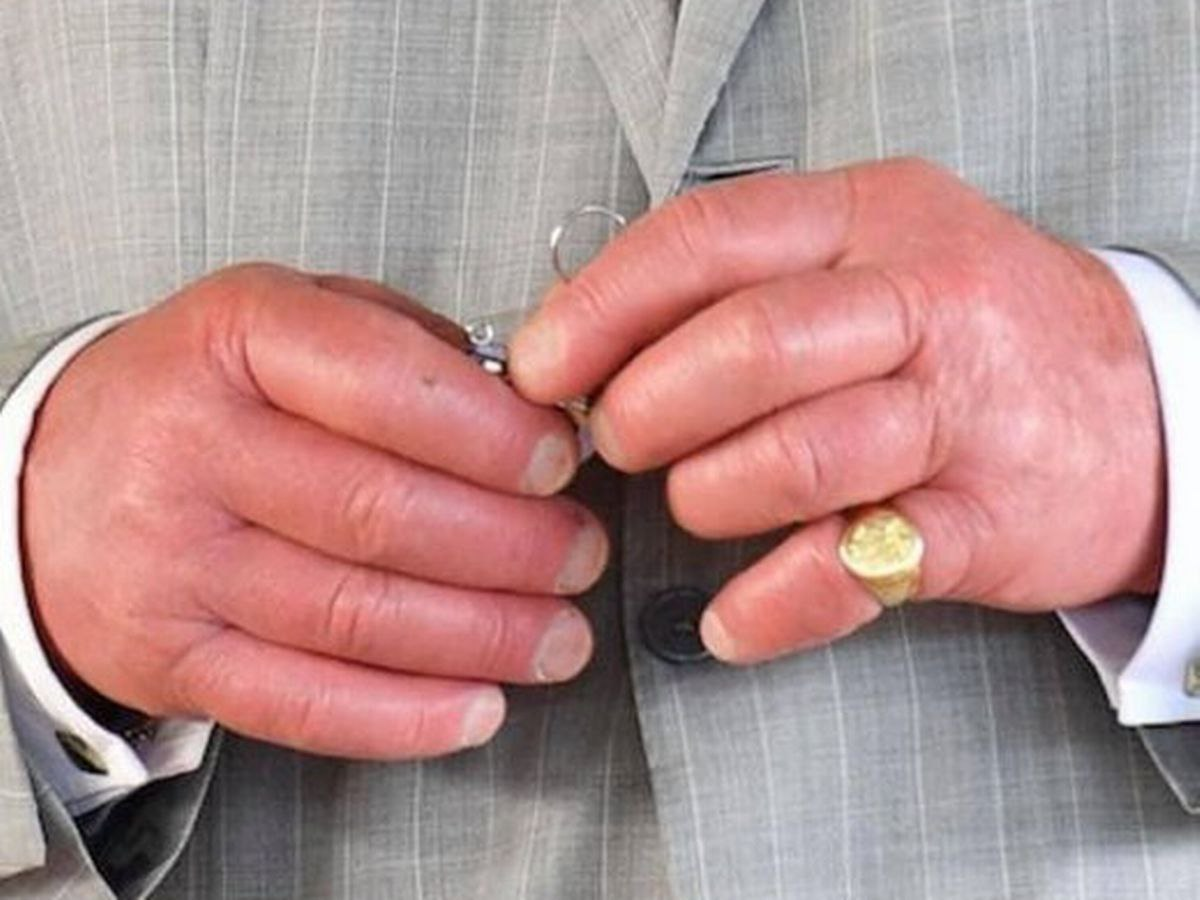
Needs some more salt . . . 


Friday, May 5, 2023

QUOTE FOR THE DAY


SOME CORONATION FACTS – CHARLES AND OTHERS


---------oOo---------

The former Prince Charles became heir apparent (next in line to the throne) at the age of three years old in 1952. Charles became king upon his mother's death on 8 September 2022. At the age of 73, he became the oldest person to accede to the British throne, after having been the longest-serving heir apparent and Prince of Wales in British history.

With his parents and sister Anne, October 1957

---------oOo---------

Charles was the first heir to see his mother crowned as Sovereign.

4-year-old Prince Charles apparently bored out of his mind at his mother's coronation in 1953, with his grandmother, the Queen Mother (left), and his aunt, Princess Margaret (right)

---------oOo---------

As Prince of Wales, Charles was given the title, 'Keeper of the Cows', by the Masai in Tanzania in 2011 to recognise his work as a farmer. The awarding of the title is considered a great honour as in Maasai culture, the cow is king. The Maasai believe they own every cow in the world - and had been particularly impressed to hear that Charles keeps over 800 cows on his land in the UK.


---------oOo---------

Westminster Abbey has been the setting for every Coronation since 1066. Before the Abbey was built, Coronations were carried out wherever was convenient, taking place in Bath, Oxford and Canterbury.

The act of crowning takes place in the Coronation Chair, facing the High Altar, on the Cosmati mosaic pavement.

The Coronation Chair at the 1911 coronation

The chair was made by order of Edward I at the turn of the fourteenth century to house the Stone of Scone (aka Stone of Destiny), which he seized and brought back from Scotland in 1296. The oak piece of furniture was specially constructed so that the Stone of Scone was enclosed within it. However, over time the wood has eroded and the stone is now more exposed.

The Stone of Scone normally resides in Edinburgh Castle after being returned to Scotland in 1996. The stone has been transported to London and will be reunited with the chair especially for Charles’s big day before heading back up north.

The Stone of Scone in the Coronation Chair at Westminster Abbey (photo c. 1875 – c. 1885). In 1914, the stone was broken in half by a suffragette bombing.

Elizabeth seated on the Coronation Chair, wearing the St. Edward Crown and carrying the Sovereign’s Sceptre and Rod.

---------oOo---------

For hundreds of years, the monarch stayed at the Tower of London two nights before the coronation. The day before the coronation, the monarch then processed through London to Westminster. This last happened in 1661 with Charles II.

Charles 11, coronation portrait

---------oOo---------

For the first time since 1937, the coronation of King Charles III will include the crowing of a Queen Consort.

Queen Elizabeth, wife of King George VI, was the last Queen Consort to be crowned.

George VI and Elizabeth in their coronation robes, 1937

---------oOo---------

Also known as 'The Wedding Ring of England', the Sovereign's Ring has featured in every coronation since King William IV in 1831, when it was made. At the coronation of Queen Victoria, her fingers were so small that the ring could not be reduced far enough in size and an alternative was created.


During the coronation ceremony the ring is placed on the fourth finger of the sovereign by the archbishop, as a symbol of 'kingly dignity'. Since the thirteenth century it has been traditional to include a ruby as the principal stone in the ring. The presentation of the ring forms part of the investiture of the coronation, which is preceded by the anointing with holy oil, and is followed by the crowning itself.

---------oOo---------

The original 14th century order of service, Liber Regalis, was written in Latin and descends directly from that of King Edgar at Bath in 973 CE. The Liber Regalis has provided the basis for every Coronation since. The Coronation Oath and the Accession Declaration Oath are the only aspects of the ceremony that are required by law.

The Liber Regalis (Latin for "Royal Book") is an English medieval illuminated manuscript which was, most likely, compiled in 1382 to provide details for the coronation of England's new queen, Anne of Bohemia. The Liber Regalis contains the ordo (order) for the following events: the coronation of a king, a king and queen and a queen alone, and details regarding the funeral of a king; each liturgy opens with a full-page illustration depicting the event.

The manuscript provided the order of service for all subsequent coronations up to, and including, that of Elizabeth I. For the coronation of James I the liturgy was translated into English. Nevertheless, with occasional adaptations to suit the political and religious circumstances of the time, the Liber Regalis remained the basis for all later coronation liturgies. The manuscript belongs to Westminster Abbey.

The illustration shows the coronation of Richard II and his first wife Anne of Bohemia.


---------oOo---------

The first photograph of a coronation was taken during that of George V in 1911 by Sir Benjamin Stone, an MP and amateur photographer.


---------oOo---------

More than 6,000 men and women of the UK's Armed Forces - and nearly 400 Armed Forces personnel from at least 35 Commonwealth countries - will take part in the Coronation of King Charles III and Queen Camilla.

---------oOo---------

Coronation Chicken was invented for the guests who were to be entertained, following Queen Elizabeth II's Coronation. The food had to be prepared in advance, and Florist Constance Spry proposed a recipe of cold chicken in a curry cream sauce with a well-seasoned dressed salad of rice, green peas and mixed herbs. Constance Spry's recipe won the approval of the Minister of Works and has since been known as Coronation Chicken.

The original Coronation Chicken

---------oOo---------