Saturday, April 6, 2024

SONG SPOT / PHRASE ORIGIN

-----------ooOoo-----------

Cry Me a River

-----------ooOoo-----------

This started off as an Origin of Words and Phrases, with me wondering where the phrase had come from, but ended up as a Song Spot as well.

-----------ooOoo-----------

Meaning:

A sarcastic response to someone who is expressing sadness or complaining and for whom you have no sympathy.

-----------ooOoo-----------

Origin:

"Cry Me a River" is a popular American torch song, written by Arthur Hamilton, first published in 1953 and made famous in 1955 with the version by Julie London.

-----------ooOoo-----------

Song versions:

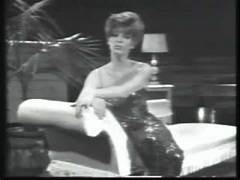
The song was originally written for jazz great Ella Fitzgerald but the version that is way out in front as Number 1 is that by Julie London. Watching her sing it is feeling that she really has been wronged, that she is singing from personal experience, making other versions only performances. Indeed, the Julie London version is now added to my list of hurt/payback songs, along with:
Alanis Morisette: You Oughta Know
Bob Dylan: Positively 4th Street
Carly Simon: You’re So Vain
Adele: Rolling in the Deep
Kenny Rogers: Coward of the County
The Chicks (formerly The Dixie Chicks): Goodbye Earl
Vicki Lawrence: The Night the Lights went out in Georgia


Video links:

Julie London:

Ella Fitzgerald:

Michael Buble:

Barbara Streisand:

Diana Krall:

I am aware that there is a version by Justin Timberlake, it’s not one I like:

-----------ooOoo-----------

Lyrics:

Now you say you're lonely
You cried the long night through
Well, you can cry me a river, cry me a river
I cried a river over you
Now you say you're sorry
For being so untrue
Well, you can cry me a river, cry me a river
I cried, cried, cried a river over you

You drove me, nearly drove me, out of my head
While you never shed a tear
Remember, I remember, all that you said
You told me love was too plebeian
Told me you were through with me and

Now you say, you say you love me
Well, just to prove you do
Come on and cry me a river, cry me a river
Cause I cried a river over you

You drove me, nearly drove me, out of my head
While you never shed a tear
Remember, remember, all that you said
Told me love was too plebeian

Told me you were through with me and
Now, now you say you love me
Well, just to prove you do
Come on and cry, cry, cry me a river, cry me a river
Cause I cried a river over you

-----------ooOoo-----------

Comments and notes:

Arthur Hamilton, who wrote the song, later said: "I had never heard the phrase. I just liked the combination of words... Instead of 'Eat your heart out' or 'I'll get even with you,' it sounded like a good, smart retort to somebody who had hurt your feelings or broken your heart." He was initially concerned that listeners would hear a reference to the Crimea, rather than "..cry me a...", but said that "..sitting down and playing the melody and coming up with lyrics made it a nonissue."

A bluesy jazz ballad, "Cry Me a River" was originally written for Ella Fitzgerald to sing in the 1920s-set film Pete Kelly's Blues (released 1955). According to Hamilton, he and Julie London had been high school classmates, and she contacted him on behalf of her husband, Jack Webb (of Dragnet fame), who was the film's director and was looking for new songs for its soundtrack.


Julie and Jack Webb with children Stacey and Lisa, 1953. Married 1947, divorced 1954.

After the song was dropped from the film, Fitzgerald first released her version on Clap Hands, Here Comes Charlie! in 1961. The song was also offered to Peggy King, but Columbia Records A&R chief Mitch Miller objected to the word "plebeian" in the lyric. (It means common, from a commoner in ancient Rome).

The song's first release was by actress and singer Julie London on Liberty Records in 1955, backed by Barney Kessel on guitar and Ray Leatherwood on bass. London had been urged to record the song by Bobby Troup, whom she would later marry after her divorce from Webb. A performance of the song by London in the 1956 film The Girl Can't Help It, helped to make it a bestseller (reaching no. 9 on US and no. 22 on the UK Singles Chart). It became a gold record, and in 2016, it was inducted by the Library of Congress in the National Recording Registry. In 2001, the Julie London version of "Cry Me a River" was inducted into the Grammy Hall of Fame.


Friday, April 5, 2024

THOUGHT FOR THE DAY


THE DISTANCE TRAVELED

-----------ooOoo-----------

The following was sent to me by friend and colleague Leo M.

Thanks Leo.

Leo sent it as a video. I have posted below both the link to the video and a transcript.

-----------ooOoo-----------

Link:


-----------ooOoo-----------

They call us ”The Elderly”

We were born in the 40-50-60’s.

We grew up in the 50-60-70's.

We studied in the 60-70-80's.

We were dating in the 70-80-90's.

We got married and discovered the world in the 70-80-90's.

We venture into the 80-90’s.

We stabilise in the 2000’s.

We got wiser in the 2010’s.

And we are going firmly through and beyond 2020.

Turns out we've lived through EIGHT different decades...

TWO different centuries...

TWO different millennia...

We have gone from the telephone with an operator for long-distance calls to video calls to anywhere in the world.

We have gone from slides to YouTube, from vinyl records to online music, from handwritten letters to email and Whats App.

From live matches on the radio, to black and white TV, colour TV and then to 3D HD TV.

We went to the Video store and now we watch Netflix.

We got to know the first computers, punch cards, floppy disks and now we have gigabytes and megabytes on our smartphones.

We wore shorts throughout our childhood and then long trousers, Oxfords, flares, shell suits & blue jeans.

We dodged infantile paralysis, meningitis, polio, tuberculosis, swine flu and now COVID-19.

We rode skates, tricycles, bicycles, mopeds, petrol or diesel cars and now we drive hybrids or electric.

Yes, we've been through a lot but what a great life we've had!

They could describe us as “exennials”; people who were born in that world of the fifties, who had an analog childhood and a digital adulthood.

We've kind of “Seen-It-All”!

Our generation has literally lived through and witnessed more than any other in every dimension of life.

It is our generation that has literally adapted to “CHANGE”.

A big round of applause to all the members of a very special generation, which will be UNIQUE.

- Author unknown

-----------ooOoo-----------

One person on the internet added a thought:

And…we knew which gender we were.


Thursday, April 4, 2024

THOUGHT FOR THE DAY


FUNNY FRIDAY

---- 😊😊😊 -----


Hello Byters.

I you're wondring why I post Funny Friday on Thursday:
a. Subscribers get it in their emails on Friday.
b. If I were to post on Friday, it has to be affter midnight and before about 9.00am for it to go out by email that day.

A mixed collection of humour today, people.

Enjoy.

As always, a caution that there is some risque content ahead.

---- 😊😊😊 -----

SOME HUMOUR:
__________

A wife is frying eggs for her husband in the morning

Suddenly the husband appears behind the wife's back and says:

"Careful, CAREFUL, put more fat in the pan! You're frying too many at a time. TOO MANY! Flip them! FLIP THEM! Come on!

Put more fat in there. Oh dear lord. How are you gonna make space for the fat now, look, they're sticking to the pan! Careful!

Careful now! You never listen to me when I cook! NEVER! Flip them over already. HURRY! ARE YOU CRAZY? Take it easy! EASY! Nooo, don't forget the salt. Put salt on them, SALT!"

The wife stares at her husband:

"What's wrong with you? You think I can't fry a few eggs?"

The husband answers calmly:

"I just wanted to show you what it feels like when I'm driving."
__________

Our teacher asked what my favourite animal was and I said, “Fried Chicken.”

She said I wasn’t funny but she couldn’t have been right because everyone else laughed.

My parents told me to always tell the truth. I did. Fried chicken is my favourite animal.

I told my dad what happened and he said that she was probably a member of PETA. He said they love animals very much.

I do too, especially chicken, pork and beef.

Anyway, my teacher sent me to the principal’s office. I told him what happened and he laughed to. Then he told me not to do it again.

The next day in class the teacher asked me what my favourite LIVE animal was. I told her it was chicken. She asked me why, so I told her it was because you could make them into fried chicken.

She sent me back to the principal’s office. He laughed and told me not to do it again.

I don’t understand. My parents taught me to be honest but my teacher doesn’t like it when I am.

Today she asked me what famous military person I admired the most and I said, “Colonel Saunders”.

Guess where I am right now….
__________

An older, white haired man walked into a jewellery store one Friday evening with a beautiful young gal at his side. He told the jeweller he was looking for a special ring for his girlfriend.

The jeweller looked through his stock and brought out a $5,000 ring and showed it to him.

The old man said, "I don't think you understand, I want something very special."

At that statement, the jeweller went to his special stock and brought another ring over. "Here's a stunning ring at only $40,000", the jeweller said.

The young lady's eyes sparkled and her whole body trembled with excitement.

The old man seeing this said, "We'll take it."

The jeweller asked how payment would be made and the old man stated, by cheque. "I know you need to make sure my cheque is good, so I'll write it now and you can call the bank Monday to verify the funds and I'll pick the ring up Monday afternoon," he said.

Monday morning, a very teed-off jeweller phoned the old man. "There's no money in that account."

"I know", said the old man, "but can you imagine the weekend I had?"
____________

One day in Czarist Russia, a poor old man and his very young daughter were on their way to town. They put all of their possessions in the back of a donkey driven wagon in hopes of selling some of them to make money. As they were travelling, up the road they saw a small group of Cossaks. They braced themselves expecting the worst. Inevitably, the Cossaks ride up to the wagon and begin harassing the old man his daughter. Eventually, the Cossacks knock the old man and his daughter off the cart and ride off with the donkey and wagon.

The old man sits on the side of the road and begins sobbing...

Daughter asks, "Papa, papa, what's the matter?"

To which the old man responds,"Don't you see? They've taken everything we had!"

"Not everything...", The daughter responds, to which she takes out a small rolled up cloth, which she unrolls to reveal some jewellry and gems.

The old man's eyes widen, "How did you manage to hide that?"

She answered, "When I saw them further up the road, I took them, rolled them up in this cloth and hid them in my private place."

To which the old man starts sobbing again...

"Papa, what's wrong now?"

"Oh, if only your sainted mother were still alive...we could have saved the whole wagon!"

---- 😊😊😊 -----


Joe was a successful lawyer, but as he got older he was increasingly hampered by incredible headaches. When his career and love life started to suffer, he sought medical help.

After being referred from one specialist to another, he finally came across an old country doctor who solved the problem. "The good news is I can cure your headaches... the bad news is that it will require castration. You have a very rare condition which causes your testicles to press up against the base of your spine and the pressure creates one hell of a headache. The only way to relieve the pressure is to remove the testicles."

Joe was shocked and depressed. He wondered if he had anything to live for. He couldn't concentrate long enough to answer, but decided he had no choice but to go under the knife. When he left the hospital he was without a headache for the first time in 20 years, but he felt like he was missing an important part of himself.

As he walked down the street, he realised that he felt like a different person. He could make a new beginning and live a new life. He saw a men's clothing store and thought "That's what I need .. a new suit." He entered the shop and told the salesman "I'd like a new suit." The elderly tailor eyed him briefly and said, "Let's see... size 42 long." Joe laughed, "That's right, how did you know?" "Been in business 60 years!" Joe tried on the suit. It fit perfectly.

As Joe admired himself in the mirror, the salesman asked "How about a new shirt?" Joe thought for a moment and then said "Sure..." The salesman eyed Joe and said "Let's see...34 sleeves and...16 and a half neck." Joe was suprised, "That's right, how did you know?" "Been in the business 60 years" Joe tried on the shirt and it fit perfectly. As Joe adjusted the collar in the mirror, the salesman asked "How about some new shoes?" Joe was on a roll and said "Sure!" The salesman eyed Joe's feet and said "Let's see... 10-1/2...E." Joe said, astonished, "That's right, how did you know?" "Been in business 60 years!" Joe tried on the shoes and they fit perfectly. Joe walked comfortably around the shop and the salesman asked "How about some new underwear?" Joe thought for a second and said, "Sure!"

The salesman stepped back, eyed Joe's waist and said "Let's see... size 36." Joe laughed, "Ah ha! I got you. I've worn a size 34 since I was 18 years old." The salesman shook his head. "You can't wear a size 34, it will press your testicles up against the base of your spine and give you one hell of a headache."
__________

A young jockey and his stable lass girlfriend make the decision to get married.

After the wedding and reception, the couple go to a hotel to check in.

The lady behind the desk asks ‘Would you like the bridal suite?'

'No thanks,’ says the jockey ‘I'll just hold her ears till she gets the hang of it!'

---- 😊😊😊 -----


LIMERICK OF THE WEEK:

A lady with features cherubic
Was famed for her area pubic.
When they asked her its size
She replied in surprise,
"Are you speaking of square feet, or cubic?"

---- 😊😊😊 -----


---- 😊😊😊 -----

RELIGION SPOT

Husband comes with a freshly baked pie to his wife

Here you go my lovely wife, a pie just for you

Thanks.... but... how did you make this?

I baked it. Just for you

But we don't have an oven?

(with a pious look on his face) God helped me bake it

Oh, come on Joseph!!! Not with this again! We've been through this a hundred times!!!

WELL, YOU REALISE HOW THIS SOUNDS, MARY!

---- 😊😊😊 -----


CORN CORNER:
__________

I ordered a chicken and an egg from Amazon
I'll let you know.
__________

Do you know why in France they only eat one egg for breakfast?
Because in France one egg is un oeuf
__________

I lost my glasses and fell down and dark wet hole
I couldn't see that well
__________

“Head, shoulders, knees and toes,” used to be a fun little kids’ song.
Now it’s a list of things that hurt.


Wednesday, April 3, 2024

QUOTE FOR THE DAY


BADASS OF THE MONTH

---------oOo---------

Badass

1. A belligerent or mean person; a person with an unpleasantly extreme appearance, attitudes, or behavior.

2. A person considered impressive due to courage, skill, and/or toughness.

- Wiktionary

---------oOo---------

Nancy Wake

Pictured 1945

Wake's intelligence and skill helped her evade capture by the Germans many times. This led to her becoming one of the Gestapo's most wanted people. In fact, Wake's ability to elude capture led to the Gestapo nicknaming her the "White Mouse." It seemed each time they had her cornered and believed she would be captured, she found a way to escape

As WWII’s most decorated woman, Nancy Wake was at the top of the Gestapo's most wanted list. Trained in hand-to-hand combat, espionage, sabotage, and able to drink her male counterparts under the table, she was known as one of the most fearsome resistance fighters of WWII. At one point during the war, she led 7,000 guerilla fighters into a raid of a German gun factory and even killed an SS sentry with her bare hands. One of her comrades described her as “most feminine woman I know, until the fighting starts. Then, she is like five men.”

Some facts:

Nancy Wake, (1912 – 2011) was a nurse and journalist who joined the French Resistance and later the Special Operations Executive (SOE) during World War II, and briefly pursued a post-war career as an intelligence officer in the Air Ministry. The official historian of the SOE, M. R. D. Foot, said that "her irrepressible, infectious, high spirits were a joy to everyone who worked with her". Many stories about her World War II activities come from her autobiography, The White Mouse, and are not verifiable from other sources.

Born in Wellington, New Zealand, Wake grew up in Sydney, New South Wales, Australia. By the 1930s, Wake was living in Marseille with her French industrialist husband, Henri Fiocca, when the war broke out. After the fall of France to Nazi Germany in 1940, Wake became a courier for the Pat O'Leary escape network led by Ian Garrow and, later, Albert Guérisse. As a member of an escape network, helping Allied airmen evade capture by the Germans and escape to neutral Spain. In 1943, when the Germans became aware of her, she escaped to Spain and then went to the United Kingdom. Her husband was captured and executed.

Nancy Wake and husband, Henri Edmond Fiocca

After reaching Britain, Wake joined the Special Operations Executive (SOE) under the code name "Hélène". In 1944, Wake and British Major John Farmer parachuted into central France. Their mission was to locate and organize groups of resistance fighters. They established places to store arms and ammunition provided by regular parachute drops. Wake and Farmer also established wireless communication with Britain. Their objective was to weaken the German army before the D-Day invasion. There were over 21,000 German troops where they were operating. Initially, they had 3,000 resistance fighters with them, but Wake was able to recruit more than double that number. She led the resistance fighters in guerilla warfare and caused German troops and facilities significant damage. She was able to obtain and distribute weapons to resistance fighters and establish even more radio communication outposts.

One of Wake's missions involved her riding a bicycle over 500 kilometers/300 miles through numerous German checkpoints to replace codes a radio operator had been forced to destroy during a German raid. Without these codes, Wake and the resistance fighters would not be able to obtain orders, weapons, or supplies. She spent over 70 hours cycling through mountainous terrain in order to complete her mission.

The Germans discovered where Wake and her resistance fighters were based and made plans to destroy them. In June of 1944, over 21,000 German troops surrounded the town where they were staying. It was one of the most hard-fought battles Wake had ever experienced; the Germans used aircraft, mobile guns, mortars, and artillery. Eventually, Wake and most of the resistance fighters were able to escape. When it was over, the Germans had lost over 1,350 troops, and the resistance had lost 100 fighters.

Wake claimed that she participated in a raid (not confirmed by other sources) that destroyed the Gestapo headquarters in Montluçon, killing 38 Germans. At one point Wake said she discovered that the men were using three girls as prostitutes and mistreating them. She coerced the maquis to release the women, to whom she provided a wash and new clothes. Nancy Wake set two of the girls free, but she suspected that a third was a German spy. After interrogating and exposing her, Wake ordered the resistance group to shoot the informer. They did not have the heart to kill her in cold blood, but when Wake insisted that she would perform the execution, they capitulated. Nancy Wake claimed that the spy girl spat and stripped naked in front of her before facing the firing squad. Wake showed no regrets for the execution. Wake also said that she killed an SS sentry with her bare hands to prevent him from raising the alarm during a raid. During a 1990s television interview, when asked what had happened to the sentry who spotted her, Wake simply drew her finger across her throat. "They'd taught this judo-chop stuff with the flat of the hand at SOE, and I practised away at it. But this was the only time I used it – whack – and it killed him all right. I was really surprised."

Nancy Wake during covert operations

Wake describing a mission to French Resistance fighters

Immediately after the war, Wake was awarded the George Medal,[34] the United States Medal of Freedom, the Médaille de la Résistance, and thrice, the Croix de Guerre. She worked for the intelligence department at the British Air Ministry, attached to embassies in Paris and Prague.

Wake stood as a Liberal candidate in the 1949 Australian federal election for the Sydney seat of Barton, running against Dr. Herbert Evatt, then deputy prime minister, attorney general, and minister for external affairs in the Ben Chifley Labor government. While Chifley lost government to Robert Menzies, Wake recorded a 13 percent swing against Evatt, with Evatt retaining the seat with 53.2 per cent of the vote on a two-party preferred basis. Wake ran against Evatt again at the 1951 federal election. By this time, Evatt was deputy leader of the opposition. The result was extremely close; however, Evatt retained the seat with a margin of fewer than 250 votes. Evatt slightly increased his margin at subsequent elections before relocating to the safer seat of Hunter by 1958.

In 1985, Wake published her autobiography, The White Mouse. Later, after 40 years of marriage, her second husband John Forward died at Port Macquarie on 19 August 1997. The couple had no children. She sold her medals to fund herself, saying, "There was no point in keeping them, I'll probably go to hell and they'd melt anyway." Her medals are now on display at the Australian War Memorial.

In 2001, Wake left Australia and emigrated to London. Wake died on 7 August 2011, aged 98, at Kingston Hospital after being admitted with a chest infection. Her ashes were scattered in France at her request.

Nancy Wake in her final years.


Tuesday, April 2, 2024

THOUGHT FOR THE DAY


PHOTOS FROM THE PAST

--------oOo-------


A boy and his toy, 1930. Whether it really drove or not, this is back when kids actually played outside. In the 1930s, there were no iPads to distract children, just the outdoors and fun toys like this.
__________


An intense image of a Native American father and daughter in traditional dress, 1905 standing with a stern yet confident look. Usually, posing for these photos could take a lot of time which could give some insight into why they aren't smiling.
__________


This American soldier was caught on camera kissing the actress Marlene Dietrich in 1945. He had just returned from World War II on a ship, and she was waiting at the dock when they happened to pull in. In a moment of excitement, the other soldiers lifted her to the ship's porthole, and they shared a brief smooch.
__________


September 11, 2001, and this little boy was posing for an innocent photo taken by his mother At that exact moment, they caught the World Trade Center being hit in the background. People hadn't yet realised the extent of what was happening and how it would change the course of their lives.
__________


In 1966, things were difficult for women in America. Gender equality was severely lacking, and this one woman wanted to prove that a person's gender doesn't matter. Bobbi Gibb loved running and wanted to join the Boston Marathon, but women were not allowed to enter the race. So she decided to listen to her heart and showed up regardless of what anyone said. Bobbi ran the entire marathon without a number. She continued despite the other marathon runners, who were all men, trying to stop her. She became an inspiration to women around the country, becoming the first woman to run a marathon in US history. Today, there is women’s marathon in the Olympics.
__________


For some historical context, most African Americans were out of work in 1937 when the above photograph, in Harlem, was taken.. America was still in the midst of the Great Depression, and discrimination, racism, and segregation were strong as ever. Unfortunately, the odds were stacked against this man, but he persevered and rose above it all. That's why this accomplishment meant the world to him. This man was able to open and own his own grocery and delicatessen store. Despite all the struggles, he had a well-deserved moment of pride.
__________


In the early 1900s, air conditioning was very uncommon. So one hot summer night, this family living in New York had to improvise. Usually, it would get so hot inside it would become unbearable. Therefore, it was common for kids or even the entire family to sleep on their buildings' fire escapes or roofs. Even though it was cooler outside than in their apartments, getting comfortable was still extremely difficult.
__________


Well into the 1980s, women wore bikinis to go swimming and tan on the beach; it wasn't anything out of the ordinary. But one lady, in particular, had an issue with that. So on a sunny day in Miami Beach, Florida, this woman decided she had to go down to the beach and make everyone, especially the young ladies there, aware of their fate. She would be even more shcked at beachwear today.
__________


This man was known to be John Smith, a Chippewa Indian who lived for an incredibly long time. Allegedly he resided in the woods of Minnesota for over a century. He was rep
ortedly a whopping one hundred and thirty-seven years old the year that he passed away.
__________


Shirley Slade was chosen for a group of about one thousand female pilots called the Women Airforce Service Pilots or WASPs during WWII. This image was taken in 1943 when she was only twenty-two years young. It captures her fierce face, flying helmet, goggles, and gloves all on, ready for takeoff.


Monday, April 1, 2024

THOUGHT FOR THE DAY


POETRY SPOT

 -----------ooOoo-----------


‘Cocky’ is Australian slang for a small-scale farmer; (in later use often applied to) a substantial landowner or to the rural interest generally. In Australia there are a number of cockies including cow cockies, cane cockies and wheat cockies. Cocky arose in the 1870s and is an abbreviation of cockatoo farmer.

The following poem applies not only to Australia but world wide.

-----------ooOoo-----------

Cocky

- Marc Glasby

Like my father before me
I work on the land
and I help feed a nation from sunlight and sand

I've seen the bush burn
and I've seen the land flood
So I give it my all with my sweat and my blood

I've seen the world change
as I've seen the sun rise
and I've seen my stock die right in front of my eyes

I've watched while my neighbours
walk away from their land
and the city folk care but they don't understand

Six generations
have toiled on this earth
the land of our dreams, the land of our birth

The land that we work
is what makes us whole
To just walk away is like losing our soul

My son's in the city
there's no future here
and my wife works in town for there's more bills to clear

I've seen how our town
has started to die
No bank and no doctor, not hard to see why

Pollies fly in
and then out the same day
Like sheep or like donkeys they bleat and they bray

When election time comes
they promise the earth
but their promises have neither substance or worth

So when the last farmer
walks off of the land
When you import your food, maybe you'll understand

When all we have now
is taken away
You'd better believe that you're all going to pay

                      February 2000 Townsville


Sunday, March 31, 2024

QUOTE FOR THE DAY


5 X 5: OLD TV SHOWS

-----------ooOoo-----------

5 facts about 5 past TV shows. . . 

-----------ooOoo-----------

M*A*S*H

__________

Some of the cast served in the military:
Alda (Hawkeye Pierce) was in the Army Reserve for six months in Korea.
Jamie Farr (Max Klinger) enlisted, and was stationed in Japan when Red Skelton requested his services on his USO Tour through Korea.
Wayne Rogers (Trapper John McIntyre) joined the U.S. Navy for a time as a ship navigator.
Mike Farrell (B.J. Hunnicut) served in the U.S. Marine Corps.
__________

The episode “Abyssinia, Henry” ends on one of the saddest moments that I have ever seen on TV. Colonel Henry Blake having received an honorable discharge, leaves for home. Radar enters the operating theatre ungowned and without a mask. Hawk yells to him to put on a mask. A stunned and distraught Radar tells everyone that he has received a message: Colonel Blake’s plane was shot down over the Sea of Japan, there were no survivors.

See the scene by clicking on:

Until M*A*S*H, whenever an actor left a television show, they’d be written off in a way that could be temporary. M*A*S*H changed that.

The main actors were shown the final page of the script, with Colonel Blake’s death, just before filming the scene. All the extras, however, had genuine shock when his death was announced.
__________

M*A*S*H ran for 11 years, 11 seasons (1972 – 1983), telling the story of Army doctors and nurses dealing with the Korean War. The actual war lasted three years, one month, and two days,
_________

Alan Alda co-wrote and directed 31 episodes of the series, being the first person to ever win an Emmy for acting, directing, and writing on the same program.

That 31 count includes the series finale - around 106 million viewers tuned in to watch the MASH finale, making it the most-watched TV episode of all time. It kept that record for 25 years until Super Bowl XLIV surpassed it.

A few minutes after MASH's final episode, "Goodbye, Farewell And Amen," many New Yorkers headed straight to the bathroom. In fact, according to UPI, approximately one million people in New York went to the toilet at the same time, as the city's sewers were flooded with 6.7 million gallons of water at once. According to the city's Department of Environmental Protection at the time, the flow rate in the water tunnels leapt by 150 million gallons at around 11:03 pm, exactly three minutes after the finale finished.
__________

A number of stars got their break on M*A*S*H. Ron Howard played an underage Marine. Leslie Nielsen played a Colonel. Patrick Swayze portrayed an injured soldier with leukemia. John Ritter, Laurence Fishburne, Pat Morita, Rita Wilson, George Wendt, Shelley Long, Ed Begley Jr., Blythe Danner, Teri Garr, and even Andrew Dice Clay also all visited the 4077th.
__________

Robert Alda, Alan Alda’s father appeared in two episodes of M*A*S*H as Doctor Anthony B. Borelli, a visiting surgeon and Civilian Medical consultant (seasons 3 and 8). He portrayed George Gershwin in the 1945 biopic Rhapsody in Blue, where he had a female love interest. It was never mentioned that Gershwin was gay.

-----------ooOoo-----------

Bonanza

__________

“Bonanza” was a hit TV show, a western series telling the story of the Cartwright family, that premiered in 1959 and ran for over 14 years. When it finished in 1973, Bonanza’s 14 seasons and 440 episodes made it the second-longest-running western in broadcast history, after Gunsmoke.
__________

In this era, TV shows were typically 30 minutes in length. Producer David Dortort wanted to change this, and asked that the show get rid of the 30 minute length and move to one hour. His reasoning was he wanted more time to get in depth with the characters and thought an hour would be better suited for the task. Typically fathers in sitcoms at this time were portrayed as bumblers, with the wives being the responsible ones, Dortort wished to change that.
__________

The Cartwrights were an all-male family headed by Ben (played by Lorne Greene), thrice a widower with a son from each marriage: Adam (Pernell Roberts), Hoss (Dan Blocker), and Little Joe (Michael Landon).

Roberts left Bonanza in 1965, but the popularity of the show, now with only two sons, remained undiminished. However, the unexpected death of Blocker in 1972 left a bigger hole, and Bonanza ended one season later.
__________

Dortort envisioned Bonanza as an Old West presentation of the legend of King Arthur. Ben Cartwright was King Arthur and his sons were his knights.
__________

Most of the show's actors created musical albums, and all four Cartwrights sang in a 1964 album called "Christmas at the Ponderosa." Greene was especially successful in this field, and his single "Ringo" was a huge hit in the US and Canada.

Hear them sing by clicking on:

-----------ooOoo-----------

Wanted: Dead or Alive

__________

Western television series Wanted: Dead or Alive ran from 1958 to 196. A switch to Wednesday nights for the third season opposite the established “Ozzie and Harriet” on ABC and the color “Price Is Right” on NBC caused “Wanted…” to falter, dropping below the Top 25, and it was canceled
__________

The Mare's Leg weapon carried by Josh Randall (Steve McQueen) is a cut down Winchester model 1892 carbine in 44-40 caliber, but the bullets in his cartridge belt are 45-70 caliber rounds used in the larger, more powerful rifles of the day. The producers wanted to use the 45-70s because they were more visually impressive than the relatively small, pistol sized rounds actually used in the 1892 carbine. The use of the 1892 carbine is itself an anachronism as the series is set in the 1870s.

You can buy a working model of the Mare's Leg today for about a grand. Rifle manufacturer Henry currently sells three iterations of the Mare's Leg as a .44 for $975, inspired by the Western series.

__________

After getting offered the chance to star in The Magnificent Seven (1960), McQueen found out that the only way he could do the film, which was being shot simultaneously with "Wanted: Dead or Alive", was to fake an accident or illness and get a medical leave from the series. According to his first wife, Neile, McQueen accomplished this feat by "faking" a car crash in which he merely crashed his car into a tree, receiving minor cuts, muscle pulls, and bruises, and getting his medical leave. The series' production went on temporary hiatus while McQueen filmed "The Magnificent Seven".
__________

Initially, the creators of the series had a hard time selling the show because bounty hunters were thought to be unsavory characters and have been portrayed as such in numerous western shows and movies. The creators overcame this obstacle by having Josh Randall give most, sometimes ALL, of his earnings to help people such as the families of people murdered by the men Randall brings in, thus making Randall a sympathetic and likable character.
__________

After a blazing big screen career, McQueen died at 50 of cancer November 7, 1980, with his third wife and two children at his side.

-----------ooOoo-----------

The Fugitive

__________

The series (1963 – 1967) tells the story of Dr. Richard Kimble who is accused as the murderer of his wife, tried and convicted. On his way to be executed, he escapes. The only chance to prove his innocence is to find the man who killed his wife. Kimble, pursued by Lt. Gerard, risks his life several times when he shows his identity to help other people out of trouble.
__________

This was the first series to feature a "final episode" in which all the plot lines were resolved, and all questions answered.
__________

While originally conceived as a modern-day western, many plot points were also taken from Victor Hugo's Les Misérables. Like Jean Valjean, Richard Kimble is on the run from the law, and must frequently change locales to stay free. His pursuer, Gerard, is both inspired by, and named after, Inspector Javert.
__________

The show appears to be based on the Samuel Sheppard murder case of 1954. While the show does feature some similarities to the case, Roy Huggins consistently denied that he based Richard Kimble on Sheppard, or the fictional murder on the real one. Claiming that he was unfamiliar with the Sheppard case until the series began, he said the show was actually influenced by his love for Westerns, and he wanted to do a series about a modern character roaming around the country, in a similar fashion to a mythic cowboy.

Sam Sheppard was an American neurosurgeon. He was convicted of the 1954 murder of his pregnant wife, Marilyn Reese Sheppard, but the conviction was eventually overturned by the U.S. Supreme Court, which cited a "carnival atmosphere" at the trial. Sheppard was acquitted at a retrial in 1966.
__________

Barry Morse had said that on more than one occasion, he was accosted by elderly ladies in supermarkets, telling him to "leave that nice Dr. Kimble alone", telling him that a one-armed man is the true killer.

-----------ooOoo-----------

Happy Days

__________

Happy Days is an American television sitcom that aired first-run on the ABC network from January 15, 1974, to July 19, 1984, with a total of 255 half-hour episodes spanning 11 seasons. Created by Garry Marshall, it was one of the most successful series of the 1970s. The series presented an idealized vision of life in the 1950s and early 1960s Midwestern United States, and it starred Ron Howard as Richie Cunningham, Henry Winkler as his friend Fonzie, and Tom Bosley and Marion Ross as Richie's parents, Howard and Marion Cunningham.
__________

Although Fonzie loved motorcycles, Henry Winkler was terrified of them. Most of the scenes of Fonzie riding the motorcycle were shot with the bike attached to a platform, and being pulled by a truck.
__________

Many fans agree that the show's quality deteriorated after the three-part season 5 opener, "Hollywood", where Fonzie jumps a shark while water-skiing. Today, when a show takes a sharp drop in quality, has strayed from its original premise beyond the point of no return, or has writers insert desperate attempts for ratings, it's said to have "jumped the shark".
__________

Its ratings were so low at the end of its second season (and first full season) that it came close to being cancelled. Then Henry Winkler's "Fonzie" character started to catch on with viewers, the ratings took a turn for the better, and the show wound up running another nine years.
__________

In the final episode, Tom Bosley stepped out of character and turned to the camera thanking the viewers for being part of the Cunningham family for the many years the show had been on.