
Sunday, August 11, 2024

FACTS AND TRIVIA: DONUTS


-----------ooOoo-----------

The first donuts were made by Dutch settlers in North America. These early donuts were called “olykoeks,” which means “oil cakes.” These were fried cake balls sometimes stuffed with nuts.

The classic donut shape with a hole in the centre was created in the mid-19th century by a New England ship captain named Hanson Gregory. The story goes that he wanted to be able to hold his donut and steer his ship at the same time, so he cut out the centre of the pastry.

Donuts were originally a breakfast food, but they have since become popular at all times of the day.

National Donut Day is celebrated on the first Friday in June in the United States. The holiday was established in 1938 by the Salvation Army to honour the women who served donuts to soldiers during World War I.

There are many different types of donuts, including cake donuts, yeast donuts, filled donuts, glazed donuts, and more.

In Japan, donuts are often served with savory toppings like tuna, salmon, and seaweed.

The world’s largest donut was made in Utica, New York in 1993. It weighed over 3,000 pounds and was over 16 feet in diameter.


Dunkin Donuts, one of the most popular donut chains in the United States, sells over 2.9 billion donuts and Munchkins (donut holes) each year.

The Guinness World Record for the most donuts eaten in three minutes is held by a man named Patrick Bertoletti, who ate 31 glazed donuts in 2012.

In 2021, Krispy Kreme offered a promotion where customers who showed proof of vaccination against COVID-19 could receive a free donut.

Donuts are not just a sweet treat. They can also be used in savory dishes like donut burgers, donut grilled cheese sandwiches, and donut breakfast sandwiches.

Donuts have become a popular canvas for artistic expression. Many bakers create elaborate designs on their donuts, including edible glitter, fondant decorations, and even portraits of celebrities.


The donut industry in the United States employs over 200,000 people and generates over $14 billion in revenue each year.

The average donut contains around 250-300 calories, depending on the size and ingredients.

Donuts are a cultural icon in pop culture. From the famous Dunkin Donuts commercial jingle (“Time to make the donuts”) to Homer Simpson’s love for donuts on “The Simpsons,” donuts have made their mark in the entertainment world.

Donuts are known by different names in different parts of the world. In the United Kingdom, they are called “doughnuts,” while in Australia, they are often referred to as “jam balls” or “jam donuts.”

(Incorrect, donuts are called doughnuts in Oz, jam doughnuts are a type of doughnut and they are the best, a personal favourite.)


Donuts were once considered a luxury item and were only available at high-end bakeries. However, with the invention of the donut-making machine in the early 20th century, donuts became much more accessible to the masses.

The first donut machine was invented in 1920 by a man named Adolph Levitt, who sold his donuts to shops and bakeries in New York City.

Adolph Levitt
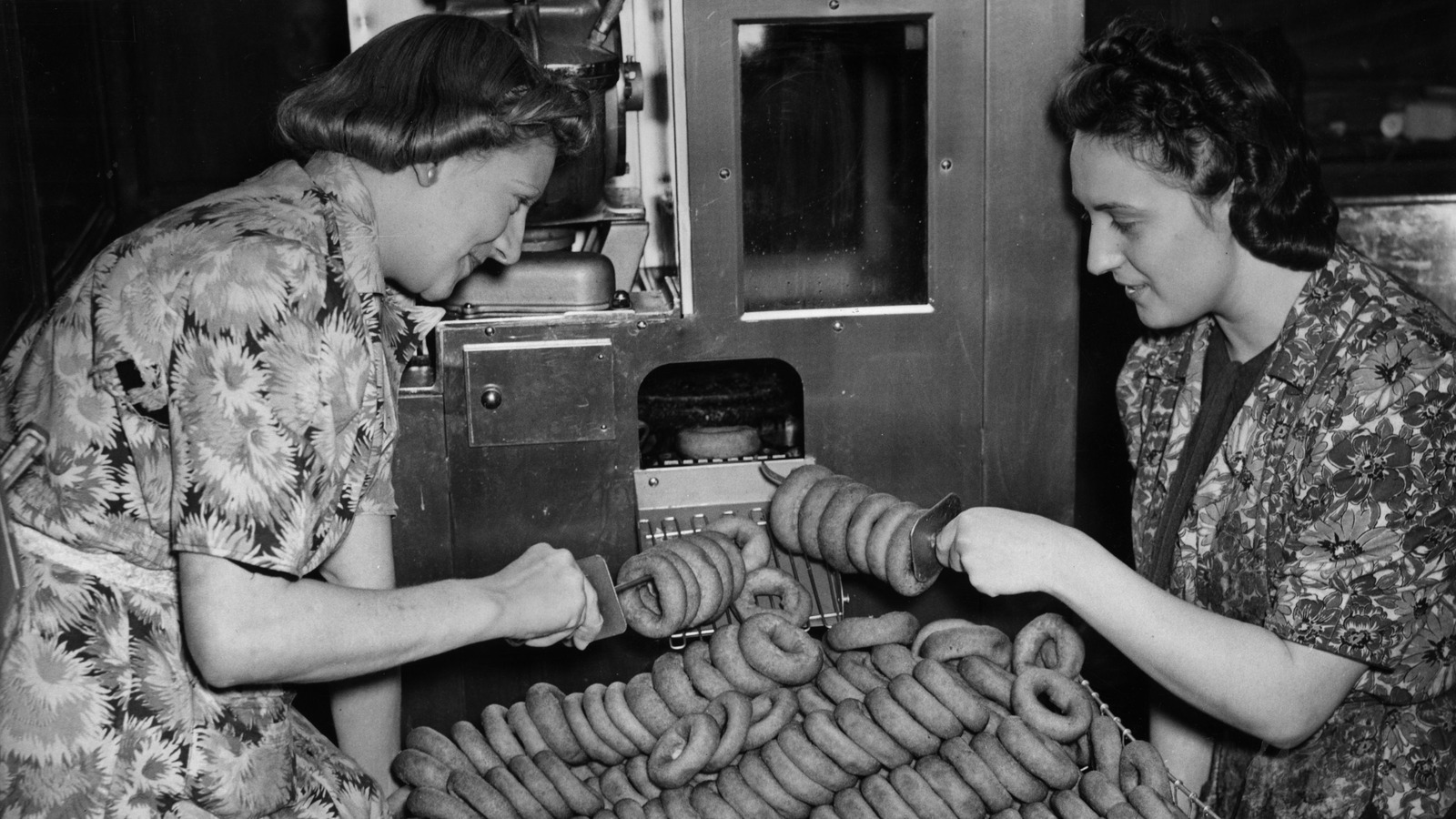
The innovative machine that helped donuts become a sensation


Donuts have been used as a form of protest. In 1917, suffragettes in the United States handed out donuts to prisoners who were on a hunger strike, as a way to show support for their cause.

There is a type of donut that is popular in the Philippines called “balut,” which is a duck egg that has been partially developed and then boiled. The egg is then placed inside a donut-like pastry and deep-fried.

The world’s most expensive donut was created in 2012 by a bakery in the United Kingdom. The donut was covered in edible 24-karat gold and cost $1,685.

In some cultures, donuts are traditionally eaten on Fat Tuesday or Shrove Tuesday, which is the day before the start of the Christian season of Lent.

There is a National Donut Eating Contest held each year at the Nathan’s Famous Fourth of July Hot Dog Eating Contest in Coney Island, New York.

The word “donut” is sometimes spelled “doughnut,” and both spellings are correct.

Donuts are not just a modern treat. Archaeologists have discovered evidence of fried dough treats in ancient cultures, including the Greeks and Romans.

Dunkin Donuts was founded in Quincy, Massachusetts, in 1950.


The donut is the official state dessert of Massachusetts.

The donut is the official food of the city of Los Angeles.

In 2013, the city of Budapest, Hungary, attempted to set a new world record for the largest donut tower. The tower was over 6 feet tall and consisted of over 3,000 donuts.

There is a famous donut shop in Portland, Oregon, called Voodoo Doughnut, which has gained a cult following for its unusual donut flavors, such as the Maple Bacon Bar and the Grape Ape.

Krispy Kreme is known for its “Hot Now” sign, which lights up when the store’s signature Original Glazed donuts are fresh out of the oven.

Donuts are often used in popular culture as a symbol of indulgence, excess, or temptation. For example, in the television show The Simpsons, the character Homer Simpson is often seen eating donuts.

National Donut Day is celebrated in the United States on the first Friday of June each year.

The Salvation Army is often credited with popularizing the donut in the United States. During World War I, Salvation Army volunteers served donuts to soldiers on the front lines.

In some parts of the world, such as the Netherlands, donuts are traditionally eaten on New Year’s Eve.

The Japanese company Mister Donut is the largest donut chain in the world, with over 1,300 stores in Japan alone.

In some parts of the world, such as Poland and Sweden, donuts are traditionally eaten on the last Thursday before Lent.

There is a type of donut in Japan called the “mochi donut,” which is made with glutinous rice flour and has a chewy texture.

In some parts of the world, such as France and Spain, donuts are traditionally eaten on Fat Tuesday or Mardi Gras.

Donuts were mentioned in Washington Irving’s famous short story “The Legend of Sleepy Hollow,” which was first published in 1820.

In the United States, National Donut Day was established in 1938 to honor the Salvation Army volunteers who served donuts to soldiers during World War I.

There is a type of donut in Denmark called the “oliekage,” which is made with oil and has a round shape.

In the United States, the city of New Orleans is famous for its beignets, which are a type of deep-fried doughnut that is often served with powdered sugar on top.

There is a type of donut in Korea called the “saewoo twigim,” which is made with shrimp and has a savoury flavor.

In some parts of the world, such as Italy and Portugal, donuts are traditionally eaten at Carnival or Carnevale.

In the United States, the city of Chicago is famous for its “Chicago-style” donuts, which are filled with jelly and covered in powdered sugar.

There is a type of donut in Malaysia called the “kuih keria,” which is made with sweet potato and has a chewy texture.

Donut-themed clothing is a popular fashion trend, with donut-printed shirts, leggings, and even socks available for purchase.

There are donut-shaped pool floats that can be used for lounging in the water or as a fun addition to pool parties.

In 2019, Dunkin’ (formerly Dunkin Donuts) released a limited-edition line of nail polish inspired by their signature colours and flavours, including “Cocoa Mocha,” “Butternutty,” and “Blueberry Crisp.”

Donut-shaped phone cases are a popular accessory, with a variety of designs available for different phone models.

There are donut-shaped candles available in different scents, such as vanilla frosting and cinnamon sugar, to bring the delicious smell of donuts into your home.

Donut-shaped stress balls are a fun and quirky way to relieve stress and anxiety, with different colours and designs available.

Donut-shaped plush toys are popular children’s toys, with soft and cuddly designs that come in different sizes and colours.

One final fact:

The centre of gravity in a doughnut is in the hole, which means the air in the hole is part of the doughnut’s mass.

Gallery:


\


Friday, August 9, 2024

QUOTE FOR THE DAY


POETRY SPOT

-----------ooOoo-----------

I Sit Beside the Fire and Think

- J R Tolkien


-----------ooOoo-----------

I Sit beside the Fire and Think is a song by Bilbo Baggins, which he sang softly in Rivendell the evening before the Fellowship of the Ring set out upon their quest. Bilbo sang the song in the presence of Frodo, after giving Frodo the Mithril-coat and Sting. The song is a contemplative piece, sung by a now-aging hobbit recalling past events that ends in anticipation of hearing returning friends.

-----------ooOoo-----------


This poem by J. R. R. Tolkien reflects on the passage of time and the bittersweet nature of memory. It is a meditative and introspective work, as the speaker sits by the fire and contemplates all that he has seen and all that he will never see. The poem's language is simple and direct, yet it evokes a profound sense of longing and regret.

The poem can be seen as a companion piece to Tolkien's other works, such as The Hobbit and The Lord of the Rings. In these works, Tolkien explores the themes of loss and mortality through the epic journeys of his characters. In "I Sit and Think," Tolkien takes a more personal approach to these themes, reflecting on the passing of time in his own life. The poem also reflects the time period in which it was written, as Europe was reeling from the devastation of World War I. Tolkien's poem can be seen as a testament to the resilience of the human spirit in the face of adversity.


-----------ooOoo-----------

I sit beside the fire and think
of all that I have seen
of meadow-flowers and butterflies
in summers that have been;
Of yellow leaves and gossamer
in autumns that there were,
with morning mist and silver sun
and wind upon my hair.

I sit beside the fire and think
of how the world will be
when winter comes without a spring
that I shall ever see.
For still there are so many things
that I have never seen:
in every wood in every spring
there is a different green.

I sit beside the fire and think
of people long ago
and people who will see a world
that I shall never know.
But all the while I sit and think
of times there were before,
I listen for returning feet
and voices at the door.


Thursday, August 8, 2024

THOUGHT FOR THE DAY


FUNNY FRIDAY

---- 😊😊😊 -----


I was speaking with someone a few days ago who told me he was severely blocked up and needed to buy suppositories. I know that it isn’t a pleasant condition so I told him the joke you will see below in From the Vault. I don’t know whether it helped or hindered.

Anyway, there are some more jokes on that theme below.

Caution: risqué humour included.


---- 😊😊😊 -----

SOME HUMOUR:
__________

Strike at suppository factory . . .

Many impacted.

They’re trying really hard to work it out, production is quite backed up.
__________

An old couple came to the hospital because the husband had problems with his stomach. The doctor was quite busy and after a brief checkup prescribes a suppository.

The old man comes out the room and his wife asks “What’s the medicine?”

“Don’t know.”

“Well, go ask the doctor.”

The old man returns to the doctor: “Excuse me, what did you prescribe me?”

“It’s a suppository.”

“I see. Thank you.”.

When the old man comes out again his wife asks “What was it?”

“It’s a ‘suppository’.”

“What’s a suppository?”

“Don’t know.”

“Well, then go ask him.”.

The old man again goes to the doctor.

“I’m terribly sorry, what do I do with the ‘suppository’?”

“Use it once a day in the morning.”

“Ah, I see. Thank you.”.

The wife: “Well, how do you take it?”

“Once a day.”

“With water?”

“Don’t know.”

“Well, ask him again.”

The old man enters again

“I’m very sorry, but how should I take it?”

“Just shove it up your arse.”

The old man comes back and tells his wife: “Let’s just go home. He got really angry.”.
__________

The above joke reminds me of another that strictly should be in From the Vault . . .

An elderly chap living in the bush felt sickly and went to the doctor for a look at. The doctor looked him over and said, "Bring a urine specimen to me in the morning to help me find out what’s wrong."

He went home and said to his wife "The doc wants me to bring him a specimen in the morning. What’s a specimen?”

When his wife said that she didn’t know either, he said “I’ll go ask the brother.”

“Don’t go near your brother,” she says, “you know you two always argue and it always ends in a blue.”

“What can go wrong?” he asked. “I’m just asking him for some information.”

He returned some time later with his clothes torn, a black eye and bruises.

“Jesus, Mary and Joseph,” said his wife. “What happened this time?”

“All I know is that when I saw him I asked him what a specimen was,” replied her husband. “He said ‘Piss in a bottle’, so I said 'Go shit in yer hat !' and that’s when the fight started.”
__________

A woman in labour suddenly shouted, “Shouldn’t! Wouldn’t! Couldn’t! Didn’t! Can’t!”

The doctor replied “Don’t worry, those are just contractions!”
__________

A man walks into a bar and orders a 21-year-old whiskey

He takes a sip and then spits it out.

"I asked for a 21-year-old, this is 18 years! I'm not paying! Give me a 12-year-old cognac."

The bartender serves him, and the man spits it out again.

"This is only 10 years! I'm not paying!"

The bartender starts getting frustrated. After more and more drinks with the same reaction, the bartender serves another one and says:

"This one's on the house."

The man takes a sip and immediately spits it out.

"This tastes like piss!"

"Now tell me, how old am I?"

---- 😊😊😊 -----


A man goes to the doctor with haemorrhoids.

The doctor prescribes him a suppository and tells him to use up to two daily as needed until the problem subsides. The man has never used a suppository before.

A few days later the doctor sees the man in the street and asks him how the suppositories went.

“For all the good they did,” he replies, “I might as well have shoved them up my arse.”

---- 😊😊😊 -----


LIMERICK OF THE WEEK:

(‘Sheik’ is pronounced ‘shake’ in the limerick below).

There was an Arabian sheik
Who entered his harem and speik:
‘A loud cry I heard
In here it occurred.
Are my fifty-two children aweik?'

---- 😊😊😊 -----

GALLERY:


---- 😊😊😊 -----


CORN CORNER:
__________

What has two butts and kills people?

An assassin
__________

My girlfriend found letters I was hiding and now she knows I've been cheating.

She says she'll never play Scrabble with me again.
__________

The countryside is great...

Unless you want to buy anything, go anywhere, do anything, or see anyone.
__________

This one's for you, Dave . . .

Chatting in the pub with my Scottish pal and I was stuck on a crossword clue; "Stranded on a Desert Island, 8 letters."

"Marooned" he said.

I replied “Oh that’s nice of you, I’ll have another beer but I still need an answer for my crossword.”

---- 😊😊😊 -----

QUOTE FOR THE DAY


POETRY SPOT


-----------ooOoo-----------

Good Timber, by Douglas Malloch

-----------ooOoo-----------


Douglas Malloch (1877 – 1938) was an American poet, short-story writer and Associate Editor of American Lumberman, a trade paper in Chicago. He was known as a "Lumberman's poet" both locally and nationally.

Born in Muskegon, Michigan which was known as a centre of the lumbering industry, he grew up amidst the forest, logging camps, sawmills and lumber yards.

In 'Good Timber' Malloch compares good men to good timber, that people, like trees, grow and reach their true potential by overcoming adversity. It is only through struggles, like a tree fighting through forest growth to reach the sun, that we grow and discover our true potential. 

-----------ooOoo-----------

Good Timber

By Douglas Malloch

The tree that never had to fight
For sun and sky and air and light,
But stood out in the open plain
And always got its share of rain,
Never became a forest king
But lived and died a scrubby thing.

The man who never had to toil
To gain and farm his patch of soil,
Who never had to win his share
Of sun and sky and light and air,
Never became a manly man
But lived and died as he began.

Good timber does not grow with ease,
The stronger wind, the stronger trees,
The further sky, the greater length,
The more the storm, the more the strength.
By sun and cold, by rain and snow,
In trees and men good timbers grow.
Where thickest lies the forest growth.

Where thickest lies the forest growth
We find the patriarchs of both.
And they hold counsel with the stars
Whose broken branches show the scars
Of many winds and much of strife.
This is the common law of life.


Tuesday, August 6, 2024

THOUGHT FOR THE DAY


MORE PAST PHOTOS


----------oOo----------

Windsor Road, Riverstone in 1907.

In 1810 Lieut-Col Maurice Charles O'Connell was granted 2,500 acres (10 km2) of land in the district, which he named "Riverston Farm", after his birthplace in Ireland. (The "e" at the end first appeared on railway timetables in the 1860s, an apparent misprint that has become the accepted spelling).
__________

Katoomba Street, Katoomba, in 1955.

In 1874 the area was named The Crushers after the name of the railway station that served a nearby quarry. It was at this point trains stopped to adjust the brakes of the carriages to allow for the descent to Springwood.

The name Katoomba was adopted in 1877 and the town achieved municipality status in 1889.

Katoomba is a derivative of the Aboriginal word ‘Kedumba’ meaning ‘shiny, falling waters’ after the natural beauty of the area.
__________

Corner of Belmont & Military Roads, Cremorne, in the 1950s.

Built 1870 at State Government expense to give access to the fortifications owing to a war scare. Part of Military Road was for a time known as Balaklava Road.

Cremorne was named after the Cremorne Gardens in London, a popular pleasure ground in England, which derived its name from the Old Irish words Crích Mugdornd meaning 'boundary' or 'chieftain' of Mugdornd.
__________

Workmen laying a new surface on George Street opposite the Town Hall in 1931.

Until 1810 George Street was generally referred to as High Street in the English custom, although the northern part of the thoroughfare was also sometimes referred to as "Sergeant Major's Row" and, earlier, as "Spring Row" (since water carriers had originally established the route as a link between the Tank Stream, the Military encampment and the hospital). The Street was formally named for King George III by Governor Lachlan Macquarie in 1810.
__________

Looking down to Eddy Avenue, outside Central Station, in 1940.

Eddy Avenue was built in 1905, during the construction of Central Railway Station. It was named after Edward Eddy, who served as Commissioner of Railways from 1887 to 1897.
__________

Martin Place, in 1933.

Ever since the proposal in 1863 to construct the Sydney General Post Office on its present site, there had been plans to open up its northern frontage, at that time a narrow laneway that connected to Moore Street past Pitt Street, with occasional proposals for beautifying the area with fountains and gardens. But nothing was done until fire destroyed properties to the north of the lane between Pitt and Castlereagh streets in 1890.

A new widened street was created in front of the General Post Office, from George to Pitt streets. It was officially opened in September 1892 and named after the Chief Justice, Sir James Martin, a former New South Wales Attorney-General and Premier. Moore Street (between Pitt and Castlereagh streets) was widened and renamed Martin Place in 1921. Sydney Municipal Council resolved to proceed with a further extension in 1923 but this section required extensive demolition of properties in the way of the line of the street, and it faced concerted opposition from land owners, with legal action taken to prevent the resumption of their land.
__________

The original Sydney Rail Terminal at Redfern in 1900.

In 1855, the first railway line in NSW was opened. The 22km ‘Great Trunk Line’ operated from Sydney (Redfern) to Parramatta with stations at Newtown, Ashfield, Burwood, Homebush and Parramatta Junction at Granville. The Sydney terminal was on the south side of Devonshire Street, just south of the current location of Central Station.
__________

New South Head Road, Rushcutters Bay, in 1870.

The toll gate that was once there can be seen in the distance.

After British settlement, the area was first known as 'Rush Cutting Bay' because the swampy land was covered in tall rushes used by early settlers for thatching houses. In 1878, 6 acres were reserved for recreation; and, after reclamation work was completed, Rushcutters Bay Park was created, bounded by New South Head Road and the bay at Sydney Harbour.
__________

Avenue Road, Mosman, between 1890-1897.
__________

Looking north on Gloucester Street, The Rocks, in 1901.
__________

Pyrmont Bridge, Darling Harbour, around 1900.

The first Pyrmont Bridge was opened in 1858, and was a wooden pile bridge with an iron centre 'swing panel' to allow ships to pass. In the first two weeks 20,000 pedestrians paid the one penny toll. It was also crossed by "932 carts and drays, 43 gigs, 17 carriages and 125 horse and rider." When the NSW government bought the bridge for £52,500 from the Pyrmont Bridge Company in 1884, they abolished the toll.
__________

A crowd gathers outside Harrys Cafe De Whhels, Wooloomooloo, in 1949.

The story of ‘Harry’s Café de Wheels’ goes back to the Great Depression years of the 1930s. With the world on the brink of a devastating war, an enterprising Sydneysider named Harry Edwards used a small converted caravan to open a mobile café near the front gates of the naval dockyard at Woolloomooloo. In those days the caravan was towed by an ex-Army ambulance. Word quickly spread with Harry’s pie ‘n’ peas and crumbed snags soon becoming a popular part of the city’s nightlife – keenly sought after by sailors, soldiers, cabbies, starlets and coppers alike.

Harry operated the caravan until 1938 when it closed, due to his enlistment into the AIF. During Harry’s time in the Middle East he was nicknamed ‘Tiger’ owing to his boxing prowess and the name stuck. Upon his return and demobilization in 1945, Harry realised that Sydney hadn’t changed much and it was still almost impossible to get a good late-night feed, so he reopened and the caravan has been operating continuously ever since. His signature dish, a meat pie topped with mushy peas, mashed potato and gravy, became known as a ‘Tiger’.

The café was originally simply known as ‘Harry’s’ but the city council came up with a ruling that mobile food caravans must move a minimum of 12 inches a day. Hence the new name ‘Harry’s Café de Wheels’. Harry (Tiger) Edwards operated the business for a further 30 years before selling out to Alex Koronya in 1975.
__________

New South Head Road, Rose Bay, 1960.

Aka 'Heartbreak Hill', which thousands of runners struggle up in the City to Surf. An FJ Holden passes a tram not long before this tram line closed. A two-tone blue Standard rolls heavily into the corner on the downhill.
__________

Evonne Goolagong, the first Australian indigenous woman to reach no1 in the world, in tennis, is welcomed home from England, after winning Wimbledon, in 1971.
__________

Chatswood Station, around 1910.

Chatswood station opened in 1890 when the North Shore line opened from Hornsby to St Leonards. It and the suburb was named after Richard Garnett’s second wife’s pet who was called Chatty. An island platform was built on 23 May 1900 and a third dock platform brought into use on 12 July 1919.
__________


Bus and Tram employees board a tram on Parramatta Road, Leichhardt, after a stop work meeting Leichhardt in October 1947.

British Colonists adopted the route that is now Parramatta Road shortly after their arrival in the Parramatta area in 1788, and only minor changes to the old colonial highway route have been made since 1797. The colonial highway itself was mapped over an ancient path trodden by people of the Eora and Darug Nations for countless generations, as they travelled between coast and inland to access resources and to gather for social and ceremonial occasions.
__________

Canterbury Road, Hurlstone Park, in 1908.

Hurlstone Park was first known as 'Wattle Hill' and then 'Fernhill'. After the Postmaster-General's Department refused to open a post office called Fernhill, a 1910 referendum chose the name 'Hurlstone', after the nearby Hurlstone College.

John Kinloch founded the college in 1878, on the site of present-day Trinity Grammar School and named it after his mother's maiden name, which was Helen Hurlstone. The college moved to a new site, now known as Hurlstone Agricultural High School. The 'Park' was added at the request of the Railways Department, to avoid confusion with the New South Wales town of Hillston.