Tuesday, February 4, 2025

VINTAGE PHOTOGRAPHS


-----------ooOoo-----------

The old photographs below were sent to me by Leo M – thanks, Leo.

Some of them are jaw-dropping, many show how far we have come since then and some are quite poignant.

(And some have been posted in Bytes before).

A look to the past.

As someone once said: “Yesterday is history. Tomorrow is a mystery, but today is a gift, that is why it’s called the present.” I know, corny. But true.

-----------ooOoo-----------


The liner Queen Elizabeth filled with the American troops coming home from war.
__________


A boy and two big lobsters caught on the New Jersey Coast, 1916.
__________


1945: The Mona Lisa painting being opened again after it had been hidden from German troops in 1939.
__________


Longacre Square, New York, 1903, one year before it was named Times Square. It was so named because the New York Times moved their headquarters there.

__________


Imperial Airlines aeroplane, 1936.
__________


April 15, 1912, a Titanic survival boat meets with a rescue ship.
__________


A priest praying over the victims of the Titanic, 1912.
__________


France, 1959. Kids playing with the guillotine.

(My comment: Note that they have even placed a bucket to received the head. Horrific.)
__________


Bruce Lee and his master, 1958.
__________


Enjoying a meal in the car while getting cooled air piped in the car - a drive-in restaurant, Texas, 1957.
__________


MGM opening credits in the making, 1928.
__________


Hitler and Speer looking at the Schwerer Gustav, the biggest gun ever used in battle.
__________


Transporting a 5 MB hard drive, 1956.
__________


Testing shoes, 1937
__________


First Wimbledon as an international tournament, 1883.
__________


Human-sized chess with actual soldiers, Russia, 1924.
__________


Oil Crisis, 1973. People are having picnics on the deserted highways.
__________

More in future Bytes


Monday, February 3, 2025

QUOTE FOR THE DAY


POETRY SPOT - MORE EDGAR A GUEST


After a few lengthy Bytes posts, we now have some short ones to enable a catch up on reading.


“I would rather fail my Wasserman test
Then read the poetry of Edgar A Guest.”
- Dorothy Parker

The Wasserman test was an antibody test for syphilis.

In contrast, my words from Bytes, October 9, 2023:

I have previously commented that I am not a great fan (of Edgar A Guest's poetry) but, that said, I would rather inspiration than cynicism, positive thoughts instead of negative outlooks and kindness in place of a lack of generosity of spirit.

It is in that vein that today’s post consists of another poem by Edgar a Guest, which has inspired me to verse as well . . .

His poems my not be thought of as best,
But worse than a failed Wasserman test?
For all of their faults,
Their emotion and schmaltz,
There’s a place for the poems of Guest.


The Few

The easy roads are crowded
And the level roads are jammed;
The pleasant little rivers
With the drifting folks are crammed.
But off yonder where it's rocky,
Where you get a better view,
You will find the ranks are thinning
And the travelers are few.

Where the going's smooth and pleasant
You will always find the throng,
For the many, more's the pity,
Seem to like to drift along.
But the steeps that call for courage,
And the task that's hard to do
In the end result in glory
For the never-wavering few.

- Edgar A Guest (1917)


From:
All Poetry

This poem explores the concept of individuality and the rarity of those who dare to venture beyond the ordinary. While the easy and pleasant paths are crowded with the masses, the difficult and challenging ones are traversed by only a select few. The speaker suggests that true worthiness lies in the arduous journey, where courage and determination lead to glory, rather than in the comfortable paths taken by the majority. The poem reflects the ideals of individualism and self-reliance prevalent during its time period and echoes the theme of choosing the "road less traveled" from Robert Frost's famous poem.


Sunday, February 2, 2025

THOUGHT FOR THE DAY


WE DIDN’T START THE FIRE


-----------ooOoo-----------

Continuing a look at the events and people in Billy Joel’s We Didn’t Start the Fire.

Each two lines represent a year.

Little Rock, Pasternak, Mickey Mantle, Kerouac
Sputnik, Chou En-Lai, "Bridge on the River Kwai"
Lebanon, Charles de Gaulle, California baseball
Starkweather homicide, children of thalidomide
Buddy Holly, "Ben Hur", space monkey, Mafia
Hula hoops, Castro, Edsel is a no-go
U-2, Syngman Rhee, payola and Kennedy
Chubby Checker, "Psycho", Belgians in the Congo

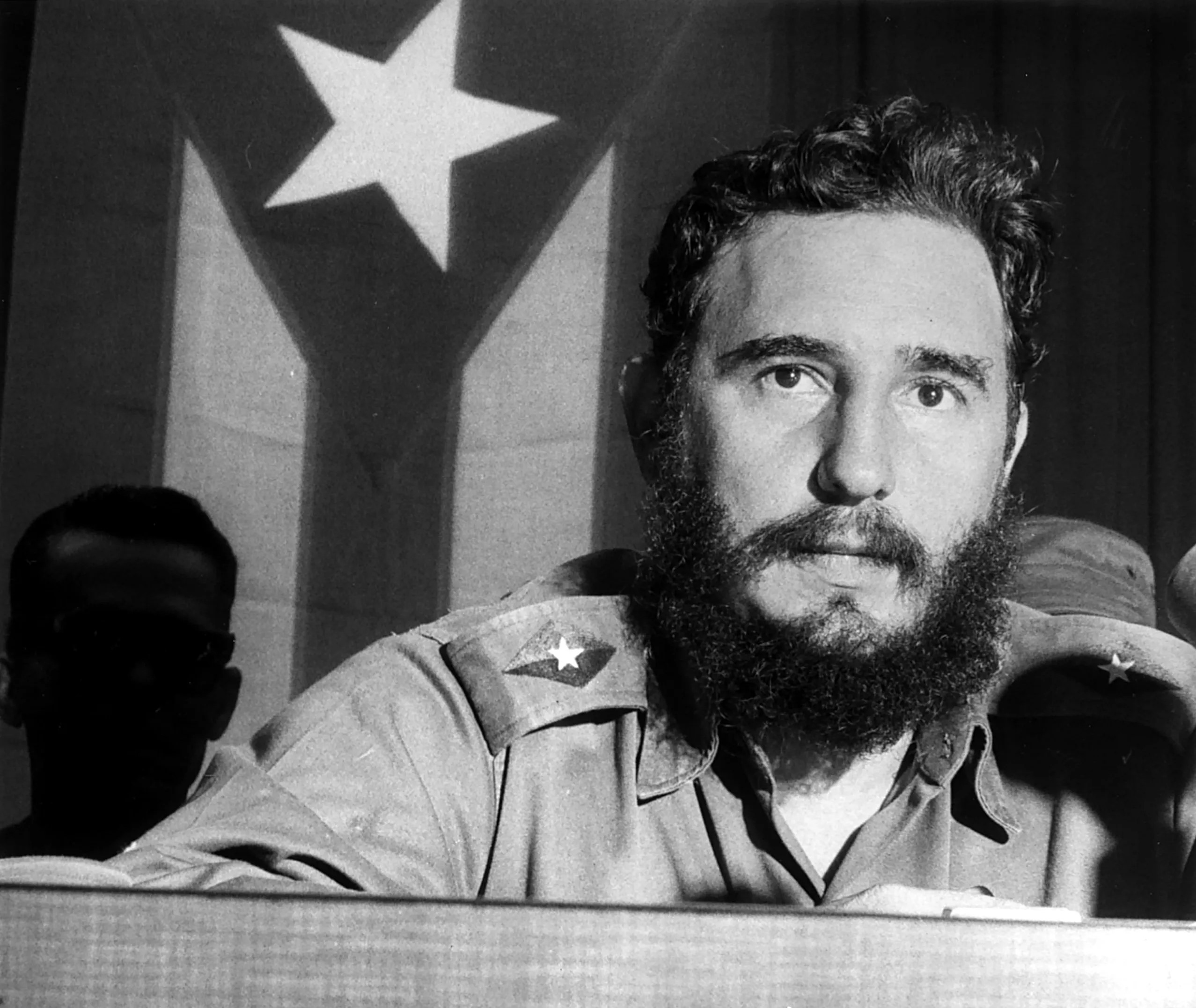
1959: Castro


Fidel Alejandro Castro Ruz (1926 – 2016) was a Cuban revolutionary and politician who was the leader of Cuba from 1959 to 2008, serving as the prime minister of Cuba from 1959 to 1976 and president from 1976 to 2008.

Ideologically a Marxist–Leninist and Cuban nationalist, he also served as the first secretary of the Communist Party of Cuba from 1965 until 2011.

Under his administration, Cuba became a one-party communist state; industry and business were nationalized, and socialist reforms were implemented throughout society

-----------ooOoo-----------

Born in Cuba, the son of a wealthy Spanish farmer, Castro adopted leftist and anti-imperialist ideas while studying law at the University of Havana. After participating in rebellions against right-wing governments in the Dominican Republic and Colombia, he planned the overthrow of Cuban president Fulgencio Batista, launching a failed attack in 1953. After a year's imprisonment, Castro travelled to Mexico where he formed a revolutionary group, the 26th of July Movement, named for the date of the failed attack, with his brother, Raúl Castro, and Ernesto "Che" Guevara. Returning to Cuba, Castro took a key role in the Cuban Revolution by leading the Movement in a guerrilla war against Batista's forces from the Sierra Maestra.

-----------ooOoo-----------

Relevance to 1959:

Believing support for the revolution was waning, Batista called for a major military offensive against the rebels in the Sierra Maestra mountains in the summer of 1958. Instead, the rebels swiftly turned back the offensive, forcing the army to withdraw. With international media giving favourable press coverage to the revolutionaries, the United States began to withdraw support for Batista’s government, which it had previously backed due to the dictator’s anti-communist stance.

By the end of 1958, the guerrilla revolutionaries in Castro’s 26th of July Movement had gained the upper hand in Cuba. On January 1, 1959, with rebel forces bearing down on Havana, Batista fled Cuba for the Dominican Republic; he later proceeded to Portugal, where he would remain in exile until his death in 1973.

Castro arrived in Havana on January 9 to take charge of a new provisional government, quickly consolidating control and rounding up Batista’s supporters, many of whom were tried and executed by revolutionary courts. Though Castro had called for elections during the revolution, he postponed them indefinitely once he came to power.

-----------ooOoo-----------

Cuba and the US:

The United States was one of the first countries to recognise Castro’s government in Cuba, but relations between the two countries quickly deteriorated as Castro implemented a communist regime and forged close ties with the Soviet Union, the U.S. enemy in the Cold War. The United States broke off diplomatic relations with Cuba in early 1961, and the next few years were marked by escalating tensions.

These included the Bay of Pigs invasion (April 1961) and the Cuban missile crisis (October 1962).

The Bay of Pigs Invasion in 1961 was a failed attack launched by the CIA during the Kennedy administration to push Cuban leader Fidel Castro from power. Since 1959, officials at the U.S. State Department and the CIA had attempted to remove Castro. Finally, on April 17, 1961, the CIA launched what its leaders believed would be the definitive strike: a full-scale invasion of Cuba by 1,400 American-trained Cubans who had fled their homes when Castro took over. However, the invasion was doomed from the start. The invaders were badly outnumbered by Castro’s troops, and they surrendered after less than 24 hours of fighting.

During the Cuban Missile Crisis, leaders of the U.S. and the Soviet Union engaged in a tense, 13-day political and military standoff in October 1962 over the installation of nuclear-armed Soviet missiles on Cuba, just 90 miles from U.S. shores. In a TV address on October 22, 1962, President John F. Kennedy (1917-63) notified Americans about the presence of the missiles, explained his decision to enact a naval blockade around Cuba and made it clear the U.S. was prepared to use military force if necessary to neutralise this perceived threat to national security. Following this news, many people feared the world was on the brink of nuclear war. However, disaster was avoided when the U.S. agreed to Soviet leader Nikita Khrushchev’s (1894-1971) offer to remove the Cuban missiles in exchange for the U.S. promising not to invade Cuba. Kennedy also secretly agreed to remove U.S. missiles from Turkey.

-----------ooOoo-----------

Rule:

Adopting a Marxist–Leninist model of development, Castro converted Cuba into a one-party, socialist state under Communist Party rule, the first in the Western Hemisphere.

Policies introducing central economic planning and expanding healthcare and education were accompanied by state control of the press and the suppression of internal dissent.

Abroad, Castro supported anti-imperialist revolutionary groups, backing the establishment of Marxist governments in Chile, Nicaragua, and Grenada, as well as sending troops to aid allies in the Yom Kippur, Ogaden, and Angolan Civil War.

These actions, coupled with Castro's leadership of the Non-Aligned Movement from 1979 to 1983 and Cuban medical internationalism, increased Cuba's profile on the world stage.

Following the dissolution of the Soviet Union in 1991, Castro led Cuba through the economic downturn of the "Special Period", embracing environmentalist and anti-globalization ideas. In the 2000s, Castro forged alliances in the Latin American "pink tide"—namely with Hugo Chávez's Venezuela—and formed the Bolivarian Alliance for the Americas. In 2006, Castro transferred his responsibilities to Vice President Raúl Castro, who was elected to the presidency by the National Assembly in 2008.

The longest-serving non-royal head of state in the 20th and 21st centuries, Castro polarized world opinion. His supporters view him as a champion of socialism and anti-imperialism whose revolutionary government advanced economic and social justice while securing Cuba's independence from American hegemony. His critics view him as a dictator whose administration oversaw human rights abuses, the exodus of many Cubans, and the impoverishment of the country's economy.

Despite a long-running U.S. trade embargo, widespread economic hardship, a mass exodus of hundreds of thousands of Cubans and multiple efforts to implement regime change, Fidel Castro remained in power until 2008, when he formally resigned after handing off power to his brother.

-----------ooOoo-----------

Gallery:

Castro under arrest after the Moncada attack, 1953

Fidel Castro and his men in the Sierra Maestra, 2 December 1956

Castro (right) with fellow revolutionary Camilo Cienfuegos entering Havana on 8 January 1959

Castro at the United Nations General Assembly in 1960

Che Guevara (left) and Castro, 1961

Castro and Richard Nixon, 1961

Castro and Russian cosmonaut Yuri Gagarin, the first human in space

Castro in his characteristic green fatigues, 2012


Saturday, February 1, 2025

QUOTE FOR THE DAY


REMEMBERING HEROES


-----------ooOoo-----------

The stories behind the names on the signs at the rest stops on the Remembrance Driveway, which goes from Sydney to Canberra.

The highway commemorates persons awarded the Victoria Cross by naming rest stops after him.

--------oOo--------

The Victoria Cross (VC) is the highest and most prestigious award for gallantry in the face of the enemy that can be awarded to British and Commonwealth forces

The VC was introduced on 29 January 1856 by Queen Victoria to honour acts of valour during the Crimean War.

-----------ooOoo-----------

BILL NEWTON VC

Flight Lieutenant William Ellis Newton VC. (1919 – 1943)

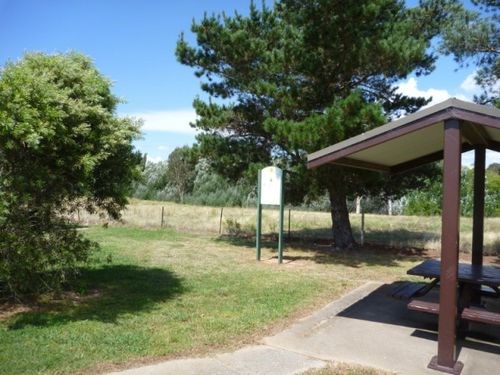
Rest Stop:

Location:
Newton VC Rest Area
Old Federal Highway, Bywong NSW 2621


About:

Newton was honoured for his actions as a bomber pilot in Papua New Guinea during March 1943 when, despite intense anti-aircraft fire, he pressed home a series of attacks on the Salamaua Isthmus, the last of which saw him forced to ditch his aircraft in the sea. Newton was still officially posted as missing when the award was made in October 1943. It later emerged that he had been taken captive by the Japanese, and executed by beheading on 29 March.

Raised in Melbourne, Newton excelled at sport, playing cricket at youth state level. He joined the Citizen Military Forces in 1938 and enlisted in the Royal Australian Air Force (RAAF) in February 1940. He had earlier attempted to enlist when he turned eighteen in 1937, but his mother refused to give her permission; with Australia now at war, she consented. He had earlier attempted to enlist when he turned eighteen in 1937, but his mother refused to give her permission; with Australia now at war, she consented.

Described as having the dash of "an Errol Flynn or a Keith Miller", Newton served as a flying instructor in Australia before being posted to No. 22 Squadron, which began operating Boston light bombers in New Guinea late in 1942. Having just taken part in the Battle of the Bismarck Sea, he was on his fifty-second mission when he was shot down and captured. Newton was the only Australian airman to receive a Victoria Cross for action in the South West Pacific theatre of World War II, and the sole Australian to be so decorated while flying with an RAAF squadron.

Newton gained a reputation for driving straight at his targets without evasive maneuver, and always leaving them in flames; this earned him the nickname "The Firebug". The Japanese gunners reportedly knew him as "Blue Cap", from his habit of wearing an old blue cricket cap on operations. In spite of the hazards of the air war in New Guinea, he was quoted as saying, "The troops on the ground should get two medals each, before any airman gets one".

Victoria Cross:

Newton was awarded the Victoria Cross for his actions on 16–18 March, becoming the only Australian airman to earn the decoration in the South West Pacific theatre of World War II, and the only one while flying with an RAAF squadron. 

The citation, which incorrectly implied that he was shot down on 17 March rather than the following day, and as having failed to escape from his sinking aircraft, was promulgated in The London Gazette on 19 October 1943:

Air Ministry, 19th October, 1943.

The KING has been graciously pleased, on the advice of Australian Ministers, to confer the VICTORIA CROSS on the undermentioned officer in recognition of most conspicuous bravery: —

Flight Lieutenant William Ellis NEWTON (Aus. 748), Royal Australian Air Force, No. 22 (R.A.A.F.) Squadron (missing).

Flight Lieutenant Newton served with No. 22 Squadron, Royal Australian Air Force, in New Guinea from May, 1942, to March, 1943, and completed 52 operational sorties.

Throughout, he displayed great courage and an iron determination to inflict the utmost damage on the enemy. His splendid offensive flying and fighting were attended with brilliant success. Disdaining evasive tactics when under the heaviest fire, he always went straight to his objectives. He carried out many daring machine-gun attacks on enemy positions involving low-flying over long distances in the face of continuous fire at point-blank range.

On three occasions, he dived through intense anti-aircraft fire to release his bombs on important targets on the Salamaua Isthmus. On one of these occasions, his starboard engine failed over the target, but he succeeded in flying back to an airfield 160 miles away. When leading an attack on an objective on 16 March 1943, he dived through intense and accurate shell fire and his aircraft was hit repeatedly. Nevertheless, he held to his course and bombed his target from a low level. The attack resulted in the destruction of many buildings and dumps, including two 40,000-gallon fuel installations. Although his aircraft was crippled, with fuselage and wing sections torn, petrol tanks pierced, main-planes and engines seriously damaged, and one of the main tyres flat, Flight Lieutenant Newton managed to fly it back to base and make a successful landing.

Despite this harassing experience, he returned next day to the same locality. His target, this time a single building, was even more difficult but he again attacked with his usual courage and resolution, flying a steady course through a barrage of fire. He scored a hit on the building but at the same moment his aircraft burst into flames.

Flight Lieutenant Newton maintained control and calmly turned his aircraft away and flew along the shore. He saw it as his duty to keep the aircraft in the air as long as he could so as to take his crew as far away as possible from the enemy's positions. With great skill, he brought his blazing aircraft down on the water. Two members of the crew were able to extricate themselves and were seen swimming to the shore, but the gallant pilot is missing. According to other air crews who witnessed the occurrence, his escape-hatch was not opened and his dinghy was not inflated. Without regard to his own safety, he had done all that man could do to prevent his crew from falling into enemy hands.

Flight Lieutenant Newton's many examples of conspicuous bravery have rarely been equalled and will serve as a shining inspiration to all who follow him.

Death and Being Remembered:

Buried initially in an unmarked bomb crater in Salamaua, Newton's body was recovered and re-interred in Lae War Cemetery after Salamaua's capture by Allied troops in September 1943. His grave marker bears the epitaph For God, my king, my country. In early 1944, the recently constructed No. 4 Airfield in Nadzab was renamed Newton Field in his honour.

For many years, the story of Newton's death was intertwined with that of an Australian commando, Sergeant Len Siffleet, who had also been captured in New Guinea. A photograph showing Siffleet about to be beheaded was discovered by American troops in April 1944 and was thought to have depicted Newton in Salamaua, but there is no known photograph of Newton’s execution.

News of Newton’s brutal execution shocked Australia. It was published in newspapers around the country after it had been translated from the captured diary of a Japanese soldier who had witnessed Newton’s death.

Newton was not specifically named in the diary, but he was identified by circumstantial evidence: the diary entry recorded the beheading of an Australian flight lieutenant who had been shot down by anti-aircraft fire on 18 March 1943 while flying a Douglas aircraft. The Japanese observer described the prisoner as "composed" in the face of his impending execution, and "unshaken to the last". After the decapitation, a seaman slashed open the dead man's stomach, declaring, "Something for the other day. Take that."

The graphic account of his death tormented Newton’s mother, Minnie, who believed the extensive coverage of her son’s exploits against the Japanese lay behind their decision to execute him.

Newton's mother was presented with her son's Victoria Cross by the Governor-General, the Duke of Gloucester, on 30 November 1945. She donated it to the Australian War Memorial, Canberra, where it remains on display with his other medals.

In the 1990s, his friend Keith Miller successfully fought to ensure that the Victoria Racing Club abandoned a plan to rename the William Ellis Newton Steeplechase—run on Anzac Day—after a commercial sponsor. Later in the decade, Miller also publicly questioned Australia Post's exclusion of Newton from a series of stamps featuring notable Australians such as cricketer Sir Donald Bradman.

A plaque dedicated to No. 22 Squadron was unveiled at the Australian War Memorial by the Chief of Air Force, Air Marshal Angus Houston, on 16 March 2003, the sixtieth anniversary of Newton's attack on Salamaua.

Gallery:


Portrait of William Newton VC, c 1940

Newton relaxing at Wagga in 1941

Newton beside his aircraft with ammunition belt draped around his neck, c 1942-1943

Studio portrait of the three brothers, Lindsay Newton, a dentist in the Australian Army Medical Corps, Surgeon Lieutenant John Newton, Royal Australian Navy, and Flight Lieutenant William (Bill) Newton, Royal Australian Air Force. The photograph was a spontaneous idea after the three brothers met by chance at the Hotel Australia in Melbourne. It would be the last time they were all together.

A Douglas Boston aircraft of No. 22 Squadron, RAAF, in New Guinea. It is widely accepted that the Boston closest to the camera was flown by Newton.

Newton's grave marker at Lae War Cemetery

Portrait of Newton commissioned by his family from indigenous artist Blak Douglas (b. 1970, Dhungatti people). The portrait shows Newton in the foreground with a ghostly depiction of his stricken Boston bomber in the sky to his left. The portrait hangs in the Australian War Memorial.

Keith Miller, photographed in 1951.
Miller (1919 – 2004) was an Australian Test cricketer and a Royal Australian Air Force pilot during World War II.

Sergeant Siffleet's execution at Aitape, 1943. It was at one time thought that the person depicted was Newton.
The photograph was found on the body of a dead Japanese soldier and shows Sergeant Siffleet wearing a blindfold and with his arms tied, about to be beheaded with a sword by Yasuno Chikao. The execution was ordered by Vice Admiral Kamada, the commander of the Japanese Naval Forces at Aitape. Sgt Siffleet was captured with Private (Pte) Pattiwahl and Pte Reharin, Ambonese members of the Netherlands East Indies Forces, whilst engaged in reconnaissance behind the Japanese lines. Yasuno Chikao died before the end of the war.