

Monday, December 28, 2020


THOSE WE LOST in 2020, Part 1 of 3
________________
GEORGE BLAKE

About:
British spy who worked as a double agent for the Soviet Union. He became a Communist and decided to work for the MGB while a prisoner during the Korean War. Discovered in 1961 and sentenced to 42 years in prison, he escaped from Wormwood Scrubs prison in west London in 1966 and fled to the Soviet Union. He was not one of the Cambridge Five spies, although he associated with Donald Maclean and Kim Philby after reaching the Soviet Union.
Date of death: December 26, 2020
Age at death: 98
Cause of death: Not disclosed
By the way:
Blake died in Moscow. The RIA Novosti news agency first reported Blake's death, citing Russia's SVR foreign intelligence agency. “We received some bitter news – the legendary George Blake passed away,” it said. Russian President Vladimir Putin, himself an ex-KGB agent, expressed his "deep condolences" to Blake's family and friends. In a message published on the Kremlin website, the Russian leader noted Blake's "invaluable contribution to ensuring strategic parity and maintaining peace on the planet." Putin also said of Blake, "Colonel Blake was a brilliant professional of special vitality and courage."
In an interview with NBC News in 1991, Blake said he regretted the deaths of the agents he had betrayed.
He remained a cmmitted Marxist–Leninist. Blake denied being a traitor, insisting that he had never felt British: "To betray, you first have to belong. I never belonged."
________________

DOUG ANTHONY

About:
Australian politician who served as leader of the National Party of Australia[a] from 1971 to 1984 and was Deputy Prime Minister under John Gorton (1971), William McMahon (1971–1972) and Malcolm Fraser (1975–1983). Apart from being a minister under six prime ministers, he was Australia’s longest-serving deputy prime minister. He won the seat of Richmond in 1957, which had been held by his father Hubert, a Gallipoli veteran, and was later held by his own son Larry during the Howard government.
Date of death: December 20, 2020
Age at death: 90
Cause of death: Not stated.
________________
CHARLEY PRIDE

About:
American singer, guitarist, and professional baseball player. His greatest musical success came in the early to mid-1970s, when he was the best-selling performer for RCA Records since Elvis Presley. During the peak years of his recording career (1966–1987), he had 52 top-10 hits on the Billboard Hot Country Songs chart, 30 of which made it to number one, and won the Entertainer of the Year award at the Country Music Association Awards in 1971. He was country music’s first black superstar.
Date of death: December 12, 2020
Age at death: 86
Cause of death: Pride died in Dallas of complications related to COVID-19.
________________
JOHN LE CARRE

About:
British author of espionage novels. During the 1950s and 1960s, he worked for both the Security Service (MI5) and the Secret Intelligence Service (MI6). His third novel, The Spy Who Came in from the Cold (1963), became an international best-seller and remains one of his best-known works. Following the success of this novel, he left MI6 to become a full-time author. His books include The Looking Glass War (1965), Tinker Tailor Soldier Spy (1974), Smiley's People (1979), The Little Drummer Girl (1983), The Night Manager (1993), The Tailor of Panama (1996), The Constant Gardener (2001), A Most Wanted Man (2008) and Our Kind of Traitor (2010), all of which have been adapted for film or television.
Date of death: December 12, 2020
Age at death: 89
Cause of death: Pneumonia
________________
BARBARA WINDSOR

About:
English actress, known for her appearances in the Carry On films and for playing Peggy Mitchell in the BBC One soap opera EastEnders. She joined the cast of EastEnders in 1994 and won the 1999 British Soap Award for Best Actress, before ultimately leaving the show in 2016 when her character was killed off. Between 1964 and 1974, she appeared in nine Carry On films, including Carry On Spying (1964), Carry On Doctor (1967), Carry On Camping (1969), Carry On Henry (1971) and Carry On Abroad (1972). She also co-presented the 1977 Carry On compilation That's Carry On!. Along with Jim Dale, she was one of the last surviving regulars on the series.
Date of death: December 10, 2020
Age at death: 83
Cause of death: Alzheimer’s
________________

MUNGO MACALLUM

About:
Australian political journalist and commentator. He was the son of Mungo Ballardie MacCallum (1913–1999), a journalist and pioneer of television in Australia, and Diana Wentworth, a great-granddaughter of the Australian explorer and politician William Charles Wentworth (1790–1872). MacCallum's father, grandfather, great-grandfather and great-great-grandfather were also called Mungo MacCallum. He was a nephew of William Charles Wentworth IV (1907–2003), who was a Liberal member of the House of Representatives (1949–1977) and a strident anti-communist. MacCallum and his uncle, while agreeing on certain questions, were fundamentally of different political inclinations. He was once described by Gough Whitlam as a "tall, bearded descendant of lunatic aristocrats".
Date of death: December 9, 2020
Age at death: 78
Cause of death: He had throat cancer and prostate cancer and also suffered from a heart attack before his death
________________
CHUCK YEAGER

About:
Retired Air Force Brig. Gen. Charles “Chuck” Yeager was the first pilot to break the sound barrier, in 1947, and setting a number of other flight records in a long military career. Yeager was a decorated World War II pilot, shooting down 13 German planes in 64 missions. After the war he became an Air Force test pilot, working in aeronautics programs that led to the space program. He set numerous flight speed records, once flying a X-1A military plane more than 1,600 mph. Yeager returned to serving as a combat pilot during the Vietnam War and also served in several Air Force command positions. Yeager won numerous military honors, including the Distinguished Flying Cross and a Purple Heart, and received the Presidential Medal of Freedom of 1985.
Date of death: December 7, 2020
Age at death: 97
Cause of death: Not disclosed.
________________
DAVID LANDER

David Lander, front
About:
American actor, voice actor, comedian, composer, musician, activist, and baseball scout. He also worked as the Goodwill Ambassador for the National Multiple Sclerosis Society. Lander was best known for his portrayal of Squiggy on the sitcom Laverne & Shirley.
Date of death: December 4, 2020
Age at death: 73
Cause of death: Complications from multiple sclerosis, from which he had suffered for 37 years.
________________
PAT PATTERSON

About:
Pro wrestling trailblazer who began his career in 1958 and who was the first openly gay wrestling star, coming out in the 1970s. He continued to work for World Wrestling Entertainment after retiring from the ring. playing an integral role in helping it become a global phenomenon.
Date of death: December 2, 2020
Age at death: 79
Cause of death: Liver failure.
________________
RAFER JOHNSON

About:
American decathlete and film actor. Jihnson was the 1960 Olympic gold medalist in the decathlon, having won silver in 1956. He had previously won a gold in the 1955 Pan American Games. He was the USA team's flag bearer at the 1960 Olympics and lit the Olympic cauldron at the Los Angeles Games in 1984.
In 1968, Johnson, football player Rosey Grier, and journalist George Plimpton tackled Sirhan Sirhan moments after he had fatally shot Robert F. Kennedy.
After he retired from athletics, Johnson turned to acting, sportscasting, and public service and was instrumental in creating the California Special Olympics. His acting career included appearances in The Sins of Rachel Cade (1961), the Elvis Presley film Wild in the Country (1961), Pirates of Tortuga (1961), None but the Brave (1965), two Tarzan films with Mike Henry, The Last Grenade (1970), Soul Soldier (1970), Roots: The Next Generations (1979), the James Bond film Licence to Kill (1989), and Think Big (1990).
Date of death: December 2, 2020
Age at death: 86
Cause of death: Stroke.
________________
DIEGO MARADONA

Maradona after winning the 1986 FIFA World Cup with Argentina
About:
Argentine professional football player and manager, widely regarded as one of the greatest players of all time Maradona's vision, passing, ball control, and dribbling skills were combined with his small stature, which allowed him to manoeuvre better than most other players.
Maradona was nicknamed "El Pibe de Oro" ("The Golden Boy"), a name that stuck with him throughout his career. His troubled off-field life resulted in bans in both 1991 and 1994 for abusing drugs.
In his international career with Argentina, he earned 91 caps and scored 34 goals. Maradona played in four FIFA World Cups, including the 1986 World Cup in Mexico, where he captained Argentina and led them to victory over West Germany in the final, and won the Golden Ball as the tournament's best player. In the 1986 World Cup quarter final, he scored both goals in a 2–1 victory over England that entered football history for two different reasons. The first goal was an unpenalized handling foul known as the "Hand of God", while the second goal followed a 60 m (66 yd) dribble past five England players, voted "Goal of the Century" by FIFA.com voters in 2002.
See the Goal of the Century, with the famed commentary by Victor Hugo Morales (I kid you not, that is the commentator’s name) by clicking on:
See the Hand of God Goal by clicking on:
Six minutes into the second half of the match, Maradona made a run at England and passed. England’s Hodges sought to clear but miskicked and sent the ball into the goal area where Maradona, who had continued his run, jumped at the air ball. He beat the much taller English goalkeeper Peter Shilton to the ball where his left fist sent it into the goal. The referee, Tunisian Ali Bin Nasser, allowed the goal, not having seen the illegality. Maradona later said, "I was waiting for my teammates to embrace me, and no one came... I told them, 'Come hug me, or the referee isn't going to allow it.'" At the subsequent press conference, Maradona said that the goal had been scored “a little with the head of Maradona and a little with the hand of God”, thereby coining the phrase Hand of God. English manager Bobby Robson stated instead that the goal had been scored by “the hand of a rascal.” The win by Argentina knocked England out of the World Cup.
Date of death: November 25, 2020
Age at death: 60
Cause of death: A source from the Argentinian Justice Ministry who was present at the time of Maradona's autopsy said the cause of death was an "acute secondary lung edema to exacerbated chronic heart failure."
_______________
BRUCE BOYNTON

About:
American civil rights leader who inspired the Freedom Riders movement and advanced the cause of racial equality by a landmark supreme court case Boynton v. Virginia.
In 1958, Boynton ordered a cheeseburger while sitting in a whites only part of a restaurant at a bus station in Richmond, Virginia. He was arrested for trespassing after he refused to leave the restaurant and spent one night in jail. He was a law student at Howard University at the time, and decided to fight his arrest in court. At trial, he was represented by Martin A. Martin. He lost his case, but decided to appeal, until finally his case reached the U.S. Supreme Court. His case, known as Boynton v. Virginia, was argued by Thurgood Marshall, who later became a justice of the Supreme Court. The court overturned Boynton's conviction, affirming that racial segregation in public transportation was illegal.
In 2018 U.S. District Judge Myron Thompson said of Boynton: "He did something that very few people would have the courage to do. He said no. To me he's on par with Rosa Parks," referring to the Black woman who did not give up her seat in the front part of a segregated bus to a white man. Summarizing his impact, Thompson went on to say, "All he wanted was a cheeseburger, and he changed the course of history."
Boynton's actions inspired the Freedom Rides in 1961, where activists rode interstate buses through the Southern United States to protest segregated bus terminals. While the Freedom Riders were arrested in a few southern states, including Alabama, Mississippi, and South Carolina, the actions prompted the then President John F. Kennedy to pass orders for a strict enforcement of the federal anti-discrimination laws.
On the day he died, the Dallas County Commission of Alabama voted to rename an annex of the Dallas County Courthouse in Selma in honor of Boynton and another prominent black lawyer, J. L. Chestnut, Jr.
Date of death: November 23, 2020
Age at death: 83
Cause of death: Cancer
________________
LUCILLE BRIDGES

About:
Lucille Bridges was the mother of Ruby Bridges (who recently featured in Bytes), the first Black student to attend William Frantz Elementary School after a federal judge ordered the Orleans Parish School Board to desegregate as a result of the Brown v. Board of Education Supreme Court decision.
In an interview several years ago, Lucille explained that before her daughter's first day of classes on Nov. 14, 1960, the Orleans Parish school superintendent "explained to me and my husband that ... we had to pray because things were going to get really worse." She said that when they "drove up right by the school, they had so many United States marshals, so many people just standing, screaming and hollering 'Two, four, six, eight, we don't want to integrate.'" The crowd tossed eggs and tomatoes at them and even followed them home. "And when they followed us home, they started pitching bottles and things." The families of many of the white students subsequently pulled their children out of the school. Lucille and her family lived under armed guard from federal marshals for the whole school year.
Ruby’s father, Abon, lost his job, local grocery stores refused to sell to Lucille, and Ruby's grandparents were evicted from the farm where they had lived for years. Abon had been reluctant to have her attend an all-white school, it was Lucille who insisted. "I wanted it better for my kids than it was for us, so that my kids could go to school and learn," Lucille stated in a later interview.
Date of death: November 10, 2020
Age at death: 86
Cause of death: Cancer.
________________
SEAN CONNERY

About:
Scottish actor who gained recognition as the first actor to portray fictional British secret agent James Bond in film, starring in seven Bond films between 1962 and 1983. Originating the role in Dr. No, Connery played Bond in six of Eon Productions' entries and made his final appearance in the Jack Schwartzman-produced Never Say Never Again.
Connery’s films include Marnie (1964), The Hill (1965), Murder on the Orient Express (1974), The Man Who Would Be King (1975), A Bridge Too Far (1977), Highlander (1986), The Name of the Rose (1986), The Untouchables (1987), Indiana Jones and the Last Crusade (1989), The Hunt for Red October (1990), Dragonheart (1996), The Rock (1996), and Finding Forrester (2000). Connery officially retired from acting in 2006, although he briefly returned for voice over roles in 2012.
Funnily enough, one of my favourite films, which also has Sean Connery before he was famous, is the 1959 flick Darby O’Gill and the Little People. See a clip from the film of Scot Sean Connery singing about his darling Irish girl by clicking on:

Date of death: October 31, 2020
Age at death: 90
Cause of death: Pneumonia and heart failure,
________________
JAMES “THE AMAZING” RANDI

About:
Canadian-American stage magician and scientific skeptic who extensively challenged paranormal and pseudoscientific claims. He was the co-founder of the Committee for Skeptical Inquiry (CSI), and founder of the James Randi Educational Foundation (JREF). Randi began his career as a magician under the stage name The Amazing Randi and later chose to devote most of his time to investigating paranormal, occult, and supernatural claims, which he collectively called "woo-woo". Randi retired from practising magic at age 60, and from his foundation at 87.
Although often referred to as a "debunker", Randi said he disliked the term's connotations and preferred to describe himself as an "investigator". He wrote about paranormal phenomena, skepticism, and the history of magic. He was a frequent guest on The Tonight Show Starring Johnny Carson, famously exposing fraudulent faith healer Peter Popoff, and was occasionally featured on the television program Penn & Teller: Bullshit! Randi was also a denounver of the claims and activities of alleged Israeli psychic Uri Geller.
Before Randi's retirement, JREF sponsored the One Million Dollar Paranormal Challenge, which offered a prize of one million US dollars to eligible applicants who could demonstrate evidence of any paranormal, supernatural, or occult power or event under test conditions agreed to by both parties. In 2015, the James Randi Educational Foundation said they will no longer accept applications directly from people claiming to have a paranormal power, but will offer the challenge to anyone who has passed a preliminary test that meets with their approval.
Bytes has previously (and admiringly) written about Randi, it being worthwhile to have a look again at the time US tonight show host in Oz, Don Lane, became pissed off with Randi and threw a hissey fit for denouncing Lane’s friend Doris Stokes, who used to come on the show and speak to the dead. See the incident by clicking on:

From Wikipedia:
Uri Geller, Doris Stokes and broadcaster Kevin Arnett regularly appeared on The Don Lane Show discussing psychic and paranormal themes. On one occasion in 1980, the skeptic James Randi was a guest on the program. After Randi criticised one of the show's regulars [Doris Stokes], a heated exchange occurred at the end of the interview, which led to Lane saying, "we're going for a commercial break and you can piss off. We'll be back with Diana Trask". Lane then walked off the set, sweeping the props from the small table, to audience applause. The aftermath of the event led to a national and personal apology to Randi, which was televised on the Nine Network.
James Randi had a follow up in an interview:
"Years later they did a commemorative program where they invited Don to come back. They invited me to be on it. I had a very busy schedule and couldn't get to Australia, but I said I could do it by phone. So I called him on air. I said, 'Hi, this is James Randi and I was asked to call you, Don.' He didn't seem very happy about it. So we had a short conversation, in which he said only 'yes' and 'no', very grumpy. Then I said, 'Well, it's time for me to say goodbye, but before I do – Don, piss off.'
Date of death: October 20, 2020
Age at death: 92
Cause of death: Announced as “age related causes”.
________________
SPENCER DAVIS

About:
Welsh singer and musician who founded The Spencer Davis Group, a band that had several hits in the 1960s including "Keep On Running", "Gimme Some Lovin'", and "I'm a Man", all sung by Steve Winwood. Davis subsequently enjoyed success as an A&R executive with Island Records.
Clip for Gimme Some Lovin’ (ignore the foreign subtitles):
Bonus:
An AC/DC clip of the same song:
Date of death: October 19, 2020
Age at death: 81
Cause of death: Pneumonia
________________
Sunday, December 27, 2020

Readers Write


Dutch Christmas Tradition:
An email from Kara O commenting on the scene with the little Dutch girl in the fil Miracle on 34th Street:
Vrolijk Kerstfeest OttoThanks for a perfect Christmas Byte.I learnt, and have only ever heard, this version of Sinterklaas kapoentje:Sinterklaas kapoentjegooi wat in mijn schoentjegooi wat in mijn laarsjedank je Sinterklaasje!I've always understood 'Sinterklaas kapoentje' to refer to Zwarte Piet the dutch equivalent of Santa's Little Helper i.e. an elf.Piet is of course very different to an elf but so of course is St Nicholas in his Bishops mitre, crozier and robes not to mention his white horse!Gooi (toss/throw) rather than leg (lay) something in my shoe/boot also fits with Piet prancing around tossing pepernoten to many happy children.You have probably covered it before but I'm sure there are plenty of byters who don't know how St NIcholas Day (6 December) is celebrated in the Netherlands especially on St Nicholas' Eve (5 Dec).Such a shame that we don't see Zwarte Piet any more, my boys loved seeing him and all the associated activities when they were small.At least we can still enjoy all the baked dutch goodies each year though I haven't seen any taai-taai so far - Covid strikes again?All the best for een Gelukkig Nieuwjaar
Thanks, Karla.
Yes, I have covered Sinterklaas and Zwarte Piet (Santa Claus/St Nicolas and Black Pete) before. As someone with Dutch origins, having been born in De Hague, my childhood Christmases revolved around those figures and some of the terrifying protocols (at least to a child) that accompanied Christmas. Read about them by clicking on the following links:
A 2018 reprint from the 2010 item below:
2010 item:
Ironic that Zwarte Piet is disappearing because of political correctness, rather than for concern for scaring little kiddies.
By the way:
The Zwarte Piet issue is dividing Holland and neo-Nazis in the Netherlands have responded violently against calls to get rid of the Dutch Santa’s sidekick.
Here are some links to that issue:
“Black Pete: the scandal we Dutch can’t stay silent about any more”
Joost de Vries
The Guardian
November 14, 2018
The UN has condemned the tradition:
The debate about the controversial Saint Nicholas character, considered racist by many, is a symptom of deeper divisions in Dutch society
By Dr Christiaan De Beukelaer, University of Melbourne
St Nicholas Centre
Neo-Nazi opposition to removal of Zwarte Piet:
National Geographic
Images illustrating the divide:

The tradition

The opposition
More about Christmas in Holland:
Dianne M also sent me an email about Dutch Christmases. Dianne is a native of the Netherlands, spent many years in Oz but is now living in Holland again.
Dianne writes:
Hi Otto
Yes I remember that song from way back in my innocent childhood years here in Holland .
This was just after Second World War with very little money and 7 children to feed. The sweets and/or chocolate that we found in our shoes next morning was very special.
Thanks for reminding me and the children still sing it today.
A Happy New Year 2021
Dianne M
Thanks Dianne.
Banjo’s chocolate:
An email from Rob T:
Hi Otto,I really enjoy your series, …. have you seen this about Banjo Patterson…?https://www.bbc.co.uk/news/av/world-australia-55421008120-year-old chocolate found in Australian poet's belongingsWith best regards,Rob
I had seen that and I’m glad you reminded me of it, Rob. Thank you.
This is the article:
Banjo Paterson: 120-year-old chocolate found in Australian poet's belongingsWhen the National Library of Australia recently acquired famous poet Banjo Paterson's personal belongings, the last thing they expected to find was chocolate.With links to Queen Victoria, the discovery from 1900 is "one of the best preserved chocolates of this age anywhere", a historian tells the BBC.

A video accompanies that article and can be sourced by clicking on the above link.
Here is another news report:
Staff from the National Library of Australia have made an incredible discovery dating back to the Boer War involving one of the nation’s most iconic poets. The 120-year-old Cadbury chocolate bar that belonged to Andrew Barton “Banjo” Paterson was found intact and with minimal decay.Library conservators found the treat hidden at the bottom of a box filled with Paterson’s poetry, diaries and newspaper clippings. “There was quite an interesting smell when they were unwrapped,” National Library of Australia conservator Jennifer Todd told the ABC. “(It was) an old tin of chocolates, belonging to Banjo, with the chocolates still wrapped in the box.”The chocolates were sent to war troops in South Africa in a tin container.The six-finger bar was still wrapped in the original silver foil and contained the old straw packaging inside. The souvenir tin had “South Africa 1900” and “I wish you a happy New Year, Victoria RI” inscribed on it. In 1899, Queen Victoria decided she wanted to send a gift of chocolate to her troops serving in South Africa. She commissioned three major British chocolate manufacturers, Fry, Cadbury and Rowntree, to produce the goods and it has been documented Queen Victoria personally paid for the manufacturing of the tin boxes. It is estimated that 123,000 tins were sent by the end of 1900. However, while intended for the Boer War troops, the gift became a bargaining tool for some. Paterson travelled to South Africa in 1899 as special war correspondent for The Sydney Morning Herald and it is speculated that he purchased the tin from serving troops then sent it home to preserve it from the heat. He returned home to Australia later that year.Source:News.com

Socialism, Bonhoeffer . . .
An email from Tim B in response to the item about the Nazis revisionism of Christmas:
Merry Christmas Otto,A good read for your byters who are interested in the topic of this byte is “Bonhoeffer” about Dietrich Bonhoeffer and the Nazi attempt to replace Christ with the Fuhrer. I would be interested on your father-in-laws take on the direction the US is heading concerning socialism, if he thinks as I do, we are headed that way.Take care,Tim B
Thanks, Tim, some weighty items raised by you. “Socialism” is a term that means different things to different people, can be used in an approving manner or can be used to condemn, and everything in between. One must also distinguish between the economic systems (socialism, capitalism) and the political systems (communism, democracy). At what point does the introduction of socialist measures make the government a socialist government and, even if so, how is that necessarily a bad thing? The governments in Australia, whether Labor or Liberal, have policies in varying degrees which are socialist. many government measures here are socialist. Cause for thought.
As regards Tim’s mention of Dietrich Bonhoeffer:
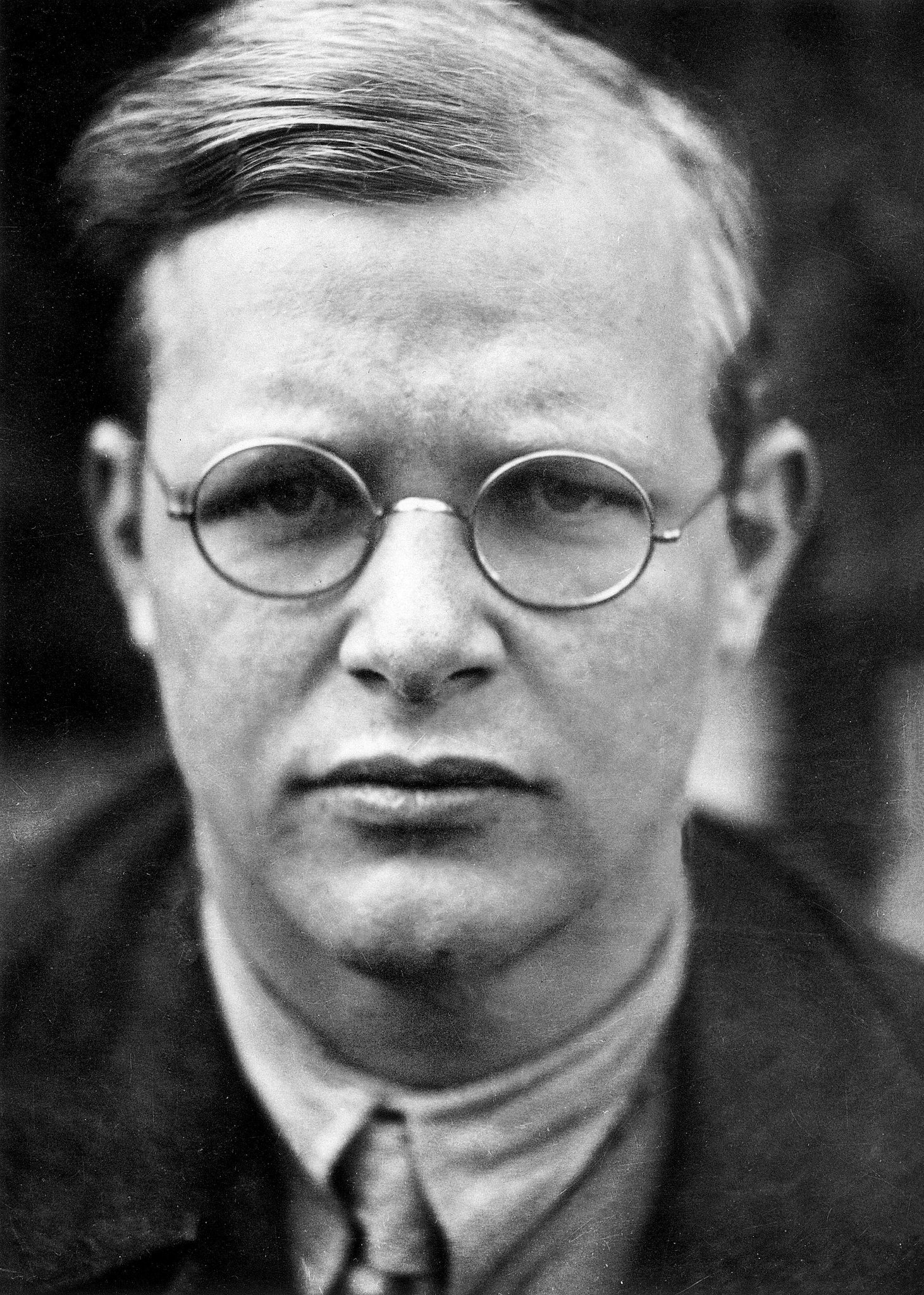
Dietrich Bonfoeffer
- Bonhoeffer (1906 – 1945) was a Lutheran pastor, theologian, anti-Nazi dissident, and key founding member of the Confessing Church.
- His writings on Christianity's role in the secular world have become widely influential, and his book The Cost of Discipleship has been described as a modern classic.
- Apart from his theological writings, Bonhoeffer was known for his staunch resistance to the Nazi dictatorship, including vocal opposition to Hitler's euthanasia program and genocidal persecution of the Jews.
- He was arrested in April 1943 by the Gestapo and imprisoned at Tegel prison for one and a half years. Later, he was transferred to Flossenbürg concentration camp.
- After being accused of being associated with the 20 July plot to assassinate Adolf Hitler, he was quickly tried, along with other accused plotters, including former members of the Abwehr (the German Military Intelligence Office), and then hanged on 9 April 1945 as the Nazi regime was collapsing.
The following paragraphs are the opening paragraphs of a 2015 article in The Washington Post (the link appears at the end for those who wish to read the whole article):
From Nazi Germany, a shining light for our dark political timesBy Michael GersonDecember 24, 2015The current ferment of American politics has brought comparisons to Europe in the 1930s, with echoes of leaders who stoke anger against outsiders and promise a return to greatness through the application of a strongman’s will.The analogy is hardly exact. Lacking the economic chaos and fragile institutions of Weimar Germany, the United States has fewer footholds for fascism. But the reaction to fascist darkness in the 1930s produced a figure, a bright light, who should guide us.Dietrich Bonhoeffer was a German theologian who resisted the Nazis and the influence of Nazism in his own church. He spoke out on behalf of German Jews, was implicated in a plot against Adolf Hitler’s life, was imprisoned, wrote and ministered for years from confinement, then was led naked to the execution ground and hanged with a noose of piano wire, just weeks before the end of World War II.
From Steve M, also in response to the Bytes post about Nazi revision of Christmas:
Fantastic Bytes today Your Lordship. Thank you : I am currently researching the second in my Hitler trilogy, which has to be delivered by the end of March 2021.Hope Christmas went well for you and yours.Steve m
Thank you Steve, best wishes for the next novel.
Saturday, December 26, 2020

5 Minutes of History: Christmas and the Nazis
________________
For my father in law Noel, the most knowledgeable person I know on the history of World War 2 and on the history of National Socialism. By the way, he will be 94 on January 3.
________________
George Orwell’s novel 1984 has as its main character a man named Winston Smith. It is a future plagued by war, totalitarian control and rigid regimentation. Smith works at the Ministry of Truth, where he rewrites historical records to conform to the state's ever-changing version of history. Winston revises past editions of The Times, while the original documents are destroyed. The language of the day is Newspeak, with words regularly being redefined or lost entirely.
Sound farfetched? Then have a quick look at the revision of Christmas by Hitler and the Nazis.
________________
Some quickfacts:
- The Nazis ruled Germany from 1933 to 1945. Prior to that, Christianity had been the main faith of the Germanic people, dating back to the 6th century.
- Nazism sought to transform the attitudes, values and mentalities of the German people into a collective consciousness, a single "national community". The motto of the Nazi Party was Ein Volk, ein Reich, ein Führer - one people, one realm, one leader.
- According to journalist William Shirer, the author of “The Rise and fall of the Third Reich”:
"under the leadership of Rosenberg, Bormann and Himmler—backed by Hitler— the Nazi regime intended to destroy Christianity in Germany, if it could, and substitute the old paganism of the early tribal Germanic gods and the new paganism of the Nazi extremists."
- Just as early Christian missionaries found it easier to incorporate pagan rituals and trappings into Christian theology with a Christian bent, rather than seeking to eradicate the rituals altogether, so the Nazis did the same but in reverse.
- The Nazis had one fundamental problem in doing so: the fact that Jesus was Jewish.
- Nazi ideologists claimed that the Christian elements of the holiday had been superimposed upon ancient Germanic traditions, that Christmas Eve originally had nothing to do with the birth of Jesus Christ, but instead celebrated the winter solstice and the 'rebirth of the sun'. The swastika, it was declared, was an ancient symbol of the sun.
- Santa Claus was declared to be a Christian reinvention of the Germanic god Odin. Accordingly, holiday posters were made to depict Odin as the "Christmas or Solstice man", riding a white charger, sporting a thick grey beard and wearing a slouch hat, carrying a sack full of gifts.
- The traditional stable crib was replaced by a garden containing wooden toy deer and rabbits; Mary and Jesus were depicted as a blonde mother and child.
- The Christmas tree was also changed. The traditional names of the tree, Christbaum or Weihnachtsbaum, was renamed in the press as a fir tree, light tree or Jul tree. The star on the top of the tree was sometimes replaced with a swastika, a Germanic sun wheel or a sig rune, and swastika-shaped tree lights.
- An attempt was made to remove the association of the coming of Jesus and replace it with the coming of Hitler, referred to as the "Saviour Führer".
- Christmas carols were also changed. The words to the German hymn "Silent Night", and all other carols, were changed so that they made no reference to God, Christ, or religion:
“Silent night, Holy night,
All is calm, all is bright.
Only the Chancellor stays on guard
Germany’s future to watch and to ward,
Guiding our nation aright.”
- Words were also changed to the hymn "Unto Us a Time Has Come" so as to remove references to Jesus. The modified version of the hymn was in use for several more years in post-war Germany. The most popular carol promoted by the Nazis was Hans Baumann's "Exalted Night of the Clear Stars" [Hohe Nacht der klaren Sterne], which replaced traditional Christian themes with Nazi racial ideologies. The carol was popular after the collapse of Nazi Germany, was regularly performed into the 1950s, and is still sometimes performed in the modern day.
- Shop catalogues containing children's toys made available during the holiday season featured chocolate SS soldiers, toy tanks, fighter planes and machine guns. As a sign of appreciation, Heinrich Himmler frequently gave SS members a Julleuchter ("Yule lantern"), a kind of ornate Germanic candlestick, some of which were made at Dachau concentration camp. Housewives were prompted to bake biscuits in the shape of birds, wheels and swastikas for their children.
- By 1944 the movement to remove Christian influences from Christmas lessened as the government concentrated more on the war effort. By the end of the war, the Nazis had tried to turn Christmas into a ceremony of mourning for the fallen but, by then, hardly anyone took notice.
________________
Gallery:

Adolf Hitler meets two, Santa Clauses during a Christmas party given by the Chief of the Chancellery in Berlin in 1937.

Nazi Christmas decorations


A Christmas wreath redone in Nazi style

Adolf Hitler, seen as a WWII-era Christmas decoration


A Christmas postcard, sent by Hitler in 1942.

A Christmas postcard sent by Johanna Maria Magdalena “Magda” Goebbels, the wife of Nazi Germany’s Propaganda Minister Joseph Goebbels.

Picture showing a mother holding her child next to a Christmas tree, while three soldiers trudge through the snow of the east. It faces a poem by Herybert Menzel titled “Soldiers’ Christmas.”

Magazines targeted at German women, like Frauen-Warte above, espoused Hitler’s religion, based on ancient runes, where the winter solstice was the focus, not God or Jesus. Suggesting the German people were supreme, editorials encouraged Germans to worship themselves, not God.


A Christmas-themed stamp emphasizes light.

________________
Sources:
Independent:
“How the Nazis stole Christmas.”
Dangerous Minds:
“Chilling images of Hitler celebrating Christmas and decorations inspiored by the Nazis”
Wikipedia:
“Christmas in Nazi Germany”
Subscribe to:
Posts (Atom)