Thursday, February 13, 2014

Recycled Art: Tom Deininger

Sept
2013Sept
2013
It’s tough enough to create an artwork with oils, watercolour or clay, the ultimate success or failure depending on knowledge, imagination, technique, content and design, plus a host of other factors that I haven’t mentioned. So how much more difficult is it when the art works are made from recycled materials, from items salvaged from rubbish, from what others have thrown away? And even more difficult than that, to do it in such a way that the final result makes you stop and look because of the impact.

In the weeks to come I will post examples – collages, sculptures, statues – of art works made from recycled materials. I have no doubt that you will be as awed as I when you see them.

First up: The art of Tom Deininger.

Tom is a 43 year old American who is both a painter of fine art and an artist who uses found and recycled materials, from electronics parts to cigarette butts, to create a variety of works of varying styles and subject matter:

(To get the full effect, move away from the computer screen and view the pics from a greater distance).


Self Portrait

Cigarette butts found in beach parking lots around Newport (RI), attached to a foam insulation background.

Detail


Bottle cap mandala

"A work of art is the unique result of a unique temperament."

- Oscar Wilde


* * * * * * * * *

Wednesday, February 12, 2014

Some Word Origins: A, B and C


Assassin

It was previously a commonly held view that the word assassin derived from a secret Muslim sect that engaged killers to terrorise their Christian enemies by performing murders as a religious duty. These acts were carried out under the influence of hashish and so the killers became known as hashshashin, meaning eaters or smokers of hashish, which evolved into the word assassin.

Modern thinking is that in the 11th and 12th centuries the term was applied to a particular sect by their opponents  as a derogatory and abusive description, much like calling someone a pot-head today. It was picked up and disseminated across Europe by Crusaders, further cementing the idea of secret and cold blooded killers carrying out their work whilst high on hashish. In truth, far from being stoned druggies, the assassins were intelligent, educated, athletic and highly trained in combat and disguise. A fearsome reputation developed. It was thought they could enter wherever they wished and kill whomsoever they targeted. At the same time, they took pains not to kill anyone not their target.

* * * * * * * *


Balls to the Wall

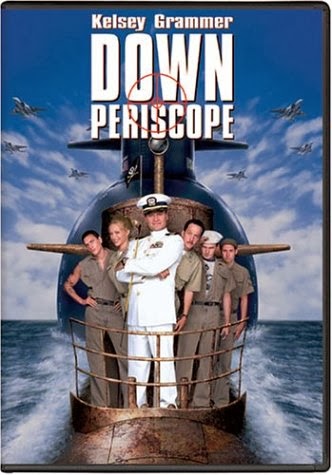
Anyone who loves the movie Down Periscope as much as I do will recall the scene where Lauren Holly, as Diving Officer Lt Emily Lake, discovers her hidden mojo and becomes gung-ho.  As the crew of the USS Stingray prepare to battle the nuclear sub USS Orlando in a war game, Emily tells the all male crew “Balls to the wall, boys!”

The expression, meaning a complete effort, contrary to expectations has nothing to do with male anatomy.

The handles controlling the throttle on aircraft were topped with ball shaped grips and were known as “balls”. Pushing the balls forward increased the amount of fuel to the engines and therefore increased the speed. Pushing the balls to the wall, that is, the panel, meant accelerating to the maximum speed. Hence the expression came to mean all out effort.

The first recorded use of the terms is from 1967 in Frank Harvey’s Air War—Vietnam:

You know what happened on that first Doomsday Mission (as the boys call a big balls-to-the-wall raid) against Hanoi oil.

It has been asserted that the phrase was already in use in that context at the time of the Korean war.

* * * * * * * *


“We'll pay you in silver
Cash on the nail”

Caiaphas, “Blood Money”
Jesus Christ Superstar

Unlike the above reference, the term “cash on the nail”, meaning immediate payment, does not hark back to the crucifixion.

Many authorities assert that the phrase has its origins in the bronze pillars outside the Corn Exchange in Bristol and the Stock Exchange in Limerick and Liverpool. These pillars, called “nails”, date from the mid 16th century and were used as tables to seal deals and make payments. 

Nails in Bristol

More likely is the explanation that it comes from previous European versions of the phrase that meant to pay immediately, including the 14th Anglo-Norman phrase "Payer ser le ungle.” The word "ugula" meant "nail" or "claw." Other languages used similar phrases, some of which used words that meant "nail" that also derived from the Latin word "ungula." The sense of the earliest version of the phrase is clearly 'payment with the hand'.

* * * * * * * * *

Monday, February 10, 2014

Reader Comments


_____________________________

In respect of the "Dead cat on a line" post:

From Sue P:

Was there also a link to the Last of the Mohicans? I seem to recall a link to the Catskill Mountains

And there is a band by that name

Can readers assist?

* * * * * * * *

From Peter M:

Back in the day when corrupt NSW police suspected their phones were tapped or they were otherwise under surveillance the standard warning comment to a colleague was "there's a whale in the bay" 
All the best 
Peter

* * * * * * * *

From Byter Tim B:

Hello Otto 
Thanks for the research. A masterful job I might add. I think I’ll go with the DARE explanation that someone is trying to deceive you or that something is going on behind your back. 
Thanks again and once again, I love Bytes Daily. 
Tim

_____________________________

In respect of the Funny Friday item on piano accordions: 

From Brett B:

Here's one that has also been applied to banjoes: 
Q: What's perfect pitch? 
A: When the accordion lands in the dumpster without hitting the sides. 

_____________________________

In respect of the item on Hitler's nephews and niece:

From Kara O: 

Interesting [as always] Otto. I find it bizarre that William Patrick Hitler / Stuart-Houston would name his first born son Alexander Adolf! 
Regards, Kara

My reply:

I know!! Adolf was a more common name back then, Hitler effectively killed it. He also killed the toothbrush moustache. However I am still surprised that, given his professed hatred for his uncle, he called his first born Adolf.

Otto

From Kara O:

Disregarding the fact that I should be doing other things, I just made a short, rather unscientific survey (covering one English County and a single well known Germanic given-name).

Birth Registration in the English County of Middlesex: (10 year periods ending with year shown)

Ending / Adolf / Adolph
1890        25    167
1900        42    155
1910        44    127
1920        32     66
1930         3     28
1940         4      1
1950         2      0
1960         1      4

A high proportion of the results for Adolph included versions ending in -e, -o, -us. Equally high numbers had Italian surnames. 
Up to 1920 the results were mostly Adolf with a couple of female children named Adolfine, and one Adolfina. Nearly all (that I actually looked at) had Germanic surnames.

Remembering that many 'English' families with Germanic surnames, Anglicised their names, they would also have followed through by using English given-names for their children. The numbers dropped significantly in the decade ending 1920, and as you say just about died out altogether since.

Looking at the US Census for 1940 and specifying an exact birth year (born in US) and restricting given name to Adolf I got these figures
1890 - 1,146; 1900 - 746; 1910 - 594; 1920 - 353; 1930 - 88; 1939 - 37 

Was Adolf used much in the Netherlands? The most common names in my husband's family tree are Hermann, Jacob, and Johannes.

Kara

Comment:

Thanks, Kara.

From Wikipedia:

Adolf was a common name for newborn babies in German-speaking countries in the 19th century and early 20th century until the end of World War II. Because of negative associations with the Nazi dictator Adolf Hitler, the name "Adolf" is now rarely given as a forename to males. The name is still common among now-elderly people. Adolf Dassler, the founder of Adidas, ended up using his nickname "Adi" in his professional life and for the name of his company.

Similarly, the French version, Adolphe — previously a fairly common name in France and also the name of a classical work of French literature — has virtually disappeared, and the Italian name Adolfo has suffered a similar fate.

However, the Spanish and Portuguese version, Adolfo, has not become stigmatised in the same way. It is still in common use in Spanish- and Portuguese-speaking countries.

In the Netherlands many men who had been given the name Adolf changed their name to Dolf after World War II.

* * * * * * * *
From Charles Z:

Otto - where did I get the notion that Hitler's family name was Shicklegruber? 
Charlie

Comment:

  • Adolf Hitler’s father was a man by the name of Alois Hitler (1837-1903).

  • Alois was the ex-nuptial son of Maria Anna Schicklgruber (1795-1847), but the baptismal register did not show the name of his father and hence he was known by his mother’s family name, Schicklgruber.
  • In 1842, when Alois was aged 5, Maria Anna married Johann George Hiedler. Anna Maria died in 1847 and Johann in 1856. Alois, aged 19, was thereafter raised in the household of Johann’s brother, also named Johann: Johann Nepomuk Hiedler. 
  • In 1876 Alois was legitimated and the baptismal register was changed by a priest to register Johann George Hiedler as Alois’ father, but recorded as George Hitler.
  • In 1885 Alois married his third wife, Klara Polzl, his housekeeper.
Alois Hitler, formerly Alois Schiklgruber

Klara Hitler

  • They had the following children:

Gustav Hitler (born 10 May 1885, died of diptheria on 8 December 1887)

Ida Hitler (born 23 September 1886, died of diphtheria 2 January 1888 in Braunau am Inn)

Otto Hitler (born and died 1887 in Vienna, lived three days) 

Adolf Hitler (born 20 April 1889, committed suicide 30 April 1945)

Adolf Hitler as a baby

Edmund Hitler (born 24 March 1894, died of measles, 28 February 1900)

Paula Hitler (born 21 January 1896, died 1 June 1960)

  • Alois, a strict and stern disciplinarian, had little interest in the children and left the child raising to Klara, which included two children of his first marriage, Alois Jnr and Angela. An abusive husband and abusive father, he preferred to spend his time in the tavern and beekeeping. After Alois Jnr quarreled with him and left for good, Angela married and left, and after son Edmund died of measles, the only children remaining were Adolf and Paula. Alois and Adolf also argued, the former seeking to browbeat his son and the latter defying. Alois died in 1903 aged 66. Klara died in 1907 aged 47, of breast cancer, leaving Adolf (age 18) and Paula (age 11), to complete their education with Klara’s parents.

Adolf Hitler at the grave of his parents in 1938.  This is a postcard.


The grave of Adolf Hitler's parents in Leonding, near Linz, in Austria.

In 2012 the tombstone marking the grave, a place of pilgrimage for neo-Nazis, was removed at the request of a descendant. The grave had been a cult site ever since Hitler paid homage there in 1938. 

In Austria graves are leased for 10 year periods, then they can be reused without removing those already interred. Asked whether he would have trouble persuading people to let their loved ones share a grave with the parents of Adolf Hitler, village priest Kurt Pitterschatscher said: "I really haven't thought about it."

* * * * * * * * *


Saturday, February 8, 2014

Hitler's Nephews and a Niece


One nephew was born in England, lived in America and fought for the US in World war 2; one fought for Germany on the eastern Front and a third fought in the Luftwaffe as well as serving as Hitler's double, his sister being the subject of Uncle Adolf's obssession . . .


* * * * * * * *

William Patrick Hitler:


William Patrick Hitler (later changed  to William Patrick Stuart-Houston) was the nephew of Adolf Hitler, born in Liverpool in England. William’s father. Alois Hitler Jnr was living in Dublin when he met Bridget Dowling there in 1909. They married and moved to Liverpool where William was born in 1911. Bridget’s manuscript “My Brother-in-Law Adolf” records that Adolf stayed with them from November 1912 to April 1913 to avoid the draft in Austria, but her claims have been dismissed by historians. Alois went on a gambling tour of Europe in 1914 and was prevented from returning to England by the war. He abandoned his family and remarried bigamously. In the 1920’s he asked Bridget to let William come to Germany, which Bridget finally allowed in 1929 when William was 18.

With Hitler’s assumption of power in Germany, his nephew repeatedly tried to blackmail him into better and higher positions, threatening to tell embarrassing stories to the papers about his family and that Hitler’s alleged paternal grandfather was Jewish. Hitler arranged a job in a bank for him, which he subsequently left after convincing Hitler to get him a job at an automobile factory, as a salesman. Hitler's patience had worn thin by this time and he began calling William “my loathsome nephew”.  He is also reported to have commented “I didn’t become Chancellor for the benefit of my family … No one is going to climb on my back.”

Fearing that he was being set up  for reprisals, William fled Germany for London where he penned an article for Look magazine called “Why I Hate My Uncle.” Making a lecture tour of the US with his mother, he was stranded there when war broke out. 

In 1942, he penned an eloquent plea to President Franklin D. Roosevelt to let him join the Allied cause. Here is an excerpt: 

I am the nephew and only descendant of the ill-famed Chancellor and Leader of Germany who today so despotically seeks to enslave the free and Christian peoples of the globe. ...

I am one of many, but I can render service to this great cause and I have a life to give that it may, with the help of all, triumph in the end. ...

As to my integrity, Mr. President, I can only say that it is a matter of record and it compares somewhat to the foresighted spirit with which you, by every ingenuity known to statecraft, wrested from the American Congress those weapons which are today the Nation's great defense in this crisis. I can also reflect that in a time of great complacency and ignorance I tried to do those things which as a Christian I knew to be right. As a fugitive from the Gestapo I warned France through the press that Hitler would invade her that year. The people of England I warned by the same means that the so-called "solution" of Munich was a myth that would bring terrible consequences. On my arrival in America I at once informed the press that Hitler would loose his Frankenstein on civilization that year. Although nobody paid any attention to what I said, I continued to lecture and write in America. Now the time for writing and talking has passed and I am mindful only of the great debt my mother and I owe to the United States. More than anything else I would like to see active combat as soon as possible and thereby be accepted by my friends and comrades as one of them in this great struggle for liberty.

J Edgar Hoover cleared him to serve in the US Navy in 1944 where he served as a pharmacist’s mate and hospital corpsman. He was discharged in 1947 and had been wounded in action. 

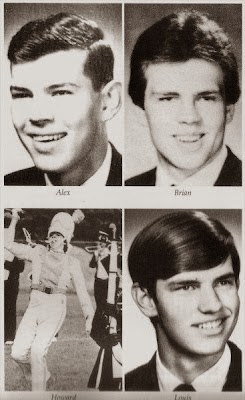
After leaving the Navy, William changed his last name to Stuart-Houston, married a lady by the name of Phyllis, and moved to Long Island. He and Phyllis sought anonymity, William dying in 1987 and Phyllis in 2004. They had four sons:  Alexander Adolf (1949-), Louis (1951-), Howard Ronald (1957-1989) and Brian William (1965-).  None of their four sons had children of their own. Alexander has denied that they had deliberately remained childless so as to discontinue the Hitler bloodline.

Some pics:


With mother Bridget Dowling

Another with mother.


Enlistment

The children of William and Phyllis

* * * * * * * *
Heinrich "Heinz" Hitler:

Alois, William’s father, had sired another son in Germany after abandoning the family. (He was saved from being jailed in Germany for bigamy only by the intervention of Bridget, who advised that they had separated when he entered into the second marriage).  


The German-born son, Heinrich "Heinz" Hitler, was a committed Nazi and served on the Eastern Front, where he was captured in 1942 during Operation Barbarossa, the invasion of the Soviet Union. After being interrogated and tortured by the Russians, he died a prisoner at the age of 21.

* * * * * * * *
Leo Rudolf Rabaul:


Leo Rudolf Raubal (1906 – 1977) was a half nephew of Adolf Hitler, the son of Hitler’s half sister Angela. According to William Patrick Hitler, Leo did not like his uncle Adolf and he blamed him for the death of his sister Geli (see below).  
Leo served in the Luftwaffe during World War 2 and so resembled Hitler that he sometimes served as his double. Injured in the Battle of Stalingard in 1943, Hitler refused a request by others for a plane to fly him out. He was captured by the Russians and eventually released in 1955, returning to Austria where he worked as a teacher. He died in 1977, survived by his son Peter. 

* * * * * * * *

Angela Maria "Geli" Rabaul:


Hitler’s sister Angela, the mother of Leo and of his sister Geli, worked as Hitler’s housekeeper, Geli’s father having died when she was 2. From an early age Hitler had taken a close interest in her. 

At age 21, in 1929, she moved into his apartment after enrolling to study medicine. Hitler was controlling and possessive towards her. He cut her off from friends, made sure that she was accompanied when she went anywhere and forced her to end a relationship she was in. He kept her a virtual prisoner. There have also been accounts that she was his lover and that he forced her to take part in perverted sexual activities,

Following an argument in 1931, after Hitler departed for a meeting in Nuremburg, Geli was found dead as a result of a gunshot wound to the chest. 

Rumours immediately began in the media about physical abuse, a sexual relationship and even murder. 

Hitler later declared that Raubal was the only woman he had ever loved. Her room at the Berghof was kept as she had left it, and he hung portraits of her in his own room there and at the Chancellery in Berlin.


* * * * * * * * *

Friday, February 7, 2014

Funny Friday: Accordions Pt 1


I heard a comment not long ago that Mozart's Hell was a roomful of piano accordions.  That may be a bit unkind, even if the accordion is the geeky nerdy one of the musical instrument world.  Here are some other views on the instrument . . .

* * * * * * * *

A gentleman is a person who can play the accordion but doesn't.

* * * * * * * *


* * * * * * * *

Honda have just created a new small car that can be stretched out to make it bigger if you have extra passengers.

They've called it the Honda Accordion.

* * * * * * * *


* * * * * * * *

Q: What's the difference between an accordion and an onion? 

A: People cry when you chop up an onion. 

* * * * * * * *


* * * * * * * *

Q: What's the range of an accordion? 

A: Twenty yards if you've got a good arm! 

* * * * * * * *

Q: What's the difference between an accordion player and a terrorist? 

A: Terrorists have sympathizers. 

*  * * * * * * *


* * * * * * * *

Q. What do you get when you toss an accordion off a tall building? 

A. Applause.

* * * * * * * *

A man parks his car in a rough part of town with two accordions on the back seat, forgetting to lock the back door.

When he returns, there are three accordions.

* * * * * * * *
Corn Corner:


My girlfriend left me the other day..

Accordion to her I make tune many musical puns.


* * * * * * * * *

Thursday, February 6, 2014

Dead Cat on a Line


After I posted items about dead cats I received an email from Byter Tim:

Otto, 
Have you ever heard the phrase...."There's a dead cat on the line"? I tried to find it in Wikipedia, but to no avail. Just curious, I enjoy your Bytes daily, thanks for sending. 
Tim

I hadn’t heard the expression before, perhaps readers have, but my researches indicate the following:

The expression means that there is something wrong or that there is something suspicious happening.

According to a 1982 article by William Safire in the Palm Beach Post, which can be read at:
there are a number of competing explanations as to the origin of the phrase.

His comments, as set out in the above article, describes research by the Smithsonian into the origin of that particular expression:

Interviewers compiling the Dictionary of American Regional English (DARE) asked hundreds of interviewees the question “When you think that someone is trying to deceive you, or that something is going on behind your back, you say ‘There’s . . . ?’” Twenty one respondents answered “Dead cat on a line.”

Lexicographic Irregulars provided DARE with the following speculative explanations of the phrase:

  • third party eavesdropping on a party line;
  • a ‘line dance’ where a stranger did not know the local steps and was therefore described as ‘dead’;
  • an abandoned Caterpillar tractor that had been used to lay a gas pipeline;

Safire’s request for assistance from readers simply presented more (but logical) possible derivations:

  • In Louisiana it was common to fish for catfish by leaving a line in the water with various other lines and hooks coming off it. This was known as a trot line and the fisherman would check the trot line each day. If a neighbour came along and found a dead catfish on the line in circumstances suggesting that the line had not been checked, it could give rise to a suspicion that something was wrong with the person who owned the line.
  • Difficulties in getting telegrams through resulted in a repair man going out to check the wires. He reported back that a cat had gone up one of the poles and died on the line, hence the inability in getting the telegrams through.
  • Back in days that were less humane, unwanted litters of kittens were often tied into a bag and drowned. Anglers who thought that they had a large fish hooked were often disappointed to find that they had a dead cat on the line instead.

There you have it, Tim, you pays your money, you takes your pick.

(Look up an earlier Bytes for the origin of that last expression:

* * * * * * * * *