Thursday, November 2, 2023

AESOP'S FABLES: THE EAGLE AND THE ARROW

-----------oOo-----------

Aesop's Fables, or the Aesopica, is a collection of fables credited to Aesop, a slave and storyteller believed to have lived in ancient Greece between 620 and 564 BCE. Of diverse origins, the stories associated with his name have descended to modern times through a number of sources and continue to be reinterpreted in different verbal registers and in popular as well as artistic media. The fables originally belonged to the oral tradition and were not collected for some three centuries after Aesop's death. By that time a variety of other stories, jokes and proverbs were being ascribed to him.

-----------oOo-----------


The Eagle and the Arrow

An Eagle was soaring through the air when suddenly it heard the whizz of an Arrow, and felt itself wounded to death. Slowly it fluttered down to the earth, with its life-blood pouring out of it. Looking down upon the Arrow with which it had been pierced, it found that the shaft of the Arrow had been feathered with one of its own plumes. “Alas!” it cried, as it died, “We often give our enemies the means for our own destruction.”

Diferent version:

An eagle sat on a lofty rock, watching the movements of a Hare whom he sought to make his prey. An archer, who saw the Eagle from a place of concealment, took an accurate aim and wounded him mortally. The Eagle gave one look at the arrow that had entered his heart and saw in that single glance that its feathers had been furnished by himself. “It is a double grief to me,” he exclaimed, “that I should perish by an arrow feathered from my own wings.”

---------oOo---------

Some comments:

The story of the eagle brought down by an arrow vaned with its own feather is referred to in several ancient Greek sources.

It is generally applied to the misery of realising that one has contributed to one's own injury but also as a warning against self-reliant pride.

The earliest mention of the fable is a brief reference in the 5th century BCE to refer to the personal blame felt by Achilles for the death of his friend Patroclus. “So the eagle, pierced by the bow-sped shaft, looked at the feathered device and said, “Thus, not by others, but by means of our own plumage are we slain”.

A version titled "The Archer and the Eagle" and ascribed to Aesop appears in his Fables.

A 1544 illustration of the wounded eagle is accompanied by a verse commenting that its sorrow at being struck down is doubled by the knowledge that it has furnished the means for its own destruction.

A wider lesson is drawn from the incident in another interpretation. The dying bird blames humans for using its own parts against itself and claims that they have learnt this cruelty from the way they treat each other.

A 1691 French version starts from the perception that the bird in the poem was on the look-out for a hare. If another hunter brings it down while so engaged, then it is a case of poetic justice, of having inflicted on itself the harm it was purposing to inflict on others.

Condemnation of pride was the interpretation given the fable when it travelled eastwards in the 11th century - an eagle soars through the air, vaunting itself. When it is brought down by a hunter and recognises the feathers on the arrow, the realisation comes that it has been injured by its own means.


-----oOo-----


The above reminds me of a famous phrase created by cartoonist Walt Kelly for his comic strip Pogo. Kelly coined the phrase for an anti-pollution Earth Day poster in 1970 and used it again in a special comic strip created for Earth Day 1971. The saying caught the collective imagination of the public and is still used today . . .


Wednesday, November 1, 2023

THOUGHT FOR THE DAY


FROM THE VAULT: NOVEMBER

--------oOo--------

November is the eleventh month of the Gregorian calendar.

In the northern hemisphere, autumn is coming to an end, the last leaves are falling, and it’s getting quite cold out. In the southern hemisphere. temperatures are heating up with the beginning of summer just around the corner.

--------oOo--------

Some facts and trivia . . .

--------oOo--------

November’s name has remained unchanged since the ancient Roman calendar, which was in use until 45 BC. This first Roman calendar was only made up of ten months, with November being the ninth month. September meant seven, October meant eight, November meant nine and December meant ten – sept, oct, novem, decem.

When the Julian calendar was adopted in 45 BC two new months, January and February, were added, which pushed November back to the 11th month. Despite its change in position, November was never renamed.
__________

On November 19, 1978, the largest group suicide in history took place in Jonestown, Guyana. The group who took their lives were instructed so by Reverend Jim Jones, who was the leader of the suicide cult called the “People’s Temple”. Over 900 of the cult members drank a cyanide-laced drink, with those who refused being forced to consume it.

Jim Jones
__________

November is the last of the four months which have 30 days. The other months are September, April, and June.
__________

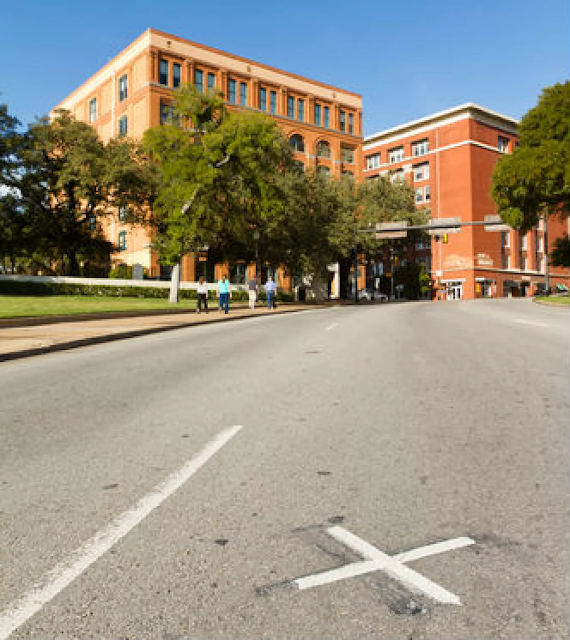
On November 22, 1963 President John F. Kennedy was fatally shot while riding along with his wife Jacqueline in a procession of cars. He was rushed to a hospital and was pronounced dead at 1 pm that day. Kennedy was the fourth US president to be assassinated, after Abraham Lincoln, James Garfield, and William McKinley.

My daughter, Acacia (whose birthday is November 20, btw), recently visited Dallas and sent me some pics. I was surprised to see that there are X’s painted on the ground where the shots hit . . .


The Texas Book Depository, now turned into a museum . . .


__________

The Anglo-Saxons had a fitting name for November. It’s usually at this time of the year in the northern hemisphere that cold winds start to chill to the bone, and as such, they called it “Wind Monath”, or wind month.

The Anglo-Saxons also called the month of November “Blod Monath”, or blood month. It gained this name as it was in November that they would traditionally slaughter cows to provide food for the long winter months.
__________

The fifth of November marks a historic day in the UK. On this day in 1605, a group of Roman Catholics plotted to blow up the English Parliament while King James I was inside. Fortunately, the plot was foiled. Every year festivities are held across the country to celebrate the group’s failure, which includes setting off countless fireworks, lighting bonfires, and even setting alight effigies of Guy Fawkes, one of the conspirators.


English Folk Verse (c.1870)

The Fifth of November

Remember, remember!
The fifth of November,
The Gunpowder treason and plot;
I know of no reason
Why the Gunpowder treason
Should ever be forgot!
Guy Fawkes and his companions
Did the scheme contrive,
To blow the King and Parliament
All up alive.
Threescore barrels, laid below,
To prove old England's overthrow.
But, by God's providence, him they catch,
With a dark lantern, lighting a match!
A stick and a stake
For King James's sake!
If you won't give me one,
I'll take two,
The better forme,
And the worse for you.
A rope, a rope, to hang the Pope,
A penn'orth of cheese to choke him,
A pint of beer to wash it down,
And a jolly good fire to burn him.
Holloa, boys! holloa, boys! make the bells ring!
Holloa, boys! holloa boys! God save the King!
Hip, hip, hooor-r-r-ray!

By the way . . .


The Guy Fawkes mask (also known as the V for Vendetta mask or Anonymous mask) is a stylised depiction of Guy Fawkes (the best-known member of the Gunpowder Plot, an attempt to blow up the House of Lords in London on 5 November 1605) created by illustrator David Lloyd for the 1982–1989 graphic novel V for Vendetta. Inspired by the use of a mask representing Fawkes being burned on an effigy having long previously had roots as part of Guy Fawkes Night celebrations, Lloyd designed the mask as a smiling face with red cheeks, a wide moustache upturned at both ends, and a thin vertical pointed beard, worn in the graphic novel's narrative by anarchist protagonist V.

Following the release of the graphic novel and its 2006 film adaptation, this design came to represent broad protest, later also becoming a symbol for the online hacktivist group Anonymous.
__________

Thanksgiving is celebrated in the US on the fourth Thursday of November and has been celebrated since 1621. The first Thanksgiving was a feast celebrating the first bountiful harvest of the pilgrims of Plymouth and New England. It is still celebrated in a similar way, with families coming together and sharing plentiful amounts of food traditionally available during November.

Ron Cobb’s take on Thanksgiving
__________

The Full moon in November is traditionally called the Beaver Moon in the US. The tradition goes back to North America’s early colonial years, as it was during this time of year that hunters would set their beaver traps for the last time before the lakes and water sources they lived in froze over.
__________

November has just one birthstone, the radiant topaz. The topaz is symbolic of many things, but most of all it is a symbol of strength and honour. The ancient Greeks also believed that the stone had the ability to turn oneself invisible.


Common topaz in its natural state is colourless, though trace element impurities can make it pale blue or golden brown to yellow orange. Topaz is often treated with heat or radiation to make it a deep blue, reddish-orange, pale green, pink, or purple.
__________

November also only has one birth flower, the chrysanthemum. Different coloured chrysanthemums have different meanings though – a white flower symbolizes pure love and truth, a red flower says “I love you” while a yellow flower is a symbol of unrequited love.

In Australia, the chrysanthemum flower is often considered the official flower for Mother’s Day.

In Belgium, Hungary, Lithuania, France, Poland, Austria, and other parts of Europe, the chrysanthemum flower is used at funerals and as memorial flowers to honor the dead. In these places, the chrysanthemum is often associated with death.
__________

November 3, 1957, was a historic day for both Soviet Russia and the world. It was on this day that the first spacecraft carrying a live passenger was successfully launched into space. The passenger was Laika, a dog, an unassuming looking stray pooch who had been found on the streets of Moscow. The Soviets used stray dogs in their tests because they assumed that they would be used to the hunger and cold that they would inevitably experience in outer space.

No capacity for her recovery and survival was planned, and she died of overheating or suffocation hours into the flight. Little was known about the impact of spaceflight on living creatures at the time of Laika's mission, and the technology to de-orbit had not yet been developed, so Laika's survival was never expected.


Laika died within hours from overheating, possibly caused by a failure of the central R-7 sustainer to separate from the payload. The true cause and time of her death were not made public until 2002; instead, it was widely reported that she died when her oxygen ran out on day six or, as the Soviet government initially claimed, she was euthanised prior to oxygen depletion.
__________

The beginning of the end of the War of Independence began on November 30, 1782, when a provisional treaty was signed between the newly-formed United States of America and the Kingdom of Great Britain. The final treaty wasn’t completed and signed until nearly a year later in Paris on September 3, 1783.
__________

Some of the more notable people born in November include Mark Twain, Leonardo DiCaprio, Winston Churchill, Kurt Vonnegut, and Scarlett Johansson.

Those born in November can be born under one of two very different star signs. If you’re born before November 23rd then you have the sign of Scorpio. Those born on November 23rd or later have the sign of Sagittarius. Scorpios are said to value trust and honesty above other things, as well as being quite intense yet imaginative people. Those born under the sign of Sagittarius are quite different, being energetic and idealistic, while also generous and open-minded.
__________


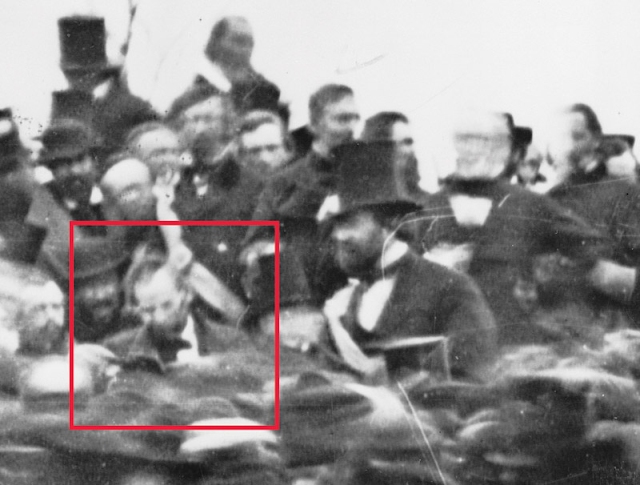
On November 19, 1863, President Abraham Lincoln delivered the Gettysburg Address at the consecration of the National Cemetery at the site of the Gettysburg battle. While Lincoln’s speech was just two minutes long it summed up everything important there is about democracy. Interestingly, Lincoln was in the middle of a minor bout of smallpox while he gave the speech, and looked drained and ghost-like.
Four score and seven years ago our fathers brought forth on this continent, a new nation, conceived in Liberty, and dedicated to the proposition that all men are created equal.

Now we are engaged in a great civil war, testing whether that nation, or any nation so conceived and so dedicated, can long endure. We are met on a great battle-field of that war. We have come to dedicate a portion of that field, as a final resting place for those who here gave their lives that that nation might live. It is altogether fitting and proper that we should do this.

But, in a larger sense, we can not dedicate—we can not consecrate—we can not hallow—this ground. The brave men, living and dead, who struggled here, have consecrated it, far above our poor power to add or detract. The world will little note, nor long remember what we say here, but it can never forget what they did here. It is for us the living, rather, to be dedicated here to the unfinished work which they who fought here have thus far so nobly advanced. It is rather for us to be here dedicated to the great task remaining before us—that from these honored dead we take increased devotion to that cause for which they gave the last full measure of devotion—that we here highly resolve that these dead shall not have died in vain—that this nation, under God, shall have a new birth of freedom—and that government of the people, by the people, for the people, shall not perish from the earth.

—Abraham Lincoln
Today, the phrase “government of the people, by the people, for the people” is still regarded as the best definition of democracy.

President Lincoln at Gettysburg. A crowd of citizens and soldiers surround Lincoln (with a red arrow pointing to his location in photo).


Tuesday, October 31, 2023

QUOTE FOR THE DAY


HALLOWEEN

---------oOo---------

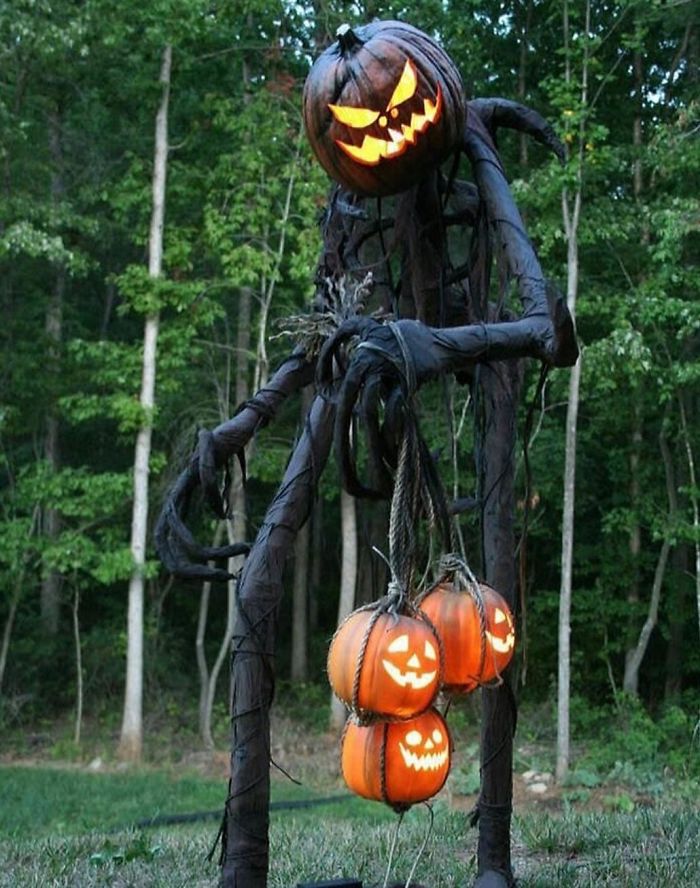
. . . Some amazing pumpkin carving . . .
__________

__________


Pumpkin Carving Of Carving A Pumpkin
__________

__________


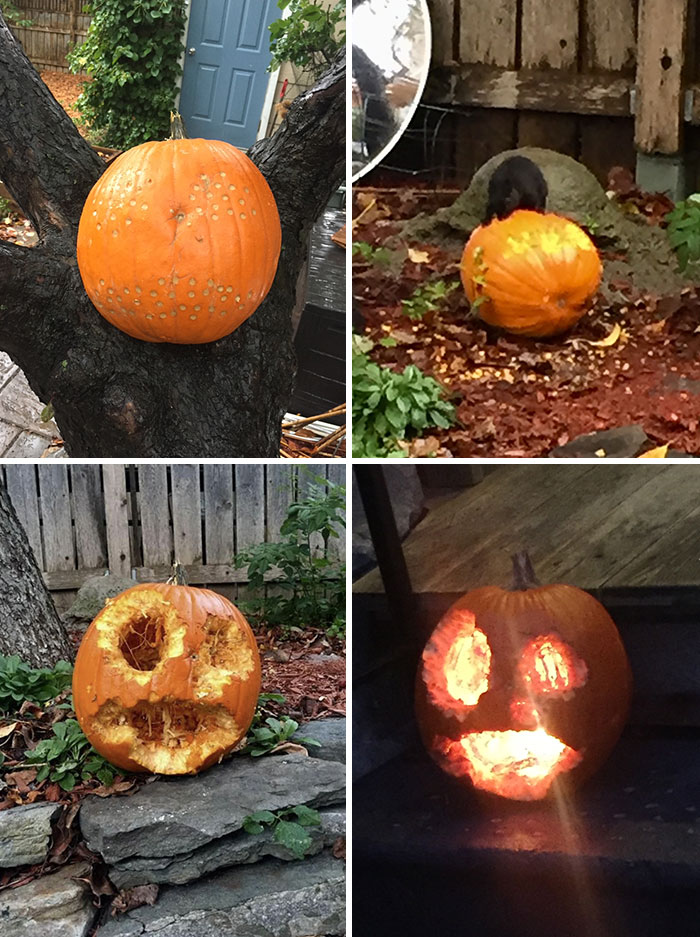
Instead Of Carving The Jack-O'-Lantern This Year, the person Poked A Bunch Of Small Holes In A Pumpkin And Stuffed The Holes With Peanut Butter. The person then let the squirrels go at it for two days. The result is something truly disturbing.
__________

__________

__________

__________

__________

__________


Carved Pumpkins By Danish Midwives At A Local Hospital
__________

__________

__________

__________

__________

__________

__________

__________

__________


Monday, October 30, 2023

THOUGHT FOR THE DAY


SKELETON LOVERS

This seems appropriate with Halloween coming up . . .

From:
Amusing Planet
July 31, 2023

Embracing, the act of holding someone or something close, goes far beyond a physical gesture; it is a powerful expression of love that transcends language, culture and time. Whether it's a warm hug between friends, a tight squeeze from a parent to a child, or an intimate embrace between romantic partners, the act of embracing communicates a deep and profound connection.

When archeologists dig up graves, sometimes they find manifestations of love through this form of expression—skeletal bodies of couples buried together, still locked in embrace. Who were they and how did they end up six feet under?

Modern scientific methods have allowed us to unravel some of these mysteries, giving us an opportunity to glimpse into the final moments of these prehistoric couples, bound together even in death.

Lovers of Valdaro


In 2007, archeologists discovered a pair of human skeletons buried face to face with their arms around each other in a lover’s embrace. The discovery was made at a Neolithic tomb in San Giorgio near Mantua, Italy. Carbon dating showed the couple died approximately 6,000 years ago.

At first, it was thought that the couple had met a tragic end. The skeletons, identified as those of a young man and woman aged between 18 and 20 years old, seemed to align perfectly with the backdrop of an Italian region renowned for its numerous tales of ill-fated romance. Mantua, the city where Romeo was banished and mistakenly informed of Juliet's death, and which inspired Giuseppe Verdi's opera Rigoletto, featuring another tale of star-crossed love and demise, fit seamlessly into this narrative.

But that didn’t seemed to be the case. There was no evidence of violent death, no fracture, or any other signs of trauma. Rather, they found a long flint blade along the thigh, and two flint knives under the pelvis. These indicate that the flint tools were buried along with the people as grave goods, and their “embrace” was carefully positioned when they were placed in the grave.

In 2014, the excavated skeletons were permanently displayed inside a glass case in the National Archaeological Museum of Mantua.

Embracing Skeletons of Alepotrypa


This burial was discovered in the Alepotrypa cave in Laconia, Greece. The pair were dated to 3,800 BCE and DNA analysis confirmed that the remains belong to a man and woman who died when they were 20 to 25 years of age.

The Alepotrypa Cave is renowned as one of Europe's largest Neolithic burial grounds. Nestled within a mountain above Diros Bay, its vast interior chambers extend more than half a kilometer. Throughout the Neolithic period in Greece, from 6000 to 3200 B.C., the cave served as a final resting place for numerous individuals, with at least 170 sets of bones discovered inside.

Around 3000 B.C., an earthquake shook the region, leading to the cave entrance's collapse. This event inadvertently sealed and preserved the cave's contents. Rediscovered in 1958, excavations began in the 1970s, unearthing a wealth of archaeological treasures.

Among the most recent finds, outside the cave on a terraced slope, are three double burials dating back to approximately 4200 to 3800 B.C. One of these burials contains the remains of a child and a newborn. In another, the bones of a young man and a young woman rest facing each other in curled positions, knees tucked beneath their chins. The final burial, however, captivated archaeologists with its extraordinary sight—an embracing couple.

Bill Parkinson, an associate curator of Eurasian anthropology at Chicago's Field Museum and part of the excavation team, described the scene as the couple appearing to be "totally spooning." The two bodies lie in an unmistakable pose of affection, with the boy as the big spoon and the girl as the little spoon. Their limbs intertwine, their arms draped over each other, frozen in a timeless hug.

Anastasia Papathanasiou, a Greek archaeologist who has been involved in the site's exploration since the late 1980s, suggests that the couple likely died in this tender embrace or were carefully arranged in this posture soon after their passing.

Hasanlu Lovers


The Hasanlu Lovers were discovered at the Teppe Hasanlu archaeological site, located in northwestern Iran. This site was once the thriving city of Hasanlu, but in 800 BCE it was destroyed by an unknown invader. The inhabitants were mercilessly slain and left unburied, while much of the city was engulfed in flames during the invasion.

Centuries later, when the site was excavated, archeologists unearthed hundreds of skeletons, and among them were the entwined remains of the “lovers”. Nestled together in a mudbrick and plaster bin, they were found facing each other and appeared to be in an embrace. The left skeleton even reached out a hand to caress the face of the other, with their arms encircling each other in an intimate gesture.

Although some signs of trauma were evident around the time of their death, no definitive fatal injuries were observed in their bones. However, this lack of evidence doesn't rule out death by injuries, as some soft tissue injuries may not have left discernible marks on the skeletons.

There is no definitive explanation as to how the two skeletons ended up in the bin. It is assumed that they crawled into the bin to escape the killings, and somehow got trapped. They probably died of asphyxiation.

At first, it was thought that the skeletons represented a male-female pair. However, through DNA analysis, it was determined that both individuals were male—one aged approximately 19–22 years old and the other between 30 and 35 years old. The revelation of their shared gender prompted media speculation regarding the nature of their relationship. But archaeologist Kristina Killgrove contends that it is erroneous to impose contemporary assumptions about sex, gender, and sexuality onto historical contexts.

Page Selinsky writes for the Penn Museum: “Human experience is full of difficult times and the need for comfort from others. As these two individuals and the other inhabitants of Hasanlu faced their darkest hour together, an embrace from a friend, lover, relative, or even a stranger might have been a natural outcome of extreme duress.”

Lovers of Cluj-Napoca


This pair of human skeletons were discovered in the cemetery of a former Dominican convent in Cluj-Napoca, Romania. The skeletons belong to a man and a woman around 30 years of age. The couple were buried facing each other, and with their hands interlocked.

The monastery was built around 1455 on the site of a Roman church and an earlier 13th century monastery. It was active only for a century until it underwent secularization in 1556 during the turbulent times of the Reformation. As a result, the historical context of the lovers' story falls within the time span between the 1450s and 1556. This timeframe is further supported by the coffin nails' material and style, which align with the date range of 1450-1550.

The man appears to have been killed by a blunt-force blow that broke his sternum, and while there is no immediately obvious cause of death for the woman, it is possible that both were murdered and buried together.

Lovers of Modena


The Lovers of Modena were discovered in a cemetery in Modena, in northern Italy. The two skeletons were buried with their hands interlocked and are believed to have been buried between the 4th and 6th century AD. Originally it was assumed that the two were composed of a male and a female, but upon scientific analysis of enamel peptides it was confirmed that the skeletons belong to two males. Researchers believe the two might have been siblings, cousins or soldiers who died together in battle. Some skeletons of other individuals discovered in the same area showed signs of trauma, probably related to death during times of violent conflict.

The pair are now on display at the Civic Museum of Modena

The Embracing Lovers of Datong


Two ancient skeletons wrapped in an eternal embrace was discovered at a construction site in Datong, in Shanxi province, China, in 2020. The remains likely belonged to a man and woman who lived during the Northern Wei period (386 to 534 C.E.) They were positioned with their arms wrapped around each other’s waists and the woman’s face pressed against the man’s shoulder.

The man’s skeleton shows signs of an unhealed injury to his right arm. Conversely, the woman appeared to be without injury, which led the researchers to speculate on two potential scenarios. One hypothesis was that she might have taken her own life after the man's demise, choosing to be buried alongside him. Alternatively, it is also possible that both individuals passed away simultaneously, possibly due to an illness.