Thursday, March 26, 2015

Quote for the Day: Jonathan Swift

"And he gave it for his opinion, that whosoever could make two ears of corn or two blades of grass to grow upon a spot of ground where only one grew before, would deserve better of mankind, and do more essential service to his country, than the whole race of politicians put together."

- Jonathan Swift, Gulliver’s Travels, A Voyage to Brobdingnag, Ch. 6


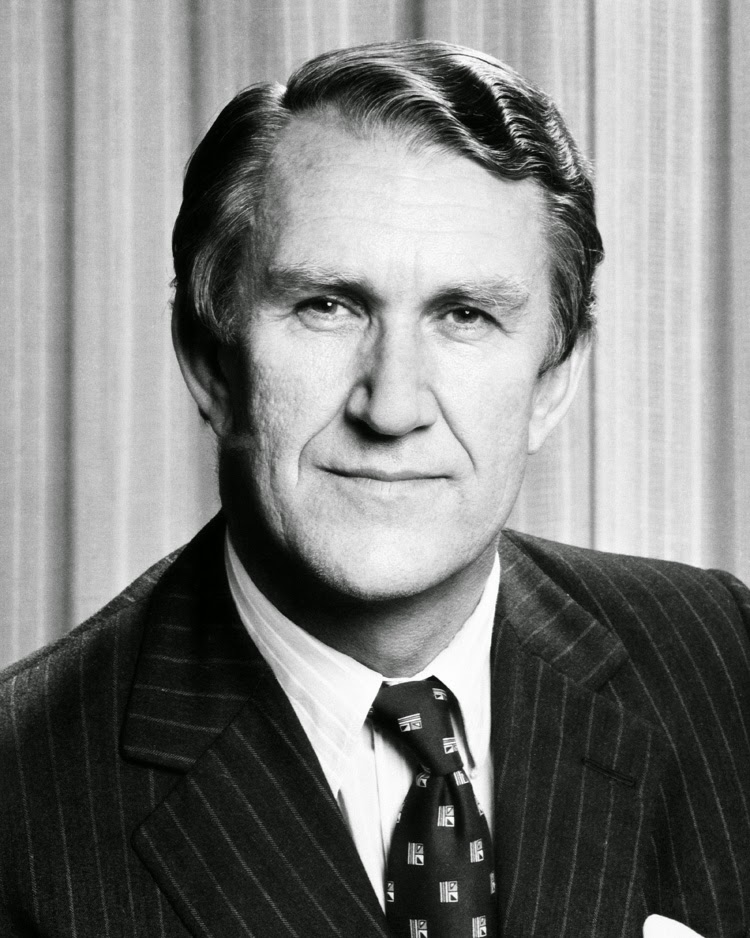
Stephen Holland and Malcom Fraser

I am indebted to Byter Vince C for bringing the anecdote below to my attention.
_____________________

Australia did not do well in the 1976 Summer Olympics at Montreal. 180 competitors took part in 115 events in 20 sports, winning one silver medal and 4 bronze. The East Germans, Russians and Americans dominated.


Although it had been decided that Waltzing Matilda would be played as the Australian anthem at medal ceremonies, it was never played because there was no gold.


Stephen Holland was Australia’s last hope of a gold medal in the swimming. His event was the 1500-metre freestyle but he was beaten into the gold and silver by American swimmers. It had been common knowledge for some time that other countries were putting a lot more effort and money into training of their athletes. Holland was not in the best mood as he got out of the pool, angry and annoyed at the lack of government support for Australian athletes.

He was told that there was a phone call for him in the press box. 

The caller said "Steve, this is Malcolm Fraser. I just wanted to say on behalf of the nation that you've done our country proud, and I wanted to offer my sincere congratulations."


Holland replied "Mate, where were you when I needed you? And I didn't vote for you, anyway. Fuck off."

It is believed that Holland’s words were part of the impetus for Fraser establishing the Australian Institute of Sport.


Wednesday, March 25, 2015

Quote for the Day: Alfred Hitchcock

When an actor comes to me and wants to discuss his character, I say, 'It's in the script.' If he says, 'But what's my motivation?, ' I say, 'Your salary.'

- Alfred Hitchcock (1899-1980)

(Bonus Hitchcock quote re actors:
 "I never said all actors are cattle; what I said was all actors should be treated like cattle.")


What heights for Bytes to nod to God

_____________________

How odd
Of God
To choose
The Jews.

- William Ewer (1885–1976)

British journalist, prominent at the time for reporting foreign affairs but today remembered mostly for the above lines. He also spied for the Soviet Union during the 1920’s
_____________________

Ewer’s lines have elicited various responses . . .
_____________________

Not odd
Of God,
Goyim*
Annoy ‘im.

- Leo Rosten

* Those who are not Jewish
____________________

But not so odd
As those who choose
A Jewish God,
Yet spurn the Jews.

-  Cecil Brown or Ogden Nash
____________________

The following are by anonymous poets:

Not odd 
of God,
His son 
Was one.

Not so odd
The Jews 
Chose God.

Variant:

Not odd,
You sod,
The Jews 
Chose God.

. . . and the last word:

How strange 
Of man
To change 
The plan.


Tuesday, March 24, 2015

Quote for the Day: Mignon McLaughlin

 If an article is attractive, or useful, or inexpensive, they'll stop making it tomorrow; if it's all three, they stopped making it yesterday. 


- Mignon McLaughlin

(1913-1983)

American journalist and author. In the 1950s, she began publishing aphorisms that were later collected in three books.


Words

Caution: risque content ahead . . .
_________________________

_________________________

Sent to me by Byter Leo: 

Spanish singer Julio Iglesias was on UK television with British TV host Anne Diamond. 

He used the word "manyana" (pronounced "man - yana"). Diamond asked him to explain what it meant. 

He said that the term means: "Maybe the job will be done tomorrow; maybe the next day; maybe the day after that; or perhaps next week; next month; next year. Who really cares?" 

The host turned to Albert Yatapingu from the Gumbaingeri Tribe (Australian aboriginal) who was also on the show. She asked him if there was an equivalent term in his native language. 

"Nah", he replied, "In Australia we don't have a word to describe that degree of urgency." 
_________________________

I have previously mentioned some foreign words and expressions for which there is either no English equivalent (eg the German word for “a face in need of a fist”) or which are so much more imaginative than in English (the Polish expression “Not my circus, not my monkeys” to mean roughly the same as “Not my problem”). 

Here is another: “Don’t hang noodles on my ears.” 


It is a Russian expression that came to prominence in the West in 1991.

Back in 1991 after the Russian coup against Gorbachev had failed, the parliamentary speaker, Anatoly Lukyanov, tried to convince Gorbachev he had played no part in it. "Don't hang noodles on my ears," Gorbachev snapped. In other words, "don't pull the wool over my eyes", or "don't pull my leg" or “don’t try to fool me”. 

Which is not to say that English lacks great images and expressions. Is there not an immediate recognition and wealth of meaning in the expression “Don’t piss down my back and tell me it’s raining.” 

Judge Judy felt so moved by it that she cleaned it up a bit and used it as the title of one of her books: 


Some others in the same vein, not exactly Shakespeare (who was not averse to a bit of ribaldry in his works) but quite expressive.  Hey, would I hang noodles on your ears?


Monday, March 23, 2015

Quote for the Day: Margaret Thatcher


"In politics, if you want something said, ask a man. If you want something done, ask a woman."

- Margaret Thatcher
(1925 - 2013)


Monday Miscellany - Some Odds, Ends and Personals


No odds, ends or personals today, just some Tetris items to brighten your Monday morning.

Caution: risque content ahead . . .


Sunday, March 22, 2015

Quote for the Day: Capt Jack Sparrow

____________________

“The problem is not the problem. The problem is your attitude about the problem. Do you understand?”

- Captain Jack Sparrow


______________________________

Of Lawyers, Lords and Wizards

____________________


At the risk of boring readers with another lawyer story, I note that a transcript of part of some proceedings in Wales was sent to me by Byter Kieran G.  The story and transcript will, no doubt, leave you bewildered and surprised. My thanks, Kieran.
____________________

Back on 28 August 2014 one Andrzej Wojcicki was found guilty in the Crown Court at Cardiff for causing the death of a 30 year old cyclist by his driving.  He was sentenced to 5 years gaol. The trial took place before Judge David Wynn Morgan, with defence counsel being Lord Harley of Counsel.

Lord Harley of Counsel is a Solicitor Advocate and is also known as Alan Blacker.

After the defendant had been found guilty, Wynn Morgan J had a discussion with Lord Harley and then addressed some remarks to him.

The transcript of that discussion and His Honour’s remarks can be read at:

It is worth a read. The website displaying the transcript is called Legal Cheek and promotes itself as “news, gossip and opinion for solicitors”.
____________________

Some pics of the dramatis personae:

Wynn Morgan J

Lord Harley of Counsel

Harry Potter (left) and Lord harley (right)


Part of Lord Harley's LinkedIn CV
____________________

For those not wanting to read the transcript, the following article accompanies the transcript at the above link;

The full transcript . . . has been released of the now infamous hearing in which a Crown Court judge carpeted Lord Harley of Counsel for appearing before him in a get-up reminiscent of a Harry Potter character — and neither party comes out looking that clever. 
The 28 August 2014 hearing at Cardiff Crown Court created a media storm around the flamboyant solicitor-advocate and his LinkedIn CV, which lists a stream of honours and other qualifications. 
So gob-smacked have been some lawyers that Lord Harley — also known as Alan Blacker — has been referred to professional regulators, with allegations suggesting he has over-egged his credentials. 
But Blacker has defended his position vociferously — and the court transcript reveals that Judge Wynn Morgan is himself not exactly up to speed with the structure and regulation of the modern legal profession. 
Lord Harley devotees will recall that the fun kicked off that day at the end of a hearing involving a charge of death by dangerous driving. A string of ribbons and badges on Lord Harley’s gown attracted the judge’s attention. 
On establishing that Blacker was not a barrister but a solicitor-advocate, Judge Morgan states: “My understanding is that solicitor-advocates are regulated by The Law Society.” 
Lord Harley (as Blacker is referred to in the court transcript) immediately, and accurately, puts the judge right. “That is not correct, your honour,” he says confidently, which only further enrages the man on the bench. 
“I want this clear,” barks back Judge Morgan. “You are asserting that solicitor advocates are not regulated by the Law Society?” 
“That is quite correct, sir,” confirms Blacker. “Solicitors have not been regulated by the Law Society for the last 12 years. They have, instead, been represented and regulated by the Solicitor Regulation Authority.” 
Of course, Blacker lets himself down on that point, as the reality is that the Legal Services Act 2007 created the SRA, and while it regulates solicitors, the Law Society represents the profession. 
Call it a score draw so far. 
Then the judge got into a spot of difficulty over the title of “senior counsel”, which Blacker ascribes to himself. “In my experience,” pontificates the judge, pointing out that he has been in practice since 1978, “the only area where I have ever heard anybody described as ‘senior counsel’ is the rank of leading counsel in South Africa.” 
Fair enough — SC is unquestionably a title in the South African legal profession. But it is also widely used across several other prominent common law jurisdictions, such as Australia, Ireland, Hong Kong and Singapore. Indeed, the Kiwis switched from Queen’s Counsel to SC several years ago, but then, in a rush of fondness for the old country, the New Zealand bar authorities switched back. 
But it is the ribbons and badges that really got on Judge Morgan’s wick. 
“If you ever appear before this court again dressed as you are at the moment,” barked the judge, “I shall exercise my right to decline to hear you. … if you want to come into court looking like something out of Harry Potter, you can forget coming into this court ever again. Do I make myself clear?” 
According to the transcript, Blacker appeared to be keen to carry on the tussle, responding with a “Your Honour…” But by that stage Judge Morgan had had a bellyful. 
“I am going to rise,” he states. And he did. 
Those hoping the SRA would get its head quickly round the issue of Blacker’s behaviour and claimed qualifications remain frustrated. Despite the authority cogitating over the issue since the end of last summer, it doesn’t seem to have made much progress. 
In a statement yesterday to Legal Cheek, an SRA spokesman said simply: “The case is still open, our investigation has yet to conclude.” 
As for south Wales’s most notorious advocate himself — Blacker too had short shrift for this publication:  “Dear Sirs and Mesdames,” he wrote to Legal Cheek. “His Lordship makes no comments to the gutter press.”
____________________

Subsequent to the above, Lord Harley lodged a complaint to the Judicial Conduct Investigations Office about Wynn Morgan J’s remarks. The JCIO has confirmed that a complaint was received and that it is being investigated. 

The Solicitors Regulation Authority is investigating Lord Harley.

Lord Harley has advised that he has also lodged formal complaints against several newspapers and broadcasters under the Editors Code of Practice aand that he will be commencing defamation actions.


Saturday, March 21, 2015

Quote for the day: Unknown


Family Moments

"If you can count your money, you don't have a billion dollars." 

- J. Paul Getty

Getty. The name conjures up images of wealth and power.


Getty #1:

Jean Paul Getty (1892-1976), commonly known as J P Getty and J Paul Getty, was an American industrialist who founded the Getty Oil Company. In 1957 Fortune magazine named him the richest living American, while the 1966 Guinness Book of Records named him as the world's richest private citizen, worth an estimated $1.2 billion (approximately $8.7 billion in 2014). At his death, he was worth more than $2 billion (approximately $8.3 billion in 2014).

Despite his wealth, Getty was known for being a miser and a nasty, miserable man.

Married and divorced five times, he had five sons with four of his wives. His fifth wife, Louise Lynch, revealed in her memoirs that he had scolded her for spending too much money on treatment of their 6 year old son Timmy, who had become blind from a brain tumour and who died at age 12. Getty did not attend the funeral. 

According to Getty, "A lasting relationship with a woman is only possible if you are a business failure.”

In the late years of his life, alone and unloved, he looked to his mediocre art collection to build his legacy. When he died in 1976, he left his fortune to the small Malibu museum that bore his name, making it the world’s richest museum overnight.

* * * * * * * *

Getty #2:

John Paul Getty, the son of Jean Paul Getty, was born from Getty’s marriage to Anne Rork. Born Eugene Paul Getty, in later life he adopted other names, including Paul Getty, John Paul Getty, Jean Paul Getty, Jr. and John Paul Getty II. His life was not a happy one and included depression and drug addiction. 

* * * * * * * *

Getty #3:

On 10 July, 1973, Getty Jnr’s eldest son, John Paul Getty 111, was kidnapped in Rome by Calabraian mobsters and held for ransom. Getty 111 had been expelled from a private school, was living on his own and was enjoying a life of nightclubs, left-wing demonstrations and reportedly of earning a living making jewelry, selling paintings and acting as an extra in movies. 

Young Getty was held in a cave in the Calabrian mountains and a $17m ransom demand was made. Getty 11, the boy’s father, did not have enough money to pay the ransom, so he approached his father, Getty 1, for financial assistance.

Getty 1 refused, saying "I have 14 other grandchildren, and if I pay one penny now, then I will have 14 kidnapped grandchildren." 

There was suspicion at the time that young Getty was himself involved in a staged kidnap to gouge money from his grandfather.

This suspicion, however, went away in November when one of the boy’s ears arrived at a daily newspaper. The demand had been delayed 3 weeks because of an Italian postal strike. The demand which accompanied the ear reduced the amount sought to $3.2m and stated "This is Paul’s ear. If we don’t get some money within 10 days, then the other ear will arrive. In other words, he will arrive in little bits.”

Eventually the demand was reduced to $3m.

Getty 11 went back to Getty 1 and again requested Getty 1’s assistance to save his grandchild.

Bear in mind that at that time Getty 1 was one of the world’s richest men.

Getty agreed to pay $2.2m, the maximum that would be tax deductible. 

The remaining $800,000 he advanced to his son as a loan at 4% interest.

The ransom was paid and Getty 111 was released. 

* * * * * * * *
Paul Getty 111 on 15 December 1973 after release


When Young Getty called to thank his grandfather for paying the ransom, his grandfather refused to come to the phone.

A year after his release, at age 18, Getty 111 married Martine Zacher, who was six years his senior. His grandfather disapproved of his marrying so young and disinherited him. When Getty 1 died in 1976, he left $500 to his son and nothing to his grandson.

Getty 111 never recovered from the ordeal. He became a drug addict and died in 2011, aged 54. Following a stroke in 1981 brought on by drugs and alcohol, he had been speechless, nearly blind and partially paralysed for the rest of his life. 

Getty 111 at his father’s funeral in 2003

In 1976 Getty 1 defended his initial refusal to pay the ransom:

I contend that acceding to the demands of criminals and terrorists merely guarantees the continuing increase and spread of lawlessness, violence and such outrages as terror-bombings, "skyjackings" and the slaughter of hostages that plague our present-day world.