G’day Your Lordship,I am enjoying your Bytes poetry segments very much. Thought I would send you a piece of Spike Milligan magic. Most people think of Spike as the genius behind The Goon Show, which he was, but there was considerably more depth to him than his classic and at times ground-breaking comedy. He was a beautiful poet, and again people remember his children’s poems – the Ning Nang Nong, I’m Walking Backwards For Christmas and so on.His poetry for adults is possible part of his legacy that is often forgotten, and I would certainly recommend Byters who enjoy poetry to hunt around for his work on-line – it is all there. He wrote some beautiful poems about love and also some very soul searching poetry when he was deep in one of his depressions.I saw him once read the poem below, and it brought him to tears. It is based upon a true event from his army days. It is simple in its structure yet it still portrays a tragic event that is very easy to relate to.22nd April 1943.LONGSTOP HILLThat April dayseems far awayThe day they decided to killLt., Tony Goldsmith R.A.On the slopes of Longstop HillAt ToukabeurThe dawn lights stirWho's blood today will spill?Today it's Tony Goldsmith'sSeeping out on Longstop HillOne can't complainNor ease the painOr find someone to fillThe place of Tony GoldsmithLying dead on Longstop HillIn GermanyThere still might beA Joachem, Fritz or Willwho did for Tony GoldsmithThat day on Longstop HillSteve m
The 2nd Battle of Longstop Hill or the Capture of Longstop Hill took place in Tunisia during the Tunisia Campaign of World War II from 21 to 23 April 1943. The battle was fought for control over the heights of Djebel el Ahmera and Djebel Rhar, together known as Longstop Hill and vicinity, between the British forces of the First Army and German units of the 5th Panzer Army.The infantry of the 78th Battleaxe Division and Churchill tanks of the North Irish Horse captured Longstop Hill after bitter fighting, in which the tanks created a measure of tactical surprise by driving up the hill, a manoeuvre that only Churchill tanks could achieve. The attackers broke through the German defences, which were the last great natural barrier on the road to Tunis. Roughly 400 were killed and wounded.
________
Ernest Sewell, 1st Battalion, East Surrey Regiment, remembers the ferocity of the fighting around Longstop Hill, Tunisia, in April 1943.I knew Spike had lived with depression, a binary persona like many comic greats from Lear to Fry. What this book reminds me, with its shrapnel of war poems, is that Milligan’s selves weren’t merely split between the public and personal. Here too is a meditative and human voice sounding clear, the same that lurks within the ‘nonsense’. Farnes’s editing is deft: a page-turn between the death at dawn of a lieutenant on ‘Longstop Hill’ and a limerick,‘One morning at oneThey fired the gunAnd Edser,in bed sir,was dead sir.’
________
Shocking. They had these airbursts and this shrapnel come right the way down on you with these airbursts just above your head and we went into an attack, what they call a creeping barrage. The troops had to stop about 100 yards behind our artillery. Of course some pitched short because they were about 18 to 20 miles back. A lot of them pitched short among their own troops. Got through that and one thing and another. We went to Longstop Hill where that Harry Secombe [was] and Spike Milligan, he was there but He was in the artillery and we were in the East Surreys. And on that Longstop Hill they [the Germans] drove the Americans off. It was horrific. Anyway, we had to go up there, they turned us up there. It was absolutely shocking. Anyway, they drove us back only to the bottom of the hill, and the Churchill and Sherman tanks were waiting at the bottom of the hill to mow us down in cold blood. That is true, they was there lined up. They said we had got to go back so we had to go back there, or we would have been shot down with those. And when the night time came - there was a Lieutenant, he was only with us a week. He was in the middle, this was at night, pitch black, and a Sergeant [was] there, and I - I was a Corporal at that particular time - I was on the other side, and no more [distance] than to that gentleman there [points to cameraman] this machine gun went off. We never had time to spread. This Lieutenant caught the lot and of course we skidded about a hundred yards, I took turf and everything, I did, going along that ground, and the Sergeant went off somewhere else. Well whatever happened to the Lieutenant, I don't know, he was killed because he got the whole burst you see. He never had time to spread, it was so near. So I found my way back in the morning, I laid there all night, I found my unit. Got back and this Sergeant found his way back, but he went off his rocker, he stood there like that, he took his hat off, his Army hat, threw it into the sand, swivelled with his foot, picked it up, dusted it off like that, put it on his head as if he was looking into a mirror like that. Then all of a sudden he run and jumped over the washing which he had tied up between the trees. Jumped over. Anyway they took him away and we don't know whatever happened.
________
Dear Otto,Your poem today reminded me of Kipling’sI KEEP six honest serving-men(They taught me all I knew);Their names are What and Why and WhenAnd How and Where and Who.I send them over land and sea,I send them east and west;But after they have worked for me,I give them all a rest.I let them rest from nine till five,For I am busy then,As well as breakfast, lunch, and tea,For they are hungry men.But different folk have different views;I know a person small—She keeps ten million serving-men,Who get no rest at all!She sends'em abroad on her own affairs,From the second she opens her eyes—One million Hows, two million Wheres,And seven million Whys!
Sergio Caredda at:
I Keep Six Honest Serving Me talks about curiosity, and the willingness to continuously learn. The Six Honest Serving Men are the questions What, Why, When, How, Where and Who that are constantly asked to ensure understanding. These questions are sent in all directions, touching every topic. But then they are put to rest, and apparently not used at work: I Let them rest from nine till five / For I am busy then. Work, apparently, does not demand curiosity, rather busyness.However, there is someone who has many more of these serving-men, a small child that asks “millions” of questions, never being allowed any rest. The sense of wonder of a child, and her curiosity, can be seen here from the second she opens her eyes.The message on the importance of curiosity is clear, but also the realisation that with adulthood we are forced to limit this to only a few parts of our lives. At the same time, the sense of wonder that kids have gets replaced while growing, limiting our capacity to imagine.
Overall, the poem is a reflection on the wisdom of children (who see the world around them with fresh eyes) and the stagnation of the adult spirit as life goes on.
This poem is wake up call to us that the questions WHO, WHY, WHAT, WHERE, WHEN AND HOW are critical to daily life and to ensure that we question, examine and collate what we find so as to ensure we make the best decisions, we can – and have a logical position on any issue and that we can argue and stand up for these decisions and opinions.The Six Honest Men help us determine the truth about ourselves, others and the issues that determine the fate of the world.
-------☹😊☹-------
And another good one isFour people named Everybody, Somebody, Anybody and Nobody.There was an important job to be done and Everybody was sure that Somebody would do it.Anybody could have done it, but Nobody did it.Somebody got angry about that, because it was Everybody’s job.Everybody thought Anybody could do it, but Nobody realized that Everybody wouldn’t do it.It ended up that Everybody blamed Somebody when Nobody did what Anybody could have.With best regards,Rob T.

The image caught the imagination of the public who read into it the mateship and sportsmanship that could exist between two hardened but still chivalrous warriors. The idea of a level playing field also appealed to readers who saw mutual respect between equals – the big man and the small – in Australian sport and by extension, in Australian society. O’Gready’s photograph became immensely popular and a symbol of the game, eventually becoming known as ‘The Gladiators’.
- Who’s that? by Michael Desmond, 1 September 2009
O’Gready was working for The Sun-Herald, the grand final being a Saturday, and when he filed his photos nobody thought it was good enough to publish. It wasn’t until the following day when a sub-editor came across it, looking for fresh pictures for Monday’s paper, that he picked it out of the tray and gave it a run.

Called “The Gladiators”, its impact was immediate, and changed Summons and Provan's life.While controversy forever taints that grand final, with rumours that refuse to die on how referee Darcy Lawler had heavily backed St George, what remains is the most iconic image in Australian sport.Summons played only one more season at Western Suburbs, just his fifth in all, and had his contract bought out by Wagga, back when country clubs could do those things.He relocated with wife Pam and ran Wagga Wagga Leagues Club, raising children David, Gillian, Janine and Kellie.He came back to the fold in 1982, when the NSW Rugby League took the radical idea of turning the game’s most famous photo into the Winfield Cup.“The only condition was we don’t want to be involved in sponsoring cigarettes and they honoured that,” he said.The funny part is, he never knew Provan before that photo.“We just acknowledged each other as captains, I don’t think he even knew my name,” Summons said.
Taken after the Dragons’ 8-3 victory over Wests in the 1963 grand final, this photograph of the two captains was for a long time considered a depiction of mateship. Summons later revealed, however, that it in fact shows a moment of bitterness, when Summons refused to swap jumpers with Provan amidst talk that the officiating referee had bet £600 on a St George win. Regardless, the photo later became the model for the NRL premiership trophy. Provan and Summons were both named in the list of rugby league’s 100 Greatest Players during the game’s centenary celebrations in 2008.
John O’Gready’s photograph was named British Sports Picture of the Year in 1963 and since then has assumed the status of an Australian sports icon. The irony was that at the very time O’Gready was snapping the image of a battletested comradeship for posterity, Summons was actually complaining bitterly about the unjust refereeing and was himself snapping that the Saints ‘were lucky to win’.- Michael Desmond
The 1963 Grand Final Controversy - time to put it to restOn the 24th August 1963, in the days of poor ground drainage, the St George Dragons and the Western Suburbs Magpies met on a muddy Sydney Cricket Ground pitch to battle it out. It was the grand final and the Rugby League premiership was up for grabs.The 1963 grand final still rates as one of the most talked about matches in the history of the game. For many, it epitomised the spirit of Rugby League when photographer John O'Gready captured rival captains Norm Provan and the much smaller Arthur Summons in a brief muddy embrace at fulltime. Entitled 'The Gladiators', the photograph won many international awards and set the standard as an enduring symbol of Rugby League mateship.But for others, the match will be remembered for the controversial and match-winning try, scored by Dragons winger Johnny King. Debate raged over the tackle on King and claims that the referee had called ?held?. Accusations that referee Darcy Lawler had made a wager on the outcome of the game are still being made to this day.From the opening whistle the 1963 decider was a gruelling affair. The wet SCG pitch quickly became a quagmire and players became unrecognisable as the ground turned into a grey, thick mudheap. At one point, St George five eighth, Bruce Pollard was blinded by the mud so badly that he couldn't pass or catch the ball, forcing him to swap places with John Raper in the back row. Raper set up the best movement of the match when he broke the line and found Reg Gasnier in support. Reg, with a Wests defender hanging off him, sent the ball to Norm Provan who was backing up out wide before finding Johnny King in support who came within a whisker of scoring.As the match developed, it was clear that Wests had a game plan to target the Saints centre three quarters. Wests' player, Gil McDougall singled out Reg Gasnier and other Wests players joined in. Eventually, Gasnier was bashed out of the match and became a passenger in the backline.Just before half time, Wests had a try disallowed. Then with only 15 minutes to go and the score favouring Saints 5-3, Johnny King scored ?that try?, thus creating a sensation in Rugby League circles that was to rage for years. If ever there was an example of playing to the whistle, this was it. With a defender hanging off him, King overcame the slippery conditions long enough to score in the corner.After the match, the debate continued. King claims it was a simple matter of 'play on' while Wests legend, Noel Kelly claims that King was tackled and that Wests 'were robbed'.In the midst of the noisy and muddy atmosphere, no one doubted the word of any player. Indeed, the only clear issue was that St George had won their eighth consecutive Grand Final defeating a gallant Wests team, 8-3 and in doing so, destroyed the Magpies' hopes for the third year running.30 years later, I had the opportunity to watch the match in full, playing back the controversial try.The claim that referee, Darcy Lawler, changed his mind and was corrupt throughout the match was utmost in my mind. These accusations have largely been hearsay as most people have never seen the match or have only caught glimpses of it on TV snippets. I looked closely for contentious decisions and found that for the most part, the referee allowed play to flow.After seeing it several times, frame-by-frame, I think we can put this one to rest. There is no clear indication that King was held and there were no hand movements or hesitations from the referee, who was in good position.In fact, King hit the mud on his knees, slid away from the tackle, and put his hand on the ground. He wasn't held.For rest of the match, there was very little opportunity for both sides in the mud. Scrums were hard to pack down with players often losing their footing.As a final adjunct I was intrigued by another incident which never gets a mention. Earlier in the match, Saints were leading 5-0 before Wests struck back with a try under the posts. Goal kicker Summons had the chance to convert and make it 5-5, which would have been a big boost under the conditions... but he missed from right in front.
https://leagueunlimited.com/news/the-1963-grand-final-controversy-time-to-put-it-to-rest


. . . is a former state parliamentarian and local mayor, barrister and advocate. In the 1950s and 1960s he was an Australian dual-code rugby international representative and had previously been a Queensland amateur boxing champion in 1958 and 1959, who trialled for the 1960 Olympics.He was a front rower or second row forward with the St. George Dragons in the latter half of their 11-year consecutive premiership winning run from 1956 to 1966. He played 106 games for the club from 1960 to 1966, and played in seven winning grand finals. Ryan took over the 'Hard Man' mantle in the St George forward pack from Billy Wilson. From 1960 to 1962 when Ryan, Wilson and Norm Provan played together the St George forward pack was formidable. Ryan perfected a ball-and-all, one-on-one tackling style. He disdained gang tackling believing it was his individual responsibility to bring his man down hard without help. He would leave the ground each time he tackled, often winding his opponent with his shoulder, then bringing them to ground wrapped up, ball included.During his footballing career Ryan was nicknamed 'Kandos' after the New South Wales cement producing town due to his on-field toughness.






Author John Aubrey's Brief Lives recounts of Edward de Vere, 17th Earl of Oxford that:
"The Earle of Oxford, making his low obeisance to Queen Elizabeth, happened to let a Fart, at which he was so abashed and ashamed that he went to Travell, 7 yeares. Upon his return home, the Queen greeted him, reportedly saying "My Lord, I had forgot the Fart."

Like Queen Elizabeth commenting on Edward de Vere's trouser trumpet during a bow, after 7 years in voluntary exile, I had forgot this post and the anecdotes. So here it is for another airing, so to speak . . .
From Bytes, September 22. 2010:
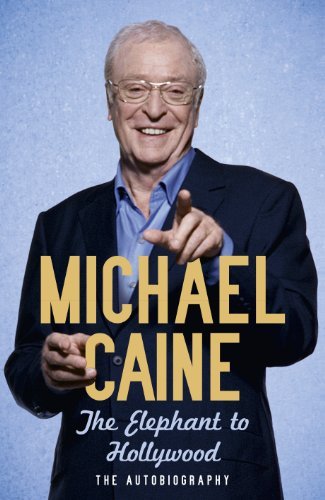
I have previously posted stories about Zulu, one of my favourite pics, and quotes by Michael Caine. In the days when Bytes consisted of an email before becoming a blog, I also posted a piece about the ending of The Italian Job. I will repost that article this weekend.
Many years ago, Richard Burton bought Elizabeth Taylor a diamond necklace for an extraordinary sum.Several years later I ran into her at a party and she was wearing it. I was telling her how beautiful it was when she pulled me towards her and whispered in my ear: ‘It’s not the real one – it’s paste!’‘Why don’t you wear the real one?’ I asked. ‘It’s too dangerous,’ she said, looking around her. I followed her gaze: all I could see were multi-millionaires. ‘Surely you’re safe here?’ I said, pointing at the two bodyguards standing behind her chair.‘Oh – them,’ she said. ‘They’re always here when I’m wearing this.’ I thought for a moment. ‘But surely you don’t need them if the necklace is paste?’She looked at me pityingly. ‘If I didn’t have the guards, Michael,’ she explained as if to a small child, ‘everyone would know it was paste.’
I knew I wouldn’t get another film until Zulu came out, but I had been given a seven-year contract by Joe Levine, president of Embassy Pictures. When I was summoned to Joe’s office, I bowled along, pretty certain he would hold to his side of the bargain.Levine was everybody’s idea of a movie producer: short, fat and with a big cigar. He got straight to the point. ‘I said to you, Michael, I said, “Michael, you’ll be dripping with diamonds. Didn’t I?’ I nodded. ‘Well, I still believe that’s gonna happen,’ he paused and I held my breath, ‘just not with Embassy Pictures.’I breathed out. I had gone dizzy. ‘Didn’t you like me in Zulu?’ I asked. ‘Loved you, Michael,’ Joe said warmly. ‘But there’s one thing I gotta tell you.’ He seemed to be bracing himself. ‘I know you’re not, but you gotta face the fact that you look like a queer on screen.’I was dumbfounded. Me? Queer? ‘I know you’re not,’ Joe said again hastily, ‘but there’s a lot of queer stars out there who look butch, and that’s fine – but you’re the other way round and it’s the wrong way round.You’ll never be a romantic lead.’ Fortunately, other people thought differently. After Zulu was released, I was offered The Ipcress File and a seven-year contract with Harry Saltzman, who, with Cubby Broccoli, was responsible for the James Bond movies.
Harry was constantly working, constantly thinking. I’ve always worn glasses. ‘I wear them because I need them,’ I told him, a bit defensively. ‘No,’ he said. ‘It’s good. Let’s have Harry Palmer wear them, too.’The Ipcress File was highly successful, but it ran into the old problem. After the first rushes, we got a cable from Hollywood. ‘Dump Caine’s spectacles and make the girl cook the meal – he is coming across as a homosexual.’This is not the exact message – I’ve cleaned it up. We had deliberately gone anti-Bond and as well as the glasses, we’d decided Harry should cook, which was risky stuff in Britain in 1964.When he seduces the girl, he doesn’t wine and dine her in a restaurant, he takes her home and cooks her dinner – making an omelette by breaking two eggs at once in one hand.As for the glasses, when the girl (played by Sue Lloyd) asks if I always wear them, I reply: ‘I only take them off in bed,’ and she reaches over and takes them off. It’s now one of the great moments of movie seduction, so I’m glad we stuck to our guns.
Paramount gave a lunch for Alfie and I found myself sitting next to an Austrian guy. ‘My name is Charles Blühdorn,’ he said in a thick accent. ‘I liked your movie and your performance very much.’I thanked him and asked what he did. He said he was an industrialist and added: ‘But you should ask me what I did yesterday.’‘And what did you do yesterday?’ I asked dutifully. ‘I bought Paramount Studios!’ he said. ‘So, if you ever have a script you want to do, let me look at it.’‘As a matter of fact . . . ’ I said, ‘there is something . . .’ I told him my friend Troy Kennedy Martin had written a script with a great part for me as a crook called Charlie Croker.‘What is it called?’ Mr Blühdorn asked. ‘The Italian Job,’ I replied.You never can know what a chance meeting might bring, can you?